8 Worst Book-to-Movie Adaptations Ever, Ranked

Jessica is a young writer from Brisbane, Australia. An avid consumer and lover of all things Film and TV, you will never tear her away from a screen. A tendency rooted from childhood, she once had dreams of becoming a member of the famed kids-band 'Hi-5'. Perhaps that's what pushed her to secure an education with a theater background. But now, as dreams evolved, her passions have turned to admiring performances from afar. Frankly, she's just grateful that she can put her binging skills to good use. Outside of work, Jessica recently completed her undergraduate double degree in Arts/Communications. Other than that, she spends most of her free time with family and friends, probably never forgetting to talk about the new movie or show she watched the day prior.
Sign in to your Collider account
Adapting a beloved book for the screen is always a risky game. Readers come in with vivid worlds already built in their minds, fiercely attached to characters, themes, and all the small details that made the story resonate in the first place. Sometimes, a film can capture that magic perfectly. Other times, it can miss the point entirely — even if the movie itself isn't necessarily bad.
That is because the most disappointing book-to-movie adaptations are often the ones that had the most potential: stories with rich mythology or emotional depth that somehow got flattened, rushed, or completely misunderstood on screen. It's a heartbreaking occurrence that tends to leave readers wondering what could have been. And these just so happen to be a handful of those adaptations that failed to live up to the books behind them.
8 'Persuasion' (2022)
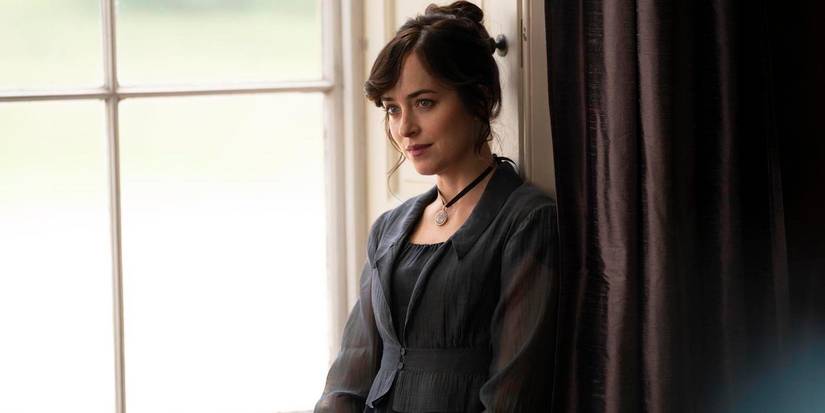
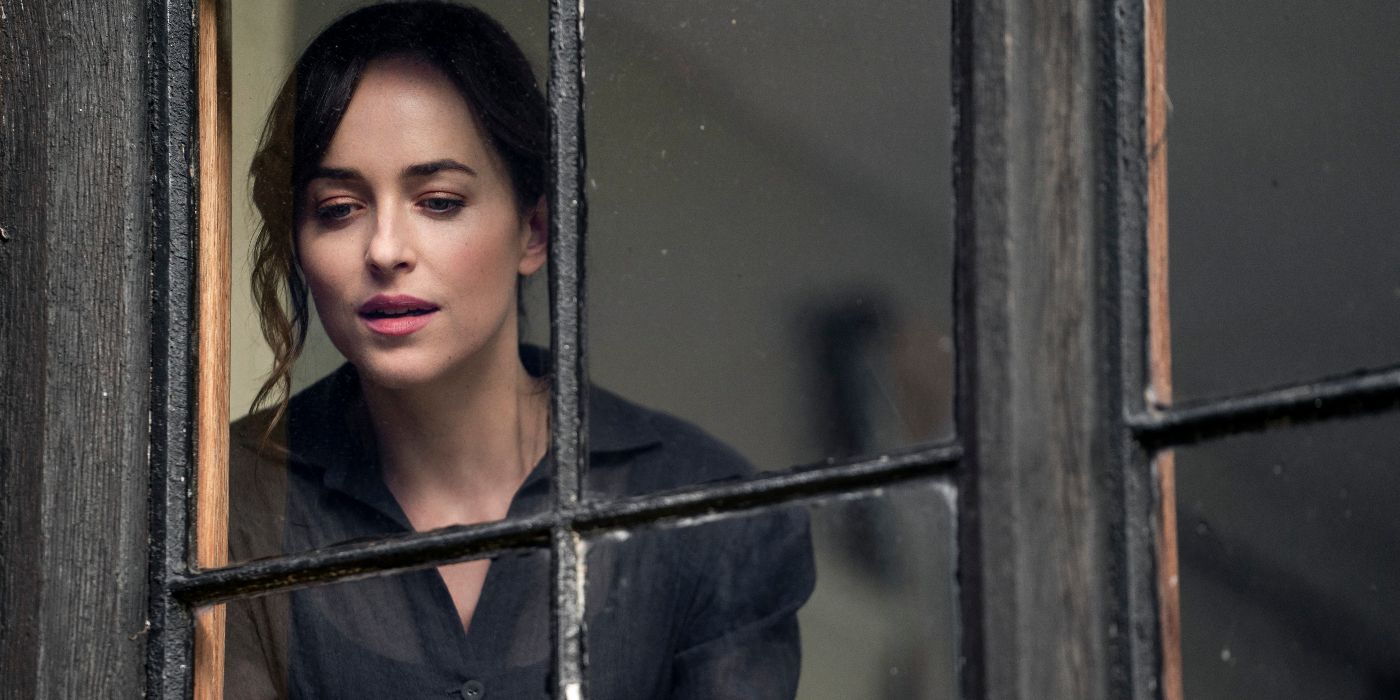
Based on Jane Austen's final completed novel, Anne Elliot (Dakota Johnson) is a woman who quietly carries regret after being persuaded years earlier to reject the man she loved. But when that very same man, Captain Frederick Wentworth (Cosmo Jarvis), suddenly re-enters her life, Anne must navigate old feelings, family pressure, and the painful reality of second chances. In novel form, this is Austen at her most emotionally restrained.
And yet, that's exactly what the 2022 adaptation seems determined to avoid. Anachronistic in every way, Persuasion completely rewrites Anne's sensibilities, turning her into a self-assured 21st-century woman, with wink-at-the-camera narration and a cinematic tone that feels closer to a Netflix rom-com. Likely inspired by the success of Bridgerton-esque projects, it fundamentally misunderstands (and changes) what makes Austen's deeply introspective novel work — especially when it comes to her complicated relationship with Wentworth, who also happens to be significantly duller than his literary counterpart. You're better off watching the older adaptations.
7 'The Giver' (2014)

In a carefully controlled society where pain, conflict, and choice have been eliminated, young Jonas (Brenton Thwaites) is selected to become the next Receiver of Memory — the one person entrusted with the truths of the past. But once under the guidance of the current Receiver (Jeff Bridges), Jonas begins to experience real emotions (both good and bad) for the first time, forcing him to completely question the world around him.
Lois Lowry's classic novel has held quiet power for decades with its nuanced, philosophical storytelling. And yet, The Giver often feels too eager to explain everything. By aging up the characters and leaning harder into the conventional YA dystopian tropes, it loses much of the story's unsettling simplicity. The book trusted readers to sit with discomfort and ask difficult questions about freedom and pain. The adaptation, however, smooths those edges down and instead adds in unnecessary romance and generic action sequences to appeal to the teenage masses. That said, this was the sign of the times.
6 'Timeline' (2003)

Based on Michael Crichton's novel, a group of archaeologists discovers that their missing professor has somehow been transported to 14th-century France. Deciding to use experimental technology created by a secretive corporation, the group travels back in time to rescue him, only to find themselves trapped in the middle of a medieval war.
On paper, it's a premise that blends science fiction with historical adventure. The film, however, never quite figures out how to make that concept exciting. Crichton's book thrives on tension, detail, and the thrill of watching modern minds try to survive in a brutal past. Yet this adaptation of Timeline flattens much of that into a forgettable 2000s action movie. The science becomes background noise, the characters feel thin, and the urgency never fully lands. Turns out not everything can be as good as Jurassic Park.
Collider Exclusive · Universe Personality Quiz Which Iconic Universe Do You Belong in the Most? Star Wars · Lord of the Rings · Harry Potter · Game of Thrones · Star Trek
Five legendary universes. Five completely different visions of what the world could be — or already was. One of them is the world your instincts, your values, and your particular way of existing were built for. Eight questions will tell you which one.
🚀Star Wars
💍Lord of the Rings
🧙Harry Potter
👑Game of Thrones
🖖Star Trek
01
What gives your life its deepest sense of meaning? Every universe is built around a different answer to this question.
02
Which kind of world do you most want to inhabit? The environment shapes who you become. Choose carefully.
03
How do you prefer your conflicts resolved? The shape of a world's conflicts tells you everything about its soul.
04
Who do you want beside you when things get difficult? Your ideal companions reveal the world you were made for.
05
What is your relationship with power? How you seek, wield, or resist power is the map of who you are.
06
How does your universe treat good and evil? A world's moral architecture tells you more about it than any map.
07
What role would you naturally fall into? Every universe has archetypes. Which one fits you without trying?
08
What do you ultimately believe about the future? The answer to this is the clearest window into which universe already lives inside you.
Your Universe Has Been Chosen You Belong In…
Your answers point to the iconic universe your values, your instincts, and your particular way of seeing the world were built for. This is where you would find your people — and your purpose.
Star Wars
You believe in the cause — in the idea that freedom is worth fighting for even when the odds are impossible and the empire is vast.
- You are drawn to the moral clarity of a universe where hope itself is a form of resistance.
- You'd find your people in the Rebellion — a ragtag coalition of true believers held together by conviction more than resources.
- Star Wars is fundamentally a story about ordinary people choosing to matter in an extraordinary conflict — and that is exactly your kind of story.
- The Force may or may not be with you. But the will to use it for something larger than yourself certainly is.
Lord of the Rings
You understand, in the deepest part of yourself, that the journey matters as much as the destination — and that the world's beauty is worth protecting even at great cost.
- Middle-earth is a world of ancient wonder, deep friendship, and a darkness that only retreats when enough small acts of courage accumulate.
- You would thrive here because you value the fellowship more than the glory — the road more than the arrival.
- Tolkien's universe rewards patience, loyalty, and the willingness to carry something heavy across a very long distance.
- Those are not burdens to you. They are simply how you move through the world.
Harry Potter
You believe that love, loyalty, and doing what's right are not naive sentiments — they are the most powerful forces in any world, magical or otherwise.
- The Wizarding World is a place of wonder hidden in plain sight, where learning is transformative and the bonds you form at school follow you into every battle.
- You would flourish here because you take both the magic and the friendships seriously — and you understand that one without the other is incomplete.
- Harry Potter's universe ultimately rewards those who choose to stand for something even when standing is terrifying.
- That choice — made quietly, without guarantee — is something you understand completely.
Game of Thrones
You see the world clearly — its power structures, its hypocrisies, its brutal arithmetic — and you are not paralysed by that clarity. You use it.
- Westeros is a world that rewards intelligence, adaptability, and the willingness to understand that every alliance is also a negotiation.
- You would survive here — possibly thrive here — because you don't confuse the world as it is with the world as you'd like it to be.
- Game of Thrones is a story about what happens when the idealists and the realists collide. You are sharp enough to know which one lasts longer.
- Winter always comes. You are already prepared.
Star Trek
You believe the future is worth building — that curiosity, cooperation, and the expansion of understanding are not just ideals but the most practical path forward for any civilisation.
- Star Trek is a universe where the questions matter as much as the answers, and where encountering something utterly alien is cause for wonder rather than fear.
- You would belong here because you are fundamentally optimistic about what intelligence and decency can achieve — while being honest about how hard that achievement is.
- The Federation is the universe's most ambitious thought experiment: what if we actually got better?
- You don't just hope that's possible. You think it's the only thing worth working toward.
5 'The Lawnmower Man' (1992)

Despite sharing a title with Stephen King's famous short story, The Lawnmower Man is barely an adaptation at all. The film follows Dr. Lawrence Angelo (Pierce Brosnan), a scientist experimenting with virtual reality and intelligence enhancement, who chooses simple gardener Jobe Smith (Jeff Fahey) as his test subject. But as Jobe's intelligence rapidly increases, so does his power (and instability), turning the experiment into a dangerous battle over control and consciousness.
The disappointment here is almost impressive in its audacity. King's original story is a bizarre, grotesque horror tale, while the film turns it into a very early-90s VR sci-fi thriller with floating CGI heads and techno-nightmare aesthetics. As a standalone movie, it's certainly memorable. As an adaptation? It almost has nothing to do with the source material beyond the lawn, which isn't surprising given that they leaned on a rewritten third-party screenplay. In this regard, The Lawnmower Man is less "based on" and more "vaguely inspired by a title someone remembered once." In fact, the deviation from King's story was so stark that King successfully sued to have his name removed from the film's original title.
4 'World War Z' (2013)

Former UN investigator Gerry Lane (Brad Pitt) travels across the globe trying to uncover the source of a rapidly spreading zombie pandemic. As cities collapse and governments fall, Gerry moves from one international crisis to another, searching for a way to stop humanity's extinction. It's a fast-paced disaster thriller with massive set pieces, global panic, and monsters that move at terrifying speeds.
And while this claims to be an adaptation of Max Brooks' World War Z, almost none of it resembles the book people actually loved. Indeed, Brooks' novel is structured as an oral history, using multiple perspectives to explore how different countries and cultures respond to global collapse. On paper, it's less about zombies and more about human systems under pressure. Unfortunately, the film ditches all of that for a standard action blockbuster, losing the political commentary and haunting realism that made the source material so special. No, it's not a bad zombie movie, but it is a poor translation of the book.
3 'Eragon' (2006)

Set in the land of Alagaësia, farm boy Eragon (Ed Speelers) discovers a mysterious blue stone that turns out to be a dragon egg — one that hatches the dragon Saphira (Rachel Weisz). Guided by the wise storyteller Brom (Jeremy Irons), Eragon soon learns that he is not only one of the last, but a prophesied dragon rider who may just be the key to restoring peace to his world.
It's a classic fantasy setup. Unfortunately, the film feels like it's speed-running the book instead of accurately adapting it. Christopher Paolini's novel built a devoted fanbase through its rich story-world and emotional coming-of-age arc, but the movie somehow flattens it into something strangely lifeless. Major character beats are rushed, the mythology is simplified to the point of blandness, and Saphira's development loses much of the bond that made her relationship with Eragon matter. Let's hope the upcoming TV adaptation does a better job.
2 'The Dark Tower' (2017)

Young Jake Chambers (Tom Taylor) begins having visions of another world, where a sinister Man in Black (Matthew McConaughey) seeks to destroy a Tower holding the universe together. His parents and psychiatrists immediately dismiss these as dreams. However, when Jake's visions lead him to a strange portal, he finds himself joining forces with Roland Deschain (Idris Elba), the last Gunslinger sworn to protect the Dark Tower.
On paper, this Stephen King series stood out for its sprawling mythology and multi-genre weirdness. But on screen, The Dark Tower somehow became a generic action film that stripped everything that made the books unique. Thousands of pages were poorly condensed, resulting in Roland losing much of his haunted complexity, and the larger world never getting room to breathe or flourish. This really could have been the launch of a bold new fantasy franchise. Sadly, the film ended up feeling like a rushed summary of a much better story happening somewhere off-screen.
1 'Dune' (1984)

Adapting Frank Herbert's famously dense novel was never going to be easy, but David Lynch's Dune took the challenge and somehow made it even more bewildering. Set in a distant future where noble houses battle to control the desert planet Arrakis, the story follows Paul Atreides (Kyle MacLachlan) as his family is betrayed, and he begins to realize he might just be part of a larger prophetic destiny. It's the legacy book that inspired countless sci-fi epics. Sadly, this 1984 adaptation was too camp for its own good.
Herbert's novel is rich with philosophical ideas about power, religion, and colonization. But in this film, much of that complexity is reduced to awkward exposition and a strange visual language that feels more confusing than visionary. Indeed, Lynch's distinct style was distracting, often clashing against the revered source material. Think Roblox-esque shields, metal speedos, phallic-looking sandworms, and the random appearance of a pug in space. And that's not even including the nonsensical unraveling of the plot. In no way does this film do justice to the book's world-building. Thankfully, we now have Denis Villeneuve's powerful interpretation in our hands.

Dune
- Release Date
- December 14, 1984
- Runtime
- 137 minutes
- Director
- David Lynch
- Writers
- David Lynch
KioskNews shows a cleaned-up reading view extracted from the publisher’s page — the original always lives on their site, not ours.