'Seinfeld' Ruined One of Its Main Characters After Larry David Left the Show

William Fischer is an author at Collider. Born and raised in Nebraska, he latched onto moviemaking at a young age and has been chasing it ever since. William holds a BFA in film from the University of Nebraska-Lincoln, an MA in film direction from the National University of Ireland, Galway, and a BA in animation from the University of Wolverhampton.
As a freelance writer, artist, and filmmaker, William has had art and short stories featured in "Intergalactic Medicine Show," "Bards and Sages Quarterly," and "Another Realm" e-zine. His short films have won prizes and nominations at Animaze, the Berlin Indie Film Festival, and the London Movie Awards.
While enjoying a little bit of everything, William is most passionate about traditional adventure, fantasy, and gothic fiction, and will go on four hours if allowed about the merits of 2D animation and strong leitmotifs in film scoring. Outside the arts, William enjoys cooking, baking, and fencing (Olympic saber and rapier).
Sign in to your Collider account
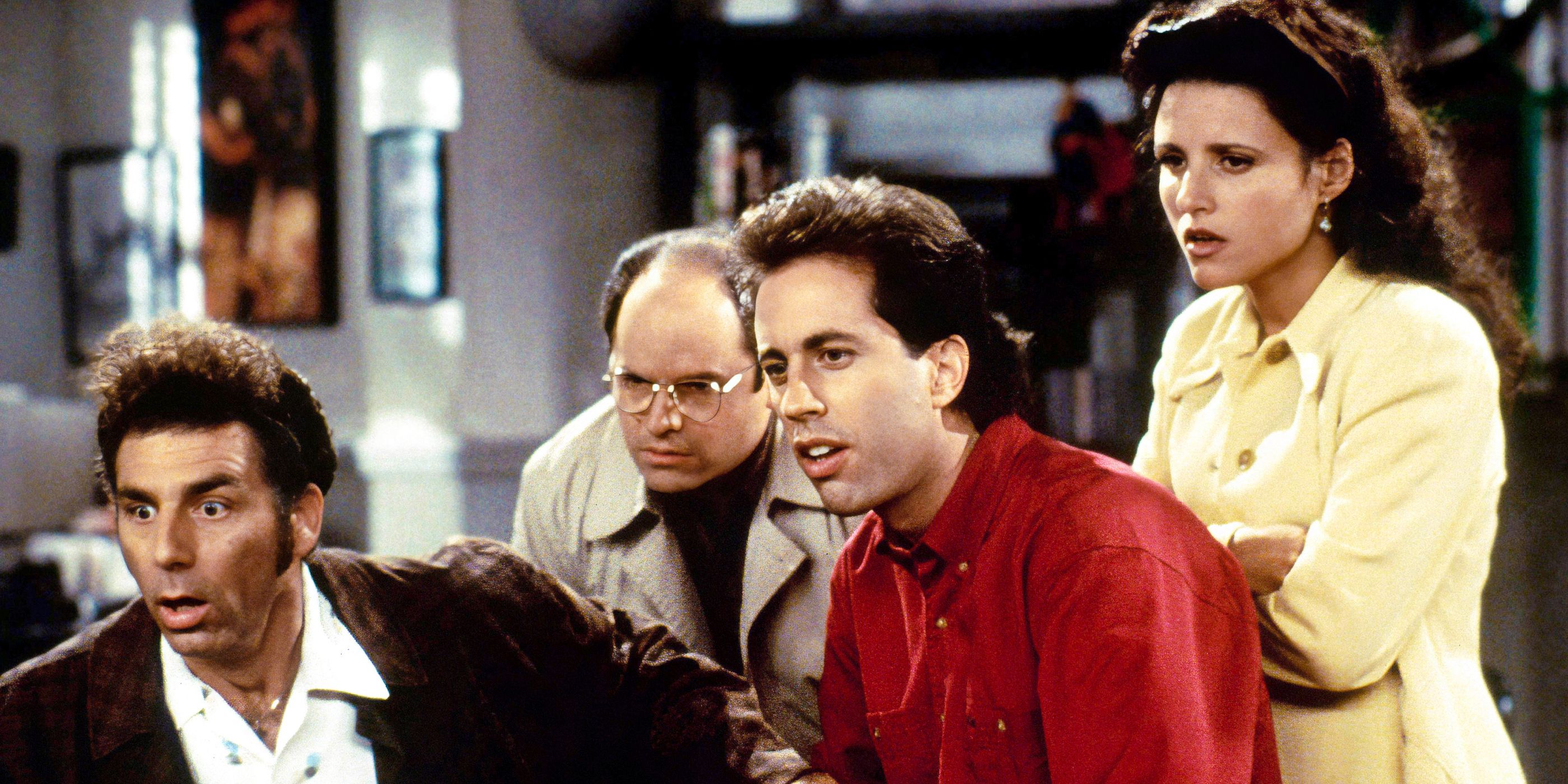
When Seinfeld went from a pilot of dubious viability to a series, NBC had just one firm note for Larry David and Jerry Seinfeld: they needed a woman as a full-time member of the cast. It was the note that proved the old proverb about the broken clock. The woman David and Seinfeld created to meet the demand was Elaine Benes, played by Julia Louis-Dreyfus, Elaine was indispensable to Seinfeld for seven of its nine years. "She gives the show luster," Seinfeld said of the actress and the character on the 2000s DVD release of the series, quoting comments David had made during production. In the early to middle years of the show, Elaine acted as a superficially prim and elegant counterpoint to the three male boors that were her friends. But that counterpoint — that luster — wouldn't survive David’s departure.
Elaine Was a Very Different Character in the Early Seasons of 'Seinfeld'
In the earliest days of Seinfeld, Elaine’s role wasn’t much more than “the girl.” She wasn’t devoid of comic material, but as Jerry’s ex-turned-pal, it wasn’t rare in the first few shows for her to end up as the tag-along to her platonic boyfriend’s meaningless outings, or the character who laughed at Jerry's sardonic comments about the world. The character (to Louis-Dreyfus' frustration) took a few seasons to develop, but she did come into her own firm identity.
Collider Exclusive · 8 Questions · 2 Minutes Which Netflix Character Would Be Your Best Friend? Dustin · Emily · Wednesday · Gi-hun
Some friends drag you out of the house. Some sit with you on the worst night of your life. Netflix has written both, plus the one who tells you the truth you have been avoiding all week. Answer eight quick questions about how you actually do friendship, and find out which of them was always going to end up in your corner.
🧢Dustin(Stranger Things)
🗼Emily(Emily in Paris)
🕷️Wednesday(Wednesday)
🟢Gi-hun(Squid Game)
01
How do you usually end up making a new friend? The origin story says a lot about the friendship that follows it.
02
What is a perfect Saturday with your best friend? Friendship is mostly built out of very ordinary hours.
03
You call them at two in the morning. What happens? This is the real test of a friendship, and everybody knows it.
04
What do you want from them when you are clearly wrong? The best friendships are the ones that survive being corrected.
05
What do your friends actually value about you? The friend you attract says something about the friend you are.
06
You have a falling out. How does it go? How a friendship repairs itself matters more than how it breaks.
07
What do you actually need a best friend for? Everybody is missing something. The right friend fills that gap.
08
Ten years from now, what keeps the two of you close? Eight questions in, this is the one that decides who you get.
The Group Chat Has Spoken Your Best Friend Is…
Four Netflix characters, four completely different ways of showing up for somebody. This is the one who fits how you actually do friendship, and what having them in your life would be like.
Dustin Henderson
You do not do friendship at half volume, and neither does he. What you want is somebody who says yes to the plan before you have finished describing the plan.
- Dustin is the friend the entire show runs on: loyal past the point of sense, enthusiastic about everything, and incapable of leaving anybody behind.
- You have the same instinct. Your friendships are loud, specific and slightly ridiculous, and they last for decades because of it.
- He is also the one person who would take your strangest interest completely seriously, which is far rarer than it sounds.
- You would have a group chat. It would never once be quiet.
Emily Cooper
You are the friend who makes things happen, and so is she. Together you would be mildly exhausting to everyone around you and completely delighted with yourselves.
- Emily treats an ordinary Tuesday as something that could be turned into an occasion, which is either the best or the worst quality in a friend depending on your energy levels.
- You share her refusal to sit still. Neither of you has ever accepted a night in when something was happening somewhere else.
- She is far more loyal than people give her credit for. She defends her friends loudly, publicly, and occasionally before checking the facts.
- She would post the photo without asking. You would forgive her, because it is a very good photo.
Wednesday Addams
You have no patience for pleasant lies, and she has no ability to tell them. What looks like coldness from the outside is the most reliable friendship on this list.
- Wednesday never says a kind thing she does not mean, which makes the rare ones count for an enormous amount.
- You would rather be told the truth than be made comfortable. She is constitutionally incapable of offering you anything else.
- Underneath all of it she is ferociously protective. She simply refuses to make a performance out of caring.
- Do not expect a birthday message. Do expect her to ruin anyone who wrongs you.
Seong Gi-hun
You look after whoever is having the worst day. So does he. It is the least strategic way to move through the world and the best possible quality in a friend.
- Gi-hun is not the strongest player in Squid Game, or the cleverest. He is the one who keeps choosing to protect somebody else, over and over, at genuine cost to himself.
- You have the same instinct. You notice who is struggling and you stay with them, long after anybody would blame you for leaving.
- He is a flawed friend, and that is part of why it lands. He lets people down, then comes back and tries again, which is more than most manage.
- He would give you his last chance and never once mention that he had done it.
In the early seasons, Elaine was very outspoken about her opposition to real fur and tuna that wasn’t dolphin-safe, and she hated those who didn't recycle. A potential relationship with baseball legend Keith Hernandez fell apart over his smoking. Elaine’s the one who first volunteered with senior citizens in “The Old Man” (and wouldn’t shut up about how good it made her feel about herself). She was proud to be the “best man” in a lesbian wedding, held a seat on the Goodwill benefit committee, and enlisted Jerry, and later Kramer (Michael Richards) for a charity bachelor auction in “The Barber.” When put alongside a hipster doofus, a perpetual loser, and a comedian dead to sentimentality, Elaine gave every appearance of being an elegant and responsible woman ticking every box on the “good progressive New Yorker” checklist. It was an appearance that was inevitably tarnished once the events of any given episode got underway.
Elaine Evolves Into a Totally Different Character in 'Seinfeld's Later Seasons

Without fail, Elaine proved herself every bit as neurotic and self-absorbed as the three boys. Her charitable efforts fell apart, sometimes through the same well-meaning faux pas that would trip up George (Jason Alexander), but also through her own superficiality. That volunteer work in “The Old Man?” Fine in theory, but how could they expect Elaine to put up with a woman with a giant goiter on the side of her neck? This concern for appearances poisoned her love life as well, with Elaine admitting to Jerry once that she couldn’t date anyone unattractive. For all the times she turned her nose up at Jerry and George’s shallow and pathetic excuses to end relationships, she had no shortage of pet peeves and attitude problems that screwed up her dates even without quibbling over looks. Elaine was also impulsive and hot-tempered, a combination that led to such comic hits as stealing all the toilet paper out of the ladies’ room for revenge and ripping the toupée off of George’s head to toss it out the window.
While treated matter-of-factly, this characterization of Elaine provided a solid and appealing dynamic among the main cast: while three of them wore what they were on their sleeves (or at least couldn’t pretend otherwise), she maintained a superficial veneer of proper society that held up just long enough to make for hilarity when it washed away. The contrast was accentuated by Louis-Dreyfus’s acting choices. In earlier seasons, Elaine was often perky, bubbly, even playful and cute with her friends, and pleasant in public... until her neuroses got in the way. This wasn’t someone putting on airs, but someone who really believed they were a good person, and could therefore plausibly fail to realize they weren't any better than Jerry, George, and Kramer week after week.
Almost all of this was gone by the end of the series. In later seasons, 8 and 9 especially, Elaine was a changed woman, so changed that in my earliest memories of watching the show I wondered if it was the same actress playing her. In these years, Elaine shed the vintage suits, the big white socks, and the half-up hairdo. Retro was out, curls worn down and modern business suits were in. But what she gained in ‘90s chic, she lost in any pretense of civic responsibility. There was no more concern for recycling, no more stabs at charitable efforts, and no more perky, cutesy demeanor. Instead, there was an openly cynical and bitter human being. Despite winning an editing position with the J. Peterman Company — even running it for a brief time — Elaine was unhappy in her work and her personal life. She finally managed a long-term relationship with David Puddy (Patrick Warburton), but she didn’t like him very much, and she was outspoken in her disdain for her circle of friends.
To some extent, this was a natural evolution, as arguably everyone but Kramer became more selfish and unhappy as the series went on. But it was partly a consequence of Larry David leaving the show after Season 7. Speaking about “The Bizarro Jerry” episode of Season 8 for the DVD, writer David Mandel acknowledged that “if you look a little bit at how I think we wrote Elaine after Larry left, there was a real sense of her always trying to look beyond.” This notion of her seeking a way out of the foursome created a new contrast between her and the boys. For all their misery, they were more or less content to be where they were, and Elaine wasn’t. And with Seinfeld taking a turn toward more surreal physical comedy in the last two seasons, Elaine’s cynicism injected some acerbic bite into a sillier period of the show.
Elaine Was Diminished After Larry David Left 'Seinfeld'
But the cost of this shift was the contrast within the character. Elaine no longer had a self-image to be punctured; she knew she was miserable in the eighth and ninth seasons, and she seemed to know she wasn’t a good person. Her storyline in "The Chicken Roaster" saw her treating the Peterman expense account as her own private line of credit without thought. Pulling her in this direction also created some redundancy among the main cast. There was already a miserable white-collar worker who felt screwed over by life, and his name was George. There was already a detached, deadpan observer ready to cut down anyone, and that was Jerry. Elaine escaped being made to double up on any of Kramer’s traits, but in becoming so much more like the other two, nearly every quality that distinguished her except her gender was shed.
A desire for escape wasn’t a strong enough replacement to make up for that, and the degree of disenchantment with her life made it hard to believe Elaine wouldn’t just leave. Life on her own might be full of neurotic and self-defeating episodes, but why should she keep coming by Jerry’s apartment to get involved with three schmucks she wanted to get away from? Seinfeld wasn't the first or the last sitcom to take shots at its group dynamic in later seasons, and I've yet to see a show where that instinct didn't weaken or critically damage the premise behind the main cast being together. With how far Elaine was pushed, it's a credit to the writers' talent that the re-characterization didn't wreak full-blown havoc on the foursome's credibility as a unit.
I can’t say these changes didn’t have their rewards. “The Bizarro Jerry” is one of the best episodes in Seinfeld’s run, and Elaine’s seizing an opportunity for another circle of friends made for a great one-time storyline. While everyone remembers late-series Elaine for “The Little Kicks,” what's even funnier in that episode was her misreading George’s effect on her staff, the constant insults she cooks up while trying to keep him away, and the physical altercation she gets into with George’s father, Frank (Jerry Stiller), at the police station. The changes to Elaine worked for this or that individual episode, but they didn’t allow for the same sort of sustainable character and superficially lustrous distinction that the earlier conception of Elaine gave the series.
- Release Date
- 1989 - 1998-00-00
- Network
- NBC
- Showrunner
- Larry David
- Directors
- David Steinberg, David Owen Trainor, Art Wolff, Jason Alexander
- Writers
- Darin Henry, Bruce Eric Kaplan, Bill Masters, Bruce Kirschbaum, Steve O'Donnell, Tom Leopold, Don McEnery, Greg Daniels, Jon Hayman, Kit Boss, Lawrence H. Levy, Matt Goldman, Matt Selman, Billy Kimball, Fred Stoller, Charlie Rubin, Steve Lookner, Steve Skrovan
KioskNews shows a cleaned-up reading view extracted from the publisher’s page — the original always lives on their site, not ours.