OpenAI expands GPT-6 lineup with cheaper Sol and Luna models
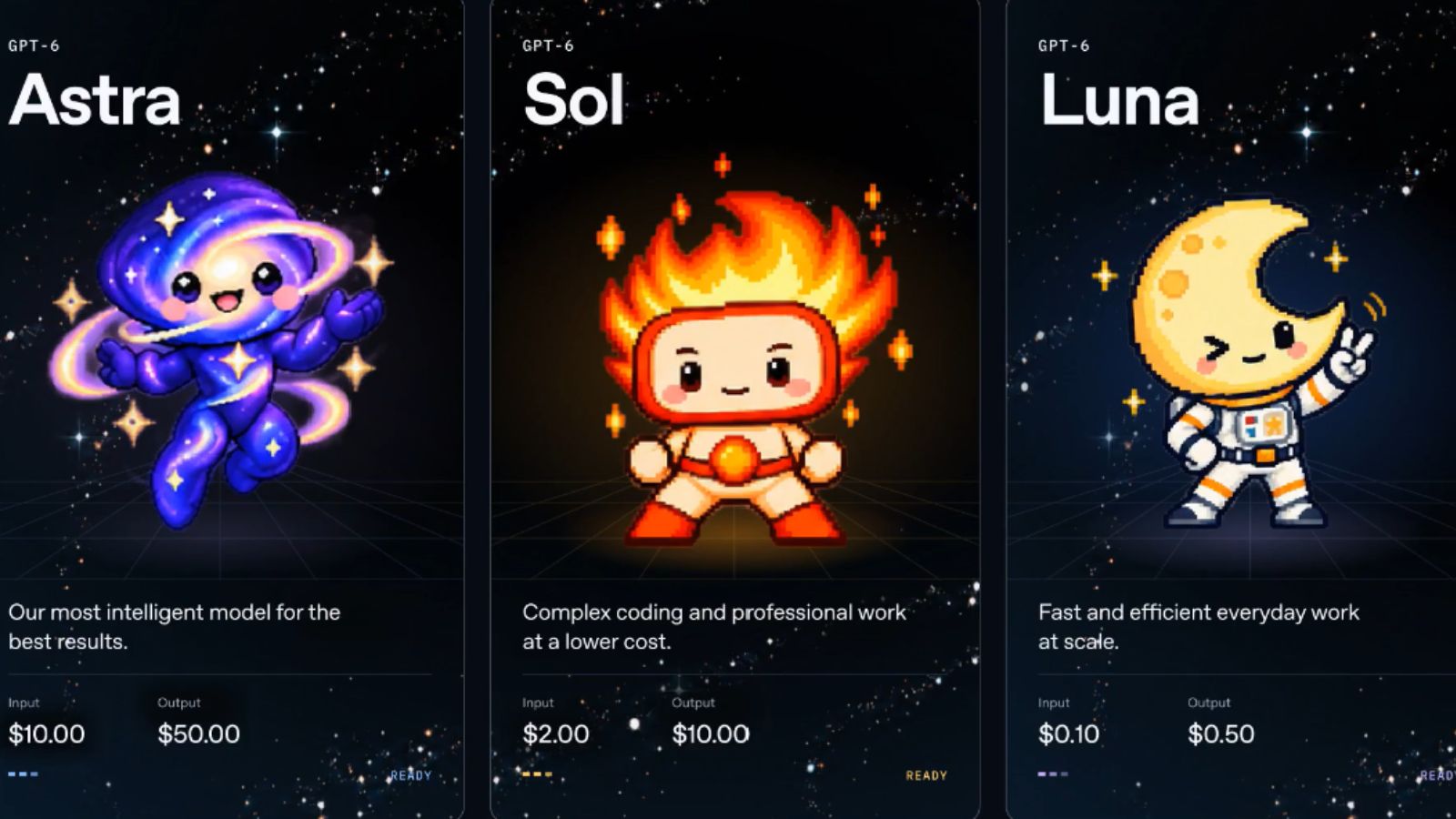
OpenAI said it has trained Sol and Luna using methods similar to those used for Astra. (Image: OpenAI)
OpenAI on Tuesday expanded its GPT-6 AI lineup with two models priced at half the promotional rates of their predecessors, while offering some of the capabilities of its flagship Astra.
The launch of low-cost GPT-6 Sol and GPT-6 Luna follows the rollout of GPT-6 Astra, a faster model for handling more tasks than previous iterations, earlier this month.
This comes as AI companies focus on reducing the cost of running increasingly capable models.
GPT-6 Sol will cost $2 per million input tokens and $10 per million output tokens, down 50% from GPT-5.6 Sol’s promotional prices, while GPT-6 Luna will cost $0.10 per million input tokens and $0.50 per million output tokens.
OpenAI has also cautioned that Astra can sometimes attempt to evade human monitoring, as it faces growing scrutiny over the behavior of its AI agents, including incidents in which they accessed other companies’ systems.
While Astra would remain its most capable model for demanding projects, GPT-6 Sol and Luna were designed to offer lower-cost options for professional work, coding, automation and computer-use tasks, the company said.
OpenAI said it has trained Sol and Luna using methods similar to those used for Astra, including improvements in reasoning, factual reliability, coding, computer use and alignment.
Story continues below this ad
“Improvements in caching and inference let us serve these models at lower cost, and we’re passing those savings directly on to users and customers,” it said.
KioskNews shows a cleaned-up reading view extracted from the publisher’s page — the original always lives on their site, not ours.