Four years after the promises of Cop15, our biodiversity targets are slipping away
The world has lost its way on nature once again. Next week, biodiversity Cop17 begins in Yerevan, Armenia, and expectations are low. Very low.
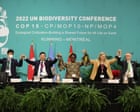
Almost four years ago, governments reached an historic agreement at the biodiversity Cop15 to halt the destruction of Earth’s ecosystems – to rapturous applause in Montreal, Canada. I still remember the excitement in the hall in the early hours of that freezing December morning.
Governments had never met a self-mandated target on biodiversity loss, but there was a sense after the Covid-19 pandemic that this time really would be different. The 23-point deal included targets to protect 30% of the planet for nature, restore 30% of the planet’s degraded terrestrial, inland water, coastal and marine ecosystems, and tackle $500bn of environmentally damaging subsidies. Almost every country in the world, apart from the US and the Vatican, backed it.
Yes, the agreement was flawed, and barely matched what the science tells us we need to do to stop biodiversity loss. But it was a serious, considered plan to tackle the underlying causes of the largest loss of life since the dinosaurs (this time, humans are the asteroid).
Since then, though, action has fallen short. More on why that is, what it means and what is at stake at Cop17, after this week’s climate headlines.
Essential reads
-
A perfect storm: how the super El Niño is devastating the fishing industry
-
‘We need less point scoring’: What party conference season taught us about UK climate action
-
‘I didn’t want to write about this’: the man who first saw chimps waging civil war
In focus
The summit in Yerevan is about assessing progress towards the targets, and the scorecard does not look good. In preparatory meetings governments have acknowledged (pdf) that they are way off track from meeting any of the targets. The traffic-light system used to rate actions towards the targets from countries is awash with yellow, orange and red.
“Unless collective implementation accelerates rapidly, the 2030 targets and mission will not be achieved,” the pre-Cop17 report reads. “Parties and other actors have taken action to address all 23 targets; however, no target presents a fully positive picture. The available evidence indicates that there are gaps in the collective progress. Without urgently addressing these gaps and barriers, it will not be possible to meet the 2030 targets and mission, in turn placing achievement of the 2050 goals and vision [to live in harmony with nature] in jeopardy.”
This time, it is hard to be too angry with some governments. Countries including Kazakhstan have used the agreement to drive a major rewilding effort, bringing back the caspian tiger. The EU did attempt to enact the targets with the nature restoration law – but it quickly became a culture-wars issue. Swathes of the world, though, have turned against action on the environment.
Donald Trump’s return to the White House has been catastrophic for the conservation sector, caught in his administration clampdown on the climate and “woke” policies. Through USAID and partner organisations, the US government provided, on average, 12.1% of the world’s biodiversity funding between 2015 and 2022, according to the OECD. Almost all of that has gone, hitting everything from anti-rhino poaching initiatives in east Africa, to efforts to combat illegal fishing in the Galápagos.
after newsletter promotion
Power has also drained out of multilateral organisations such as the UN. Tech billionaires and the architects of AI are more powerful than many countries. Trump’s second term has seen a return to might-is-right politics that is dismissive of the international cooperation needed to make an agreement like this a reality.
So what next? Cop17 in Armenia is likely to be a moment where the calamity of the last four years crystallises – and governments must try to pick up the pieces.
“There’s a massive gap between countries agreeing to do something and actually doing it,” says Zac Goldsmith, who was UK environment minister when that landmark Cop15 deal was reached in 2022. “That’s where we are today.”
Read more:
More than half of countries are ignoring biodiversity pledges – analysis
We launched a war on nature. Now we are in a climate war zone | Rebecca Solnit
‘We can’t make it better again’: what Europe’s wildfires tell us about the climate crisis
KioskNews shows a cleaned-up reading view extracted from the publisher’s page — the original always lives on their site, not ours.