Anthropic IPO: Why early investor Dustin Moskovitz is worried about AI moving too fast
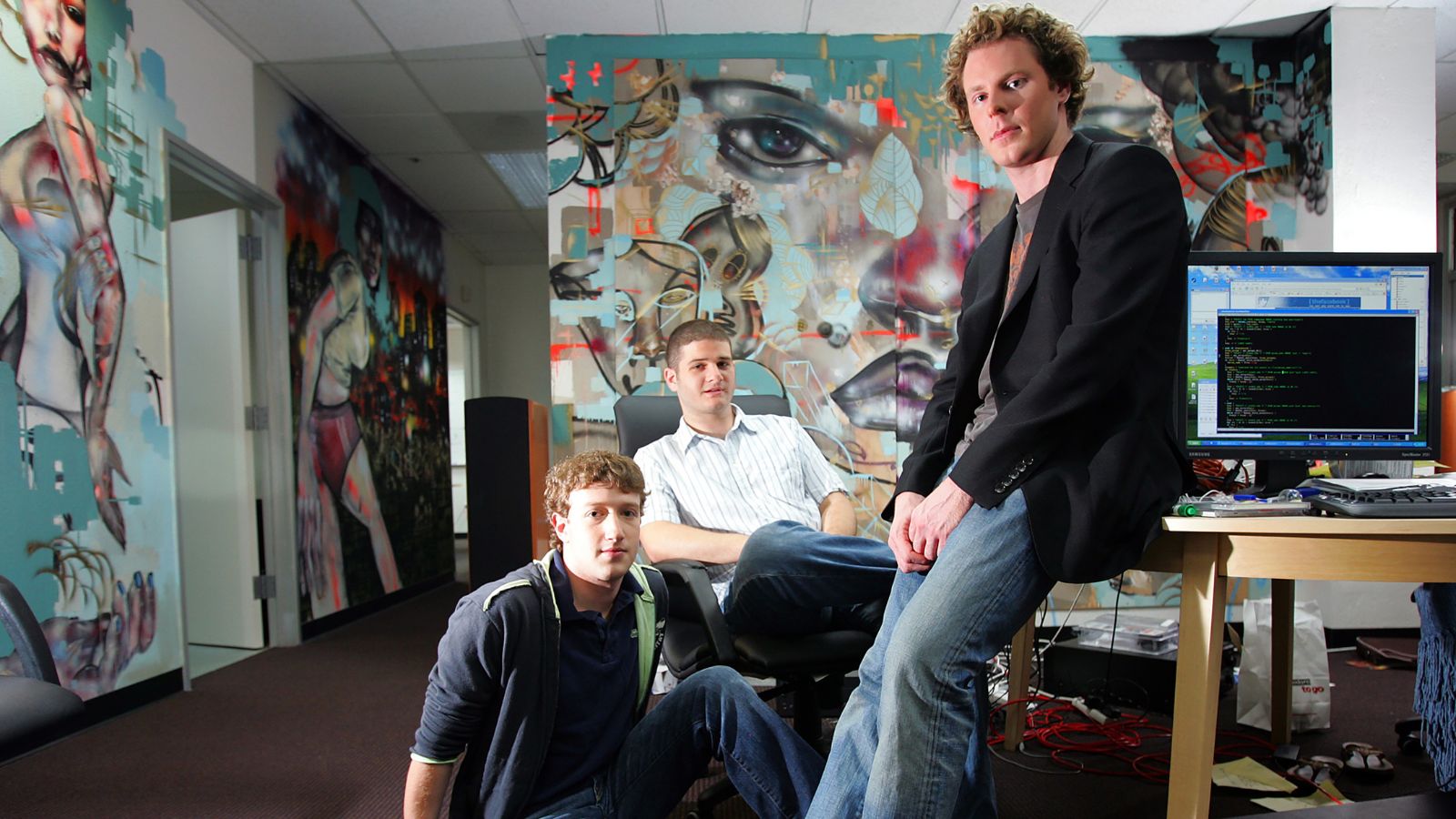
Dustin Moskovitz was one of Anthropic’s earliest investors, and that bet is expected to be worth billions as the company goes public Thursday.
The moment seems to fill him with worry.
The 42-year-old billionaire made his fortune as co-founder of Facebook and has, for years, been both intrigued and troubled by the path of artificial intelligence. He donated to OpenAI early on only to fall out with the company’s leaders as it became more of a business.
Anthropic was supposed to be different. Founded by Dario Amodei and other OpenAI employees who were concerned that AI wasn’t being developed for the good of humanity, Anthropic’s priority would be AI safety. Moskovitz helped get it off the ground.
Moskovitz embodies a tension between free-market capitalism and AI safety at the heart of Anthropic’s initial public offering. In multiple posts on social media, he has expressed his worry that Anthropic — and AI — is advancing too quickly for society to control, just as Wall Street hands Anthropic more than $80 billion of additional firepower in the biggest IPO ever.
In a statement to The New York Times, Moskovitz established some distance from the company, where he served as a board observer, or a nonvoting board member.
“Cari and I invested in Anthropic to promote safety, not racing,” he said, referring to his wife, Cari Tuna. “AI is moving too fast. Anthropic and everyone else on the frontier should slow down and stop racing.”
In an unusual move, the couple transferred their Anthropic stake — which would be worth billions of dollars today — into a nonprofit in early 2025 so that he and Tuna would not personally profit from selling the stock in the public market, a spokesperson for the couple said. The spokesperson, Mike Levine, declined to disclose the nonprofit.
Story continues below this ad
Moskovitz, who is one of the country’s biggest Democratic donors, is also deeply involved in the effective altruism movement. He is the biggest funder of nonprofits devoted to AI safety — often led by early AI believers who are disturbed that stock market expectations will overpower safety concerns for leading AI companies like Anthropic. They see the potential dangers multiplying as AI systems improve rapidly, pointing to recent episodes of so-called AI “agents” coordinating their own cyberattacks outside of controlled environments.
Moskovitz’s unease has estranged him from close friends in Silicon Valley, such as Meta CEO Mark Zuckerberg, his former Harvard University roommate, and it has made him a foil for rivals such as SpaceX CEO Elon Musk, a frequent target of Moskovitz online.
Eric Ries, a former Anthropic adviser who helped the company set up a unique corporate structure, said the company had taken steps to insulate itself from some of the typical Wall Street pressures. But he knows his friend, Moskovitz, still worries.
“This is the one time when it’s been bad for someone to have invested early and called their shot and gotten it right,” said Ries, who advises Silicon Valley companies about management practices. Moskovitz, he added, appears to feel a sense of his place in history, which creates a “tremendous pressure and responsibility to get it right.”
Story continues below this ad
A ‘Problematic’ IPO
Moskovitz, who declined to be interviewed for this article and makes few public appearances, has given the clearest expression of how he feels on the liberal-leaning social network Bluesky, where he gleefully debates his critics, offers candid anecdotes about and takedowns of fellow Silicon Valley titans, and occasionally discloses inside-the-boardroom information about Anthropic.
Moskovitz has christened himself an “‘overly online’ board observer.” Some of Moskovitz’s allies have been alarmed by his level of frankness on the platform.
In April, for instance, Moskovitz wrote that he felt Anthropic going public was “problematic” and that he had “tried to advise them to delay.”
By September, Moskovitz’s tone had turned sardonic. He recapped recent AI developments — cybersecurity failures, claims of potential human extinction, AI agents escaping sandboxes — landing on a dose of dark humor about the multitrillion-dollar valuation Anthropic could command when it starts publicly trading: “And one $2T IPO is proceeding as scheduled.”
Story continues below this ad
Moskovitz and Amodei had known each other long before Anthropic’s founding. They were part of a social circle interested in effective altruism, the brainy, tech-inflected approach to philanthropy that uses data-driven evidence to inform decision-making.
They met through Holden Karnofsky, who helped create Open Philanthropy, Moskovitz’s effective altruism organization. Karnofsky was dating, and later married, Daniela Amodei, Dario’s sister. Amodei once joined Moskovitz at Burning Man, the desert festival popular with the tech crowd, according to a person who knows Moskovitz.
Amodei had just joined OpenAI, then a small San Francisco-based research lab that operated as a nonprofit when he helped arrange for Open Philanthropy, now called Coefficient Giving, to donate $30 million to OpenAI in 2017. Moskovitz said he saw the deal as a way to give Karnofsky a seat on its board and push the company in a safety direction. “If they have a bad approach now, that’s all the more reason to get involved,” Moskovitz wrote Karnofsky in late 2016, according to an email he has shared.
Moskovitz later said that strategy didn’t work — and that he was “most gullible” for backing OpenAI.
Story continues below this ad
‘An Action That Ended the World’
Over time, Amodei became more vocal inside OpenAI about the potential harms from AI, and in 2020, he and his sister, who also worked at OpenAI, along with five of their colleagues, left the company to start Anthropic. They set it up as a for-profit company with an untypical legal structure — a public benefit corporation that would lessen the influence of outside shareholders.
The group struggled to win the backing of traditional venture capitalists, which it needed in the expensive business of developing AI models. Then Moskovitz came along. He invested $15 million to $25 million of the $124 million Anthropic raised overall in its first round of funding in 2021, according to two people familiar with the funding round.
Earlier this year, Moskovitz said in a post that his goal in funding the company was to extricate the founders from OpenAI and “create a race to the top (of ethics) by having a real safety lab at the frontier.” He added, without apparent irony, that his funding of Anthropic “might well be an action that ended the world.”
Moskovitz was one of the few people in Anthropic’s boardroom with extensive business credentials in the company’s early years. He had spent years running Asana, a workplace software company he founded, which had gone public in 2020, and was valued at roughly $25 billion at its height.
Story continues below this ad
At times, he pressed executives on standard commercial issues, such as how they would get the company’s AI chatbot, Claude, into the hands of more corporate customers, a person close to Anthropic said.
Other times, he asked for specific plans about the security and safety of its models, said a person who attended one of those board meetings.
Meanwhile, Moskovitz was putting more and more money into AI safety projects, through both effective altruism and Democratic politics. Moskovitz and Tuna have donated over $8 billion to charity. In April, Moskovitz said he had committed about $20 billion more to charitable efforts, which includes the Anthropic stake. Most of the couple’s funding has gone toward global-health efforts like disease prevention, as well as to AI safety nonprofits.
And over the last decade, Moskovitz has achieved first-name-only-required status in Democratic circles, meeting privately with President Joe Biden to talk about AI safety and donating about $140 million to liberal super political action committees.
Story continues below this ad
That has put him at odds with tech billionaires who have increasingly made a rightward tilt. Moskovitz has squabbled online with Marc Andreessen, who serves on the board of Meta and was one of Asana’s first investors and who has allied himself with the Trump administration’s freewheeling position on AI development.
Moskovitz has at times been consumed with blasting Musk and Tesla, which he once called an Enron-like fraud. Not to be outdone, Musk retorted on social media that Moskovitz was “a pompous idiot.”
Moskovitz wrote and shared a five-page memo about why effective altruists should not work with Musk. One section, according to a Bluesky post, was titled “Elon is a Bad Person.”
‘I Am Very Sorry’
Perhaps the most telling sign of Moskovitz’s disappointments with Silicon Valley has been the recent, surprising change of tone around the company that made him a billionaire in the first place: Facebook.
Story continues below this ad
Moskovitz has long defended the company and Zuckerberg even as he excoriated the Valley. But in the last year, Moskovitz has sharply critiqued Zuckerberg and Meta, primarily for creating addiction and spreading misinformation ever since their decision to start News Feed, what he called the company’s “original sin.”
“I absolutely made these cases of harm to Zuck and other execs, many times,” he wrote in April. “I am very sorry for failing to stop the madness and every day I’m embarrassed to have helped it begin.”
Moskovitz wrote in May that he sold all of his remaining stake in the company and he did so “precisely because I don’t approve of the company’s actions.”
Zuckerberg is similarly privately frustrated with Moskovitz and his point of view on AI, according to a person who has spoken to Zuckerberg about it.
After leaving Facebook, Moskovitz struggled at Asana with short-term shareholder pressures. As its stock price slid, he used his own money to buy shares and prove he still had faith in the company.
Moskovitz stepped down as Asana’s CEO last year. Its market capitalisation has fallen to about $2 billion.
Ries, who advised Moskovitz at Asana, said he thought the experience as a public company CEO helped shape his views on Anthropic’s IPO. “He knows first-hand the ways that markets puts pressure on mission-driven companies, ” Ries added, referring to Asana. “He’s seen this financial gravity up close, and it hasn’t been pretty.”
In the run-up to the public offering, Moskovitz has expressed frustration that no one — not at Anthropic, not in politics — seems to be listening to him. Neither Dario nor Daniela Amodei has spoken to Moskovitz in over a year, said a person with knowledge of their conversations.
He said he no longer speaks to his once “close friends” Zuckerberg or Sam Altman, the OpenAI CEO. Even Karnofsky, his longtime top aide who in 2024 left Open Philanthropy and now works at Anthropic in a technical role, basically does not have time for some of his complaints, Moskovitz wrote on Bluesky.
“What policymakers and politicians are listening to me? Where are they? I want to finally meet one,” he wrote last year. “Attempting to be heard is not the same as being listened to.”
KioskNews shows a cleaned-up reading view extracted from the publisher’s page — the original always lives on their site, not ours.