Foreign Investors Return To India. What's Driving Rs 1 Lakh Crore Inflows?

Stock Market Today: Foreign investors, who spent much of the past two years pulling money out of Indian equities, appear to be changing their stance. But this time, the reason may have less to do with India's growth story and more to do with growing concerns around the global artificial intelligence (AI) trade.
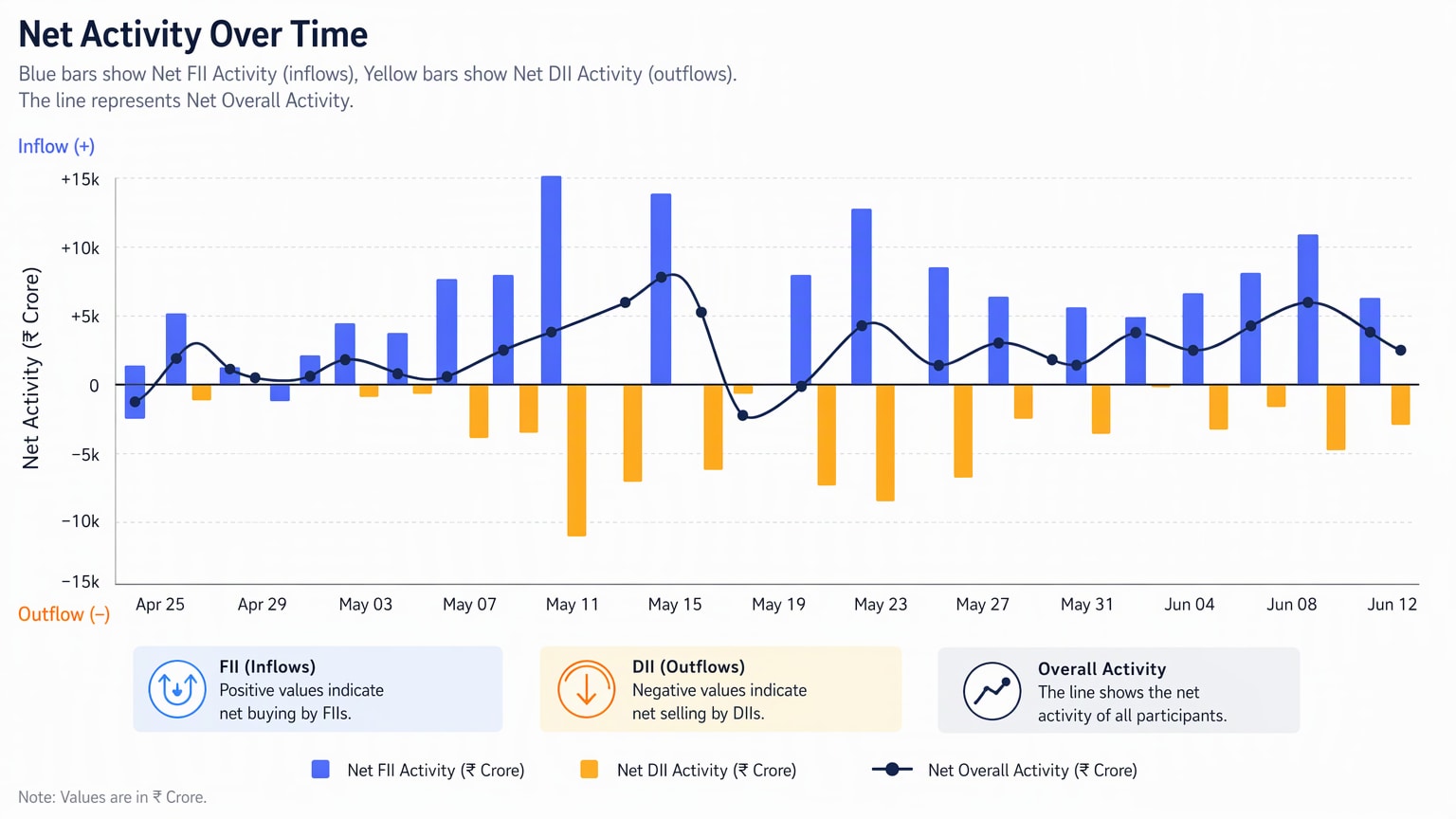
Foreign Portfolio Investors (FPIs) invested roughly Rs 1 lakh crore in Indian markets as of November 19, 2026. This marks a sharp reversal after months of heavy selling. Between January and October 2026 alone, foreign investors withdrew Rs 3.6 lakh crore, or around $38 billion, from Indian equities.
According to Mitesh Dalal, Head of Broking at Sanctum Wealth, the latest inflows reflect a broader shift in global investment preferences. Investors are increasingly moving away from technology-heavy markets and looking at economies that could benefit from a possible unwinding of the AI trade.
Also Read | Layoffs Are Rising In Tech, But These Skills Are Helping People Unlock Better Pay
Why Are Foreign Investors Returning To India?
Since September 2024, global investors have increasingly favoured technology and AI-driven markets such as the US, Taiwan and South Korea.
India, with its consumption-led economy, was among the markets that faced the pressure of this shift in capital. However, the global investment narrative appears to be changing.
The 2026 US midterm elections, in which Donald Trump's Republicans lost control of both houses of Congress, have added to concerns about the future of the AI trade.
The Democratic victory has raised expectations of greater scrutiny of domestic AI infrastructure, data centres and semiconductor companies. This has fuelled concerns about tighter oversight of businesses that have benefited from the global AI boom.
The resulting selloff in AI-linked stocks has encouraged investors to look beyond traditional technology-heavy markets.
Dalal told NDTV that India has emerged as an attractive destination in this changing investment environment, particularly as investors reassess their exposure to the AI trade.
Cooling Crude Oil Prices Add To India's Appeal
Another factor supporting foreign investor sentiment is the moderation in crude oil prices. Brent crude, which had climbed above $100 per barrel, has cooled to around $93 per barrel as concerns over supply disruptions have eased.
This is particularly important for India, which imports a large share of its crude oil requirements. Lower oil prices can ease pressure on the country's import bill, inflation and current account deficit. They can also provide some relief to the rupee and corporate margins.
For foreign investors, this improves India's relative attractiveness at a time when global markets are reassessing their exposure to expensive AI-linked stocks.
Have Indian Stock Market Valuations Become Attractive?
Valuations have also played an important role in bringing foreign investors back. The sharp correction in Indian equities has brought the valuations of the Nifty 50 and other benchmark indices closer to levels seen around the Covid-era market troughs.
This has made Indian equities more attractive from a relative valuation perspective. According to Dalal, India has emerged as one of the strongest beneficiaries of the anti-AI trade. This is particularly relevant as other emerging markets, including Brazil and Indonesia, continue to face macroeconomic challenges.
For foreign investors looking to diversify away from technology-heavy markets, India's consumption-driven economy and relatively attractive valuations offer an alternative.
Is This The Beginning Of A Structural FPI Comeback?
Despite the recent inflows, investors may want to avoid interpreting the reversal as the beginning of a sustained foreign investment cycle. Several risks could still change the direction of global capital flows.
Geopolitical tensions in the Middle East remain a concern. Any escalation could push crude oil prices higher and hurt sentiment towards oil-importing economies such as India.
There is also the possibility of the global AI trade gaining momentum again. If investors return to technology stocks, money could once again move away from markets such as India.
Domestic challenges could add to the uncertainty. An El Nino-driven rise in food inflation could affect household budgets and consumption demand. Persistent weakness in rural demand could also weigh on corporate earnings.
Dalal cautions that the recent FPI inflows should not automatically be seen as evidence of a lasting shift in foreign investor sentiment.
What Should Stock Market Investors Do Now?
Global money flows can change quickly. A market that faces sustained selling pressure today could become attractive tomorrow because of changing international investment preferences.
However, investors should avoid making investment decisions solely on the basis of FPI buying or selling. Dalal recommends focusing on companies with strong fundamentals and reasonable valuations, particularly large-cap stocks.
Companies with sound balance sheets, sustainable earnings and reasonable valuations could offer better resilience if global market conditions turn volatile again.
{Disclaimer: Views expressed are those of the author in his capacity as Head of Broking & Research at Sanctum Wealth Private Limited, a SEBI-registered Research Analyst (Reg. No. INH000003051). The author and Sanctum Wealth may have financial interests in the securities discussed. Read the disclosures on www.sanctumwealth.com. Investments in securities markets are subject to market risks.}
KioskNews shows a cleaned-up reading view extracted from the publisher’s page — the original always lives on their site, not ours.