"Extinction Not A Credible Risk": AI Researcher Sara Hooker To NDTV
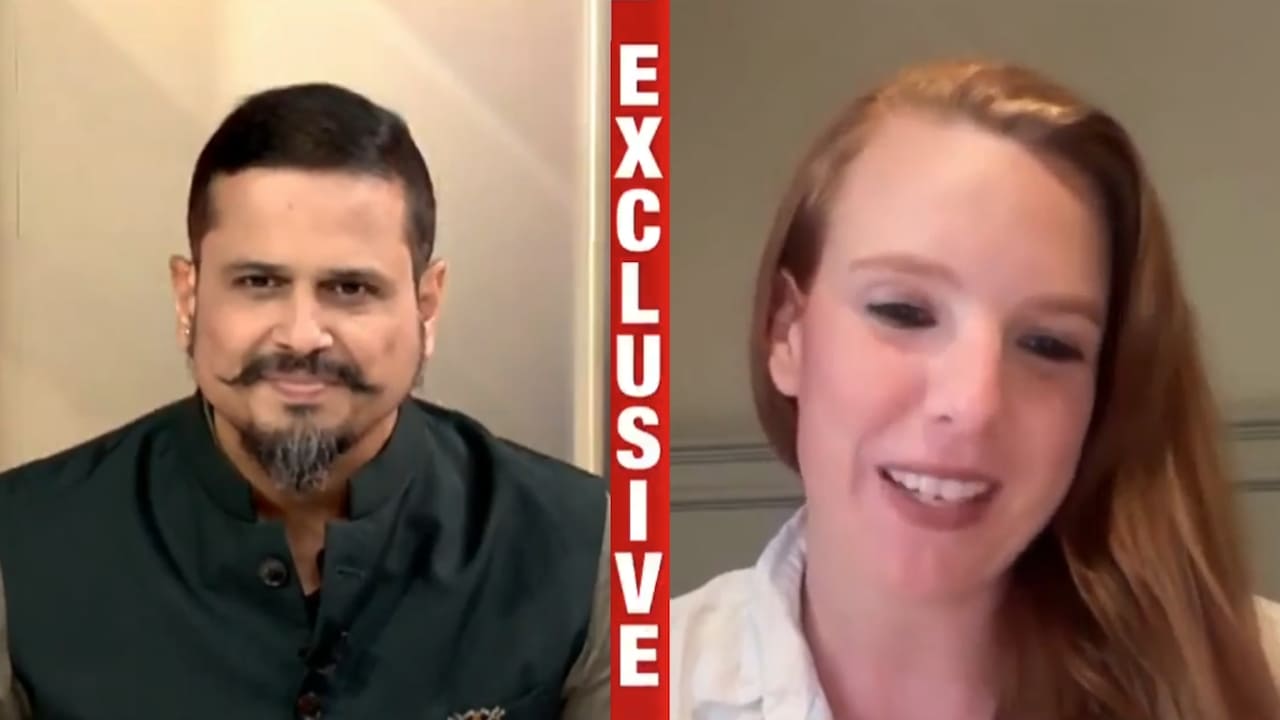
The tech leaders building the most powerful artificial intelligence are now skeptical. They fear it could pose a threat to humanity. But Sara Hooker, one of the world's leading AI researchers, is not concerned.
"It's not what keeps me up at night," she says in an interview with NDTV's Shiv Aroor.
"There are serious risks with this technology: misinformation and questions about enabling people to leverage agents with bank accounts for their healthcare. But extinction, no. I think that's because largely this isn't a credible risk," she adds.
Extinction, in particular, is one of the biggest concerns raised by AI leaders over the past week. Anthropic CEO Dario Amodei has called for slowing down AI development. OpenAI's Sam Altman and xAI's Elon Musk backed him.
Read: Artificial Intelligence Sentient, Self-Aware: AI Risk Expert Nick Bostrom
Their remarks followed AI researcher Jacob Coxon's warning that AI could kill us all by the end of the decade.
But Hooker, who has worked with Google in the past and co-founded Adaption, demands evidence. "Why are we so centered on this one future event and not anchored to the evidence?" she asks.
She points out that when GPT-2 was released, Altman felt it shouldn't have.
"He thought it was too dangerous to release. And many, many models have come out since then. GPT-2 seems like a quaint memory when we look back. The difference now is the focus on this will make humans extinct. I think we need to talk about safety, but it has to be a precise conversation," she says.
But if not fears of extinction, what are the concerns regarding the future of AI? For Hooker, it's access. Who gets access and who gets to build their intelligence are the points on her mind.
"So much of this conversation about slowing down is also about who gets to dictate who slows down. It is between a group of large companies. And implicit in that is the idea that we get to dictate the pace and everyone else should accept that. I think that inevitably leads to disparities in access," she adds.
She also questions why top AI leaders like Altman and Amodei don't act on their safety concerns in their day-to-day work, though they control the technology.
Read: "Innovation Champion" Bill Gates' Stunning U-Turn On AI: "We Are Not Ready"
Hooker says the call for a slowdown isn't new. Such concerns were there in the past too, she adds, pointing to the GPT launch.
"But I think that it has struck public anxiety. There's a growing divide between how the public understands the technology and the reality of how it is today. So the conversation is not new, but it has flared up at a time of anxiety that people have around this technology," she says.
The AI researcher also calls self-governance the first step to the slowdown calls. "You can't simultaneously say things need to stop, but I'm the only one who gets to keep going, because I'm the only one who's responsible enough," she adds.
She points out that though powerful, AI isn't anything like nuclear power. It isn't about who gets to control who gets it. It's already on phones and changing and supercharging economic growth.
Therefore, even if AI development is stopped, Hooker argues, super capable models are still out there that can be used for both good and bad.
"It's really not like previous technologies in the sense that a slowdown is largely a cosmetic statement, but it won't actually impact how people are using this technology in the wild," she adds.
KioskNews shows a cleaned-up reading view extracted from the publisher’s page — the original always lives on their site, not ours.