‘Spraying should be the last option’: how farmers are exploring alternatives to pesticides
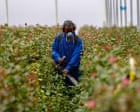
For two decades, Phyllis Nduva, 72, has grown mangoes and citrus in Wote, a town in Kenya’s eastern Makueni County. In the beginning, she only had to worry about ordinary fruit flies. She handled them simply, buying chemical pesticides and spraying her trees whenever they appeared.
But then, in 2014, the false codling moth turned up on her farm. The small brown creature had been causing havoc in South Africa for years, and in 2007 it was spotted in Kenya.
Research into how to deal with the moth was continuing, but no one Nduva knew had information about how to stop it from spreading across her 8-hectare (20-acre) orchard.
“We tried looking for answers, but we couldn’t get [any],” she said. “So we continued using readily available pesticides, but they were not effective.”
Driven by desperation, she sprayed her trees frequently but in 2016 lost more than 60% of her harvest to the pest. That was when she began to investigate the alternatives and became interested in integrated pest management (IPM), where farmers reduce their pesticide use and instead combine approaches including traps, natural predators, field sanitation and selective pesticide use.
IPM was developed in response to steadily increasing pesticide use and became internationally recognised in the 1960s and 1970s after concerns grew about pesticide resistance, environmental pollution, health risks to farmers and consumers and destruction of beneficial insects such as bees and natural predators.
A review by the British government in 2020 found that IPM could be effective at reducing pesticide use while controlling pests and diseases. It was complex, but it reduced costs for farmers and was beneficial for biodiversity.
Willing to try anything, Nduva started small by placing fruit fly traps around her farm. It helped, but her orchard was already heavily infested. To fight back properly, she deployed a full arsenal of IPM techniques, including nocturnal solar traps and augmentorium bags, used to break pest breeding cycles by collecting the infected fruits and sealing them away so the pests die off, reducing future infestation.
“The shift from chemical pesticides to IPM was not just an agricultural decision; it was a moral one,” Nduva said. “I realised that what I was doing was harming the environment, exposing my family and consumers to chemicals and contributing to climate change.
“Before, we would just leave the damaged fruits on the farm. This caused the pests to continue multiplying. Now we are controlling pests in a way that protects both the crop and the environment.”
Pesticide use in Kenya has risen steadily over the past few decades: pesticide imports surged from 6,400 tonnes in 2015 to more than 15,600 tonnes in 2019, with farmers now spending an estimated $70m (£52m) annually.
A 2026 study in the Journal of Environmental Management found that climate breakdown was increasing pest pressure on crops, driving up pesticide use among smallholders.
Roughly 63% of these are classified as highly hazardous and 44% contain active ingredients banned in the EU. The ecological toll is severe: a 2025 study detected 56 different pesticides in water systems around Kenya’s Lake Naivasha, while a Nature Sustainability study in 2024 linked rising pyrethroid and neonicotinoid use to widespread declines in the wild bee population.
The UN’s Food and Agriculture Organization said it reflected a global trend. In an analytical brief on pesticide use and trade, it said: “Total pesticides use in agriculture in 2024 was 3.92m tonnes of active ingredients, a 5% increase from 2023, an 18% increase in a decade and more than a doubling since 1990.”
But Nduva and other IPM adopters have experienced ecological and economic recovery. Nduva’s harvest losses have dropped to under 20% and pollinators have returned to her farm, boosting fruit quality. Without the mandatory chemical withdrawal periods, she can harvest and sell her fruit the moment a buyer is ready.
after newsletter promotion
Her organic approach commands a premium. A kilogram of her fruit fetches 400 shillings (£2.30) in the market, while pesticide-treated fruits sell for 50 shillings. Today most of her harvest is bought by off-takers for export.
“This gives us more flexibility, improves marketability and ensures that our fruits are safe and healthy for consumers,” she said.
Other horticulture farmers in east African countries, particularly in Kenya, Uganda and Tanzania, have been turning to IPM as export markets tighten their rules on pesticide residues. The method is supported by the government in China and is being adopted by farmers in Brazil and India.
In Kenya, Nduva trains other farmers: 600 in Makueni County alone have adopted IPM, although according to Josephine Makumbi, the Wote/Nziu ward agricultural officer, its use across the area remains uneven. About three in every 10 farmers in her ward have adopted IPM practices.
Cost remains a barrier. An augmentorium bag, for instance, costs about 6,000 shillings, while fruit fly traps are approximately 350 shillings, and IPM requires at least four an acre. For many smallholders such upfront investments are difficult to afford, but the county is now giving out some of the tools for free.
Kelvin Musyoki, 29, a plant doctor trained by the Centre for Agriculture and Bioscience International, the shift towards low-chemical farming is not only helping to fight pests naturally but is also addressing a growing concern: food safety.
“It’s not every time you see a pest that you spray,” Musyoki said. “There are biological ways, there are cultural practices. Spraying should be the last option.”
KioskNews shows a cleaned-up reading view extracted from the publisher’s page — the original always lives on their site, not ours.