California prepares for flooding as king tides and storms threaten Thanksgiving week
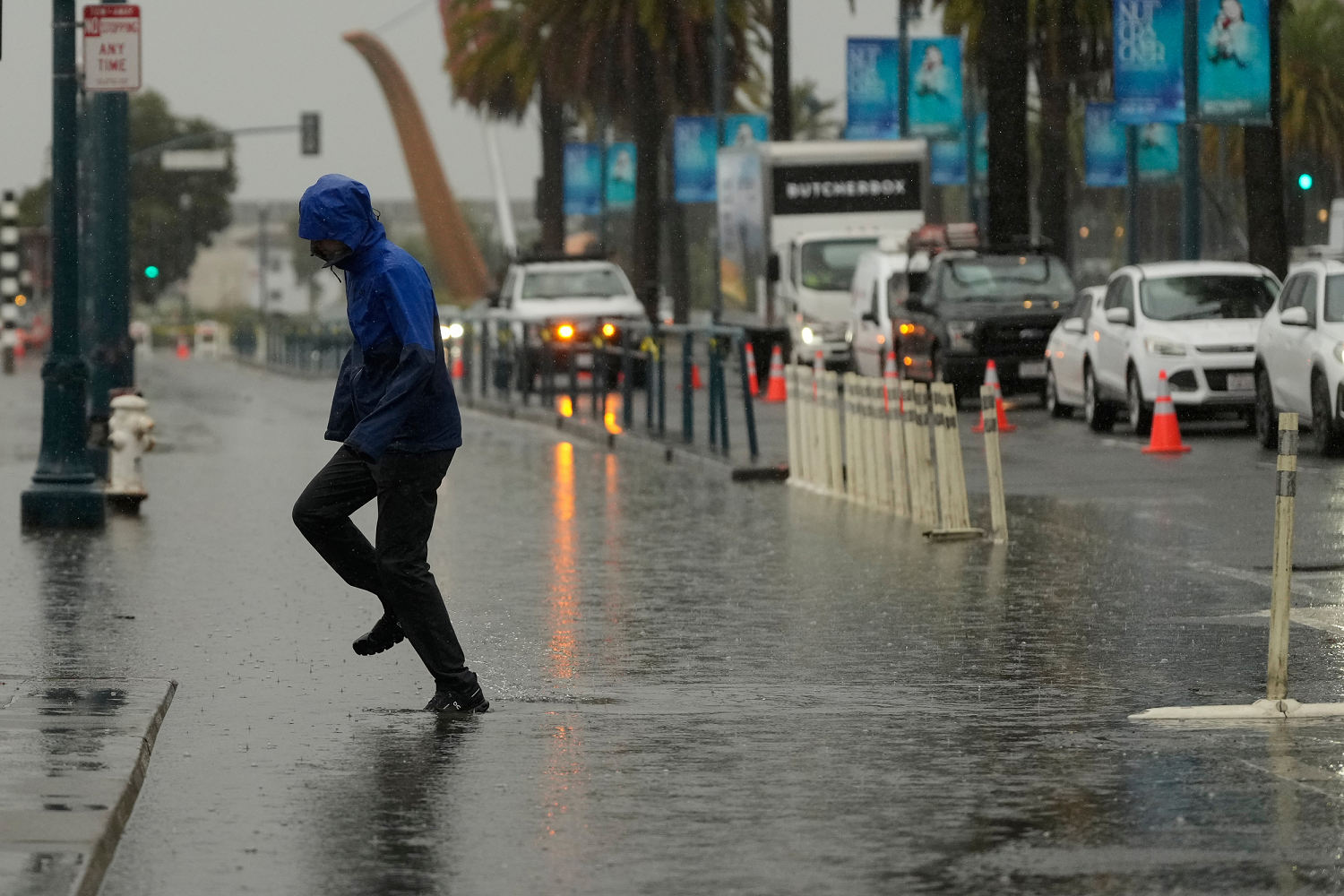
California officials this weekend are preparing for storms that could coincide with the year’s highest tides, Thanksgiving and some of its busiest holiday travel days.
“A series of winter storms is impacting California, bringing heavy rain, mountain snow, and potentially hazardous travel conditions,” the California Governor’s Office of Emergency Services said Friday.
A Pacific storm is expected to strike the Northern California coast Tuesday and Wednesday, bringing with it an atmospheric river of rain drawn from nearly tropical climes in the ocean, forecasters said.
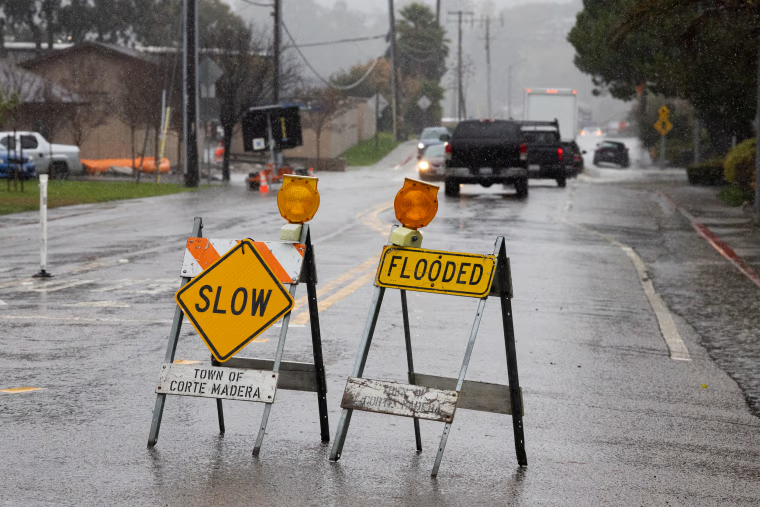
National Weather Service forecasters in the San Francisco Bay Area said the storm would bring “widespread” and persistent rainfall — up to 3 inches in northern portions of the region. A coastal flood warning covering the Bay Area coastline from 6 a.m. Monday to 4 p.m. Thursday said nearly 3 feet of inundation was possible in low-lying areas.
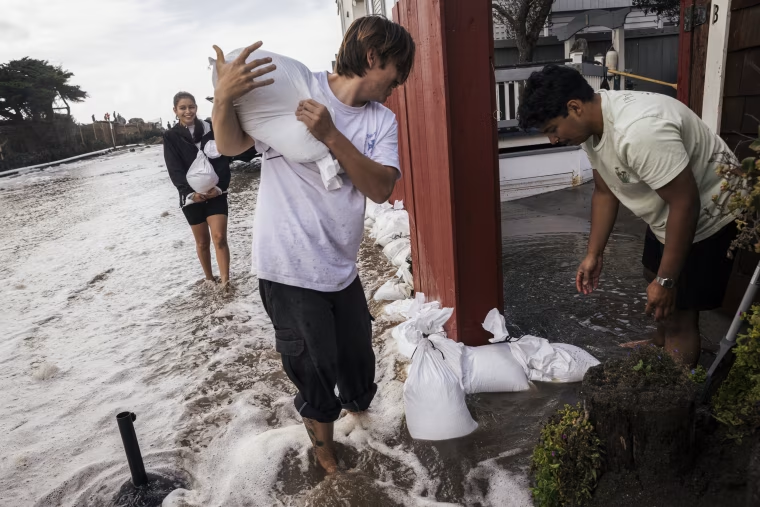
Wind gusts of 45 miles per hour are possible in parts of the Bay Area, federal forecasters said.
A second storm with atmospheric river precipitation was expected to swing behind the first, the Center for Western Weather and Water Extremes said. There is “considerable disagreement” on timing, location and strength, however, it said in its storm outlook report Friday.
Weather service forecasters in the Bay Area said the second storm of the week could arrive late this coming Friday and may affect the weekend.
Storm prep underway
The Governor’s Office of Emergency Services said the “potential for heavy rainfall and flooding across California” prompted it to move resources, including swift-water rescue teams, to locations around the state where they might be needed.
San Francisco Mayor Daniel Lurie said the city’s emergency operations center was being activated over the weekend to prepare for potential rain- and tide-driven flooding.
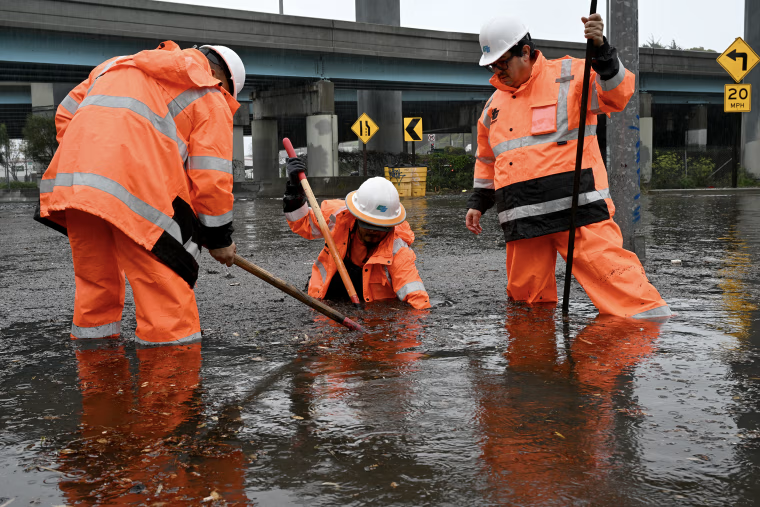
“We are anticipating high tides and rain that this city has never seen before,” he said on X. “This is extremely serious, and we are acting accordingly at the city level.”
He urged people along the water to prepare by stocking up and considering a holiday at home.
“I know there’s a lot of travel for many of you as you head into the Thanksgiving holiday, but I’m going to ask you all to consider not traveling unless it is absolutely essential, starting Monday afternoon and into Wednesday,” Lurie said.
Perilous king tides
The city’s Department of Emergency Management said in a statement that the first of the week’s storms combined with king tides “could result in significant street flooding.”
King tides, a term for the highest tides of the year, will come Tuesday through Thursday, the California Coastal Commission said. It set up a series of public meetings to help coastal residents prepare for the worst, including possible flooding.
In a Saturday forecast discussion, the weather service’s Bay Area office noted the perils of the week’s first storm: “This system roughly coincides with the first cycle of the King Tides and rain runoff that reaches the Bays to find historically high tide levels may contribute to coastal flooding impacts.”
It said the system could also affect travel over the holiday week.
Transportation data firm Inrix said the busiest U.S. road travel days ahead of Thanksgiving will be Tuesday and Wednesday.
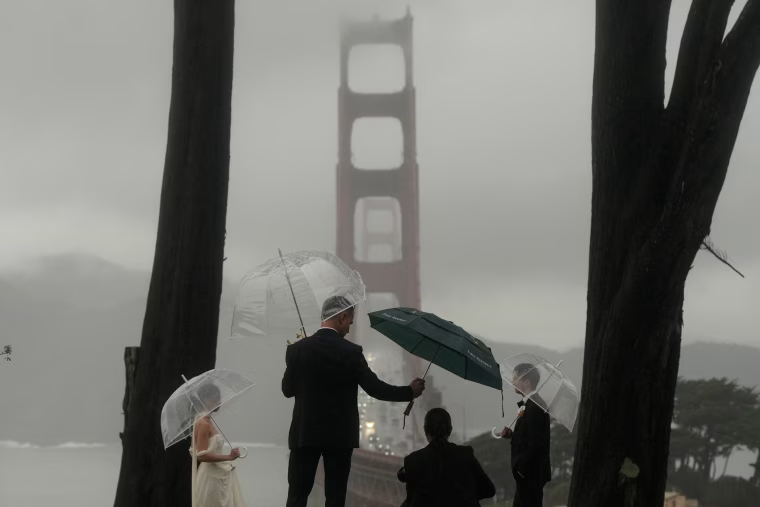
King tides in the Bay Area and beyond could reach 7.5 to 8 feet above the average low tide, the highest in 18 years, according to the U.S. Coast Guard. Water could rise 1 to 2 feet above normal high tides and even more if the high tides take place amid an incoming storm, it said in a statement.
“Coastal and low-lying areas around San Francisco Bay, San Pablo Bay, Marin County, San Mateo County, the San Francisco waterfront and ocean beaches are prone to temporary flooding and closures,” the Coast Guard said.
Its Sector San Francisco division urged people along the coast to stay away from jetties and rocks and be on the lookout for sneaker waves. Boat owners should make sure their vessels are secure, it said.
“Mariners and boaters should inspect mooring lines, dock cleats and waterfront gear ahead of peak tides, as extreme water levels and surges can strain lines or float unsecured items,” the Coast Guard said.
California Department of Transportation officials announced the Posey Tube, an East Bay tunnel under the Oakland Estuary that links Alameda Island and Oakland, will be shuttered Sunday through Friday as a precaution.
Central Coast could see impacts
Along California’s Central Coast, the first of the week’s storms is expected to bring light rain into San Luis Obispo and Santa Barbara counties but is unlikely to bring serious precipitation as far south as urban Los Angeles, federal forecasters there said.
A National Weather Service coastal flood advisory, which warns of high surf and tide-driven flooding, is also in place for Catalina and Santa Barbara islands, Santa Barbara County’s southwestern coast and Santa Barbara County’s southeastern coast from early Monday to Thursday afternoon.
King tides are also a concern in Southern California, and the Port of San Diego said it’s closing two public access trails along San Diego Bay for the week.
Snow in the Sierra Nevadas, storms in Portland
The winter pattern storms have origins in the Gulf of Alaska, where low-pressure systems spin in a counterclockwise direction as they sometimes draw precipitation from warmer parts of the Pacific. They often collide with the Pacific Northwest and California and then drive across the continental United States with the help of the eastward jet stream.
The Thanksgiving week storms are expected to bring fresh snow to the Sierra Nevada mountain range, the weather service office in Reno, Nevada, said, “bringing periods of difficult travel ... during a very busy holiday travel period.”
In Portland, Oregon, there’s a coastal flood watch Monday through Thursday. “A series of systems, coupled with multiple atmospheric rivers will keep widespread precipitation in the forecast through the end of the week,” the weather service said in a forecast discussion.
The National Oceanic and Atmospheric Administration last month said “a very strong El Niño” — winter weather influenced by warm waters in the equatorial Pacific — will bring wetter-than-average conditions to California.
Follow popular topics
KioskNews shows a cleaned-up reading view extracted from the publisher’s page — the original always lives on their site, not ours.