Bad to worse? Europe’s relief over US midterms tempered by prospect of Trump backlash
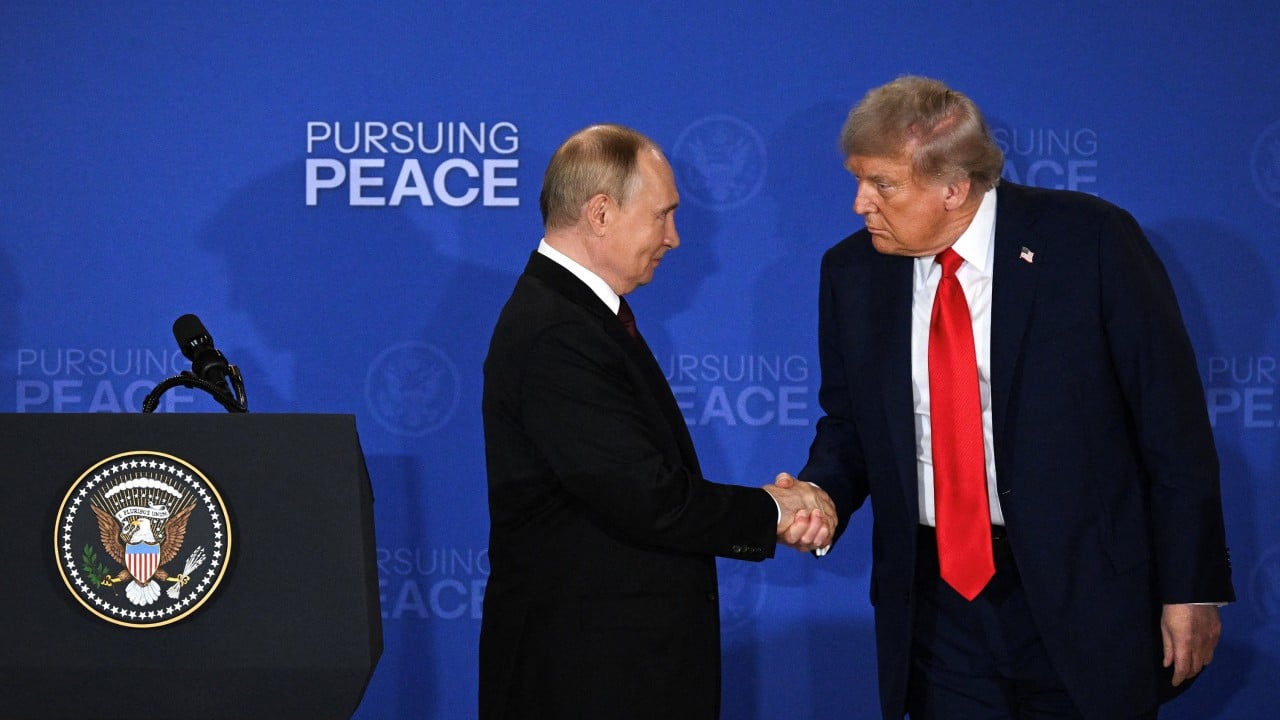
After almost two years in which the transatlantic alliance verged on collapse, a Democratic landslide in the US midterm elections was welcomed in Europe on Wednesday, even if few believed it would be a panacea for ailing ties.
The Democratic Party swept both chambers of the US Congress in a crushing rebuke of US President Donald Trump’s two-year record. For Europe, that period has led to a shattering of the post-war order and deep schisms in the Western coalition.
Trump has pulled US support for Ukraine and moved closer to Russia, threatened to seize the Danish territory of Greenland and made clear that Europe must pay for its own defence, leaving the future of Nato uncertain.
He has also hit Europeans in their pockets. Trade frictions have seen tariffs slapped on EU goods, while Trump has attempted to force Brussels to abandon green and digital laws affecting US companies.
Trump’s war against Iran, launched together with Israel this year, has led the European Union to import €127 billion (US$143 billion) in additional fossil fuels “without a single molecule of energy in addition”, European Commission President Ursula von der Leyen said on Tuesday. That sum is equivalent to roughly €281 per EU resident, or 67 per cent of the bloc’s entire annual budget.
Nonetheless, few were rejoicing over the results. The muted reaction reflected just how much damage the relationship has endured since the beginning of last year.
“We kind of lost hope in the US being the saviour … the fact that pretty much everyone doesn’t think it’s going to move the needle much says a lot about the EU-US relationship,” said an EU diplomat, speaking on condition of anonymity.
Many observers warned that a wounded Trump could make life even worse for Europe after his party’s humiliating losses.
“Lame-duck presidents in their final two years shift their focus to foreign policy. The Trump administration has a radical approach to the world. They want to disrupt the existing world order and they have two more years to do that. I expect a lot of collisions with Europe ahead,” said Max Bergmann, a Europe analyst at Washington’s Centre for Strategic and International Studies.
The diplomat agreed that Trump might become more aggressive towards Europe.
“He’s going to have a lot of free time, and because of this he’s going to lash out more … so I don’t think that’s good for us because obviously Europe is one of his main targets. Trade, foreign policy is where he still has a bit of clout,” the diplomat said.
Fabian Zuleeg, chief executive at the European Policy Centre, warned that Trump “could become more dangerous” for Europe.
“He will seek scapegoats, at home and abroad, although economic realities might limit further confrontation. Europe and Ukraine must prepare for the possibility of an accommodation with Russia, building on the diesel deal.”
Despite the Republicans’ electoral thrashing, Trump retains control of US foreign policy and holds veto power over proposals from legislators – a point he was keen to trumpet in media appearances as the scale of the defeat became clear.
“While the Democratic sweep of the House and the Senate is a good thing that will be celebrated across Europe, it should not be mistaken as a fundamental change in US foreign policy,” said Paul Verhagen, a senior fellow at The Hague Centre for Strategic Studies.
“The backlash against Trump that produced the blue tsunami is driven by domestic concerns. It is not a rejection of Trump’s foreign policy per se, it’s a rejection of the price at the pump,” said Verhagen, author of the recent book The Techtonic Shift: Power, Tech and the End of Nations.
Observers said the “blue wave” was therefore unlikely to result in a major shift in the US retrenchment from Ukraine, while Europe would remain on the hook for its own security needs.
“Pressure for Europe to carry more of its defence burden will continue, as will trade disputes,” wrote J.C. Lintzenich, a visiting fellow at the German Marshall Fund of the United States, a US think tank.
“Congressional support may make assistance to Ukraine more durable, although appropriations must still overcome production, approval and delivery hurdles before they become military capability.”
A worst-case scenario for Europe, according to observers, would be Trump doubling down on some of the foreign policies that have caused consternation in the bloc.
“I’m really worried about Russia,” the diplomatic source said. “I’m worried he’s going to start reopening business with Russia, not taking into account at all European interests.”
KioskNews shows a cleaned-up reading view extracted from the publisher’s page — the original always lives on their site, not ours.