Legal body’s new Hong Kong office targets developing Southeast Asian economies
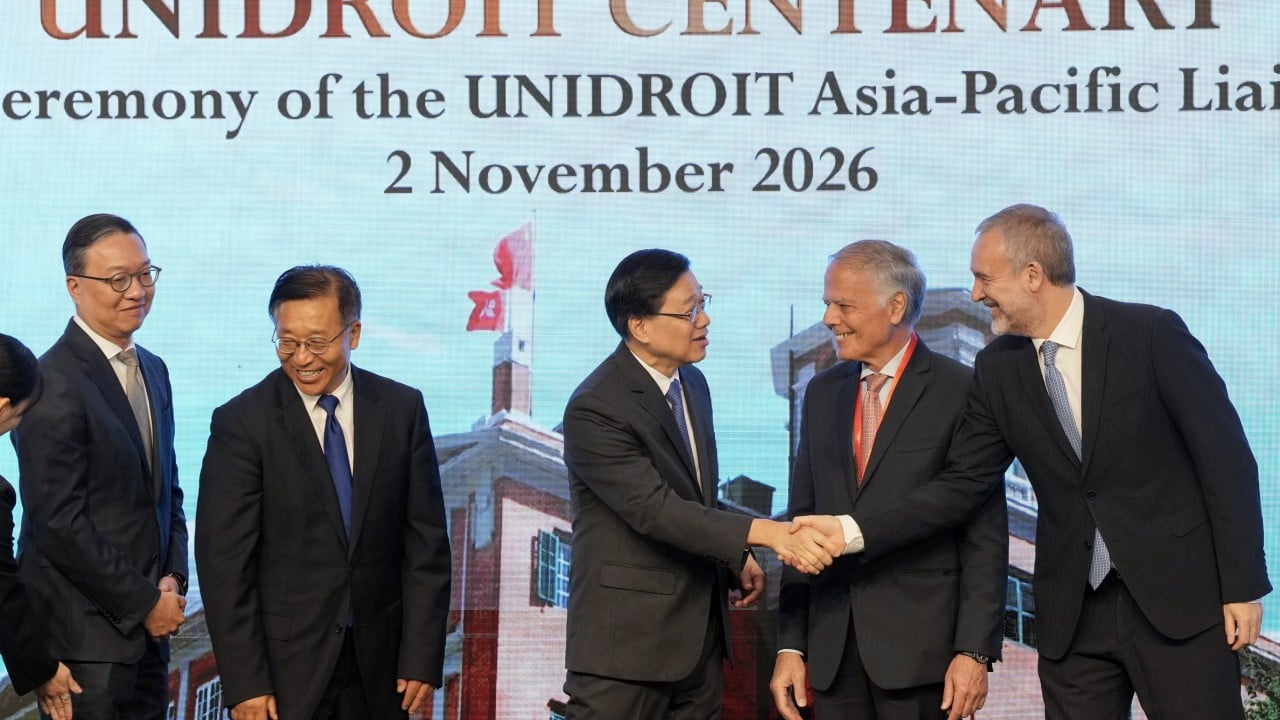
An international legal body’s new regional office in Hong Kong aims to help developing Southeast Asian economies and promote the wider use of uniform commercial law across the Asia-Pacific, its secretary general has said.
Ignacio Tirado, secretary general of the International Institute for the Unification of Private Law (Unidroit), said its new Asia-Pacific Liaison Office was receiving financial support from the Hong Kong government and seeking additional sponsors.
He was speaking after the opening ceremony for the office, the body’s first outside its Rome headquarters.
Founded in 1926, Unidroit works to modernise, harmonise and coordinate private and commercial law across states and groups of states by developing uniform legal instruments, principles and rules.
“We want to be closer to the member states in the region, so we would like to have increased membership,” Tirado said.
“We would really like to have more countries in these regions, especially those which have less developed markets, because those are the countries which we can help the most.”
“Hong Kong is very close to Vietnam, Laos, Cambodia, Myanmar and Malaysia, so all these are countries where we would very much like to operate, work and collaborate with their governments.”
For example, Tirado said Unidroit’s Mine, Agriculture and Construction Protocol made it easier and cheaper to acquire sophisticated machinery, potentially benefiting small entrepreneurs and the agricultural sector in Southeast Asian countries.
He added that Unidroit had been in discussions with Vietnam and Cambodia about joining the body but ruled out Asean joining as a bloc because membership required domestic legislative action by individual states.
Tirado also said the Hong Kong office was expected to increase the use of Unidroit’s legal instruments across the region.
The office will have a director, a deputy and an office manager, supported by staff seconded from member states.
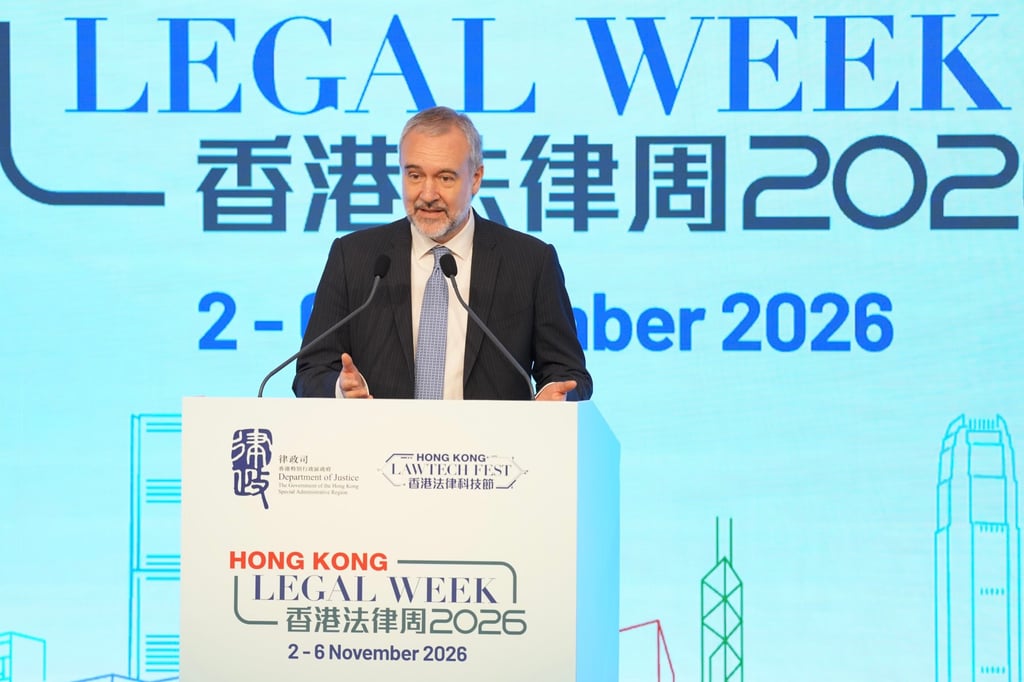
Describing Unidroit as a public organisation with limited resources, Tirado said it was not drawing on its general budget to fund the office.
He said the body had signed a six-year agreement with the Hong Kong government, which was also contributing financially. He declined to disclose the amount.
“We will re-evaluate after six years and see if we can move to a more fully fledged regional office, which is quite bigger. It will depend on member states,” he said.
“From our side, we very much like to stay. We really hope it will not just be six years.”
Asked about reported objections from the United States to locating the office in Hong Kong, Tirado declined to comment on individual members’ positions but stressed that the decision-making process had been transparent and a majority had supported the move.
“The process of opening the office is the same as international organisations usually have. You present a project, you substantiate it, and you explain why you are opening the office,” he said.
“Some countries were in favour, others were less so, but a majority was in favour.”
Tirado also said he would discuss with Hong Kong authorities during his visit the possibility of the city joining the Cape Town Convention, a Unidroit treaty that provides a legal framework for securing rights over high-value assets, including aircraft. The convention currently has 90 contracting states.
“It does not make sense that Hong Kong is not a member of the aircraft protocol. Mainland China is, Singapore is, and Vietnam is,” he said.
“It is purely putting in the hands or making available to the market the use of an alternative financing … If [Hong Kong] decides it does not fit them, I would like to know why. Because precisely the fact that it’s not invasive, it does not replace your system.”
Unidroit has 65 member states, including China, the United States and India. It is one of the “three sisters” of international private law, alongside the United Nations Commission on International Trade Law and the Hague Conference on Private International Law.
KioskNews shows a cleaned-up reading view extracted from the publisher’s page — the original always lives on their site, not ours.