Amid OBC creamy layer row, why 958 new UPSC civil servants are in limbo
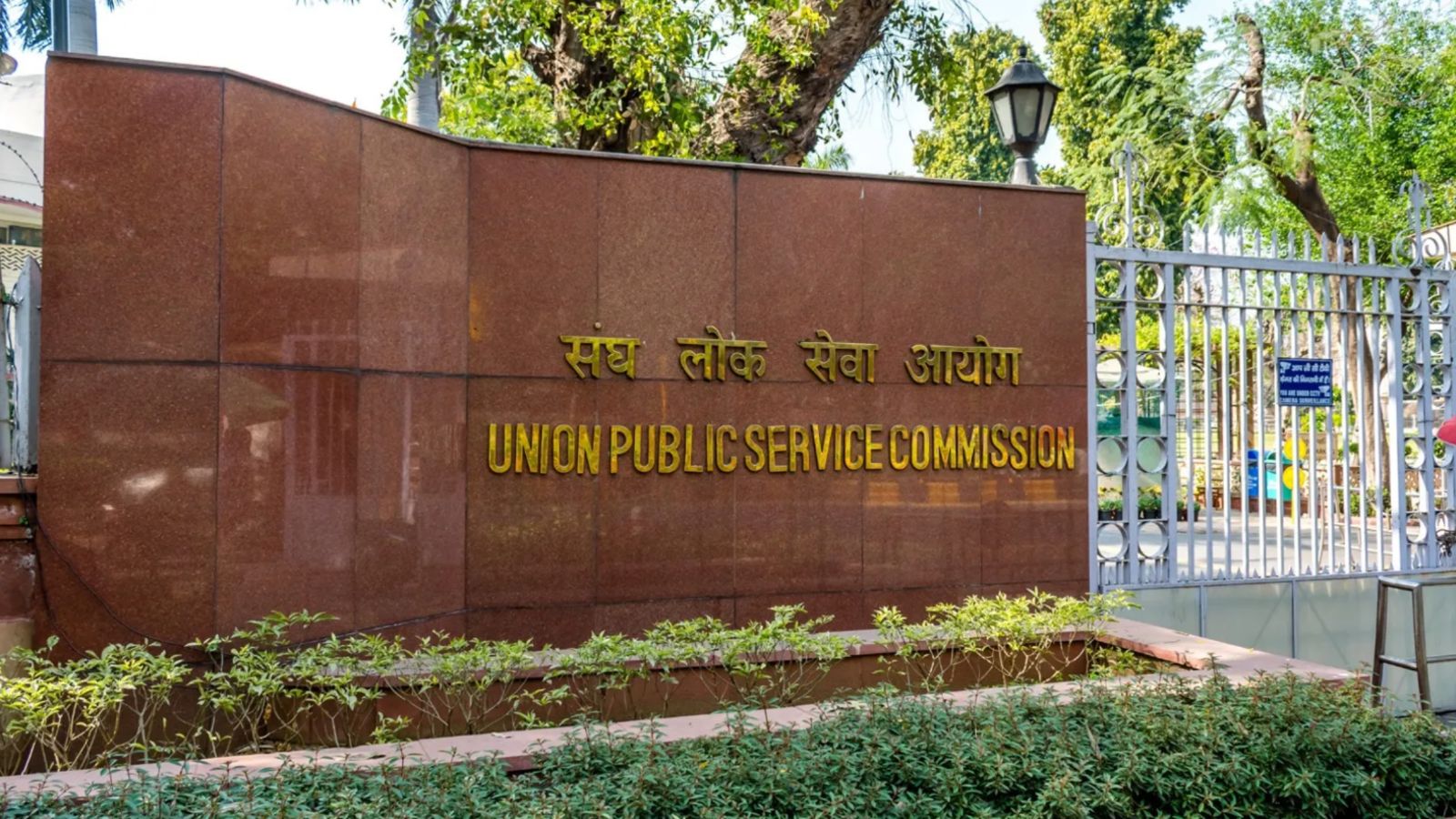
The Foundation Course for every batch of civil servants recruited through the Civil Services Examination (CSE), conducted by the Union Public Service Commission (UPSC) every year, usually begins at the Lal Bahadur Shastri National Academy of Administration (LBSNAA) in Mussoorie by late August or early September, and concludes in December.
Its commencement this year, for the 958 candidates who cleared CSE 2025, was listed in the LBSNAA’s calendar as the last week of August. However, the training course has still not begun.
This is the first time since Independence that the Foundation Course has been stalled, leaving an entire batch of future administrators in the cold.
After the Supreme Court’s March 11, 2026 judgment on the determination of “equivalence” with regard to the Other Backward Classes (OBC) creamy layer, the Centre moved the apex court on August 24 — barely three weeks before the six-month deadline for the implementation of the court’s order was to expire — seeking certain clarifications.
On September 24, the top court reserved its order on the Centre’s plea. Consequently, the service allocation and the Foundation Course for the new recruits have been suspended.
Cloud of uncertainty
One of the successful candidates, whose rank indicates a prospect of allocation to the Indian Administrative Service (IAS), said, “I continue to wait for a call regarding the Foundation Course. And since the service allocation has not yet been made, we hesitate to approach the authorities.”
Another candidate whose rank points to a possible allocation to the Indian Revenue Service (IRS), remarked, “I simply keep refreshing the LBSNAA website for updates. The training course was listed in its calendar for August, which has since been missing.”
For those among the 2025 batch recruits who took the CSE Mains again this year to seek improved ranks, the Foundation Course was to be held at the National Communications Academy-Finance in Delhi about a week after the LBSNAA course’s commencement. That programme has also been postponed indefinitely.
Seniority in the civil services is reckoned from the day the Foundation Course begins. The continued delay has thus jolted the new recruits, pushing back their joining schedule and affecting their long-term career progression.
A senior LBSNAA official told The Indian Express: “We are preparing for the Foundation Course, but its starting date is yet to be fixed. A decision is to be taken at the highest level and we are waiting for further orders from our authorities.”
Fate of 100 OBC candidates
The current impasse also involves the future of about 100 candidates who have cleared the CSE since 2016, only to have their OBC status rejected for belonging to the “creamy layer”.
The creamy layer concept, introduced to ensure that the benefits of reservation reach the genuinely backward sections within the OBCs, has long been plagued by questions of how status and income should be measured across different forms of employment. The income criterion for those not in government service was set at Rs 1 lakh per annum in 1993 that was revised in 2004, 2008 and 2013. In 2017, its ceiling was raised to Rs 8 lakh per annum, which has since remained unchanged.
The creamy layer criteria encompass persons occupying constitutional posts; Group A/Class I officers of the All India Services, central and state services; Group B/Class II officers of the Centre and states; employees of public-sector undertakings (PSUs); officers of the armed forces; professionals and those engaged in trade and industry; property owners; and income/wealth test.
While equivalence or comparability of posts in some central PSUs was settled in 2017, the question has remained pending for the private sector, universities, educational institutions and various state government organisations.
That long-pending issue was addressed by the Supreme Court Division Bench of Justices P S Narasimha and R Mahadevan in its March 11 verdict. It ruled that income cannot be the sole criterion for determining the creamy layer among the OBCs. The Bench stated that “the object of excluding the creamy layer is… not to create artificial distinctions between equally placed members of the same social class…. unequal treatment of similarly placed OBC candidates would not only be legally erroneous but constitutionally impermissible.”
The petitions filed before the apex court arose from a clarificatory note dated October 14, 2004, issued by the Department of Personnel and Training (DoPT) in relation to the government’s September 1993 Office Memorandum (OM). The court noted that while the 1993 OM excluded income from salary and agricultural income from the income/wealth test, the 2004 note stipulated that salary income of the public sector and private sector employees be included. Treating the children of persons employed in the PSUs or private employment as excluded from reservation benefits for belonging to creamy layer solely on the basis of their salary income, without reference to the posts held (whether Group A or B, or Group C or D), the Court ruled, would amount to “hostile discrimination” and to equals being treated unequally, attracting Articles 14, 15 and 16 of the Constitution.
Paragraph 9 of the DoPT’s 2004 clarification provided that where equivalence of posts with government posts had not been evaluated, creamy layer status would be determined by assessing parental income from salaries and other sources separately. This formula, frozen during the previous Congress-led UPA regime, began to be applied effectively from 2016 (CSE 2015 batch), two years after the BJP led by Narendra Modi stormed to power.
Govt’s stance
Moving the apex court, the Centre pointed out that its March 11 judgment was delivered five days after the CSE 2025’s final results were declared. It has sought clarifications from the court that the ruling should not be applied retrospectively so as to unsettle completed admissions, academic sessions, degrees already conferred or settled rights.
The government has also sought a two-year window to undertake the necessary equivalence exercise. It has contended that any delay in finalising category-wise merit and allocation lists would produce a cascading effect on training schedules, seniority and pay fixation of the incoming batch.
At current levels of recruitment, candidates drawn from the three All India Services and central civil services undergo the Foundation Course each year at LBSNAA and partner institutions.
As officer trainees are fresh entrants, the common Foundation Course is designed to instil a shared understanding of the Constitution, government functioning and public policy, and to build camaraderie across services for the smoother conduct of governmental affairs. Its deferment could thus disrupt not merely a training schedule but the early institutionalisation of a common administrative culture.
A senior government officer, who has served as a course coordinator at the LBSNAA, said: “This is for the first time in the history of civil services in Independent India that there is such a mess.”
From giving constitutional status to the National Commission for Backward Classes (NCBC) to setting up a Commission for the OBC sub-categorisation in order to ensure a more level-playing field for the quota regime, the Modi government has tried to reach out to the OBCs. Observers however say the government has now faced a setback due to the creamy layer row, which has a crucial bearing on a legion of new civil service recruits, especially the OBC candidates.
KioskNews shows a cleaned-up reading view extracted from the publisher’s page — the original always lives on their site, not ours.