First-year archaeology students find Roman treasure trove during first excavation
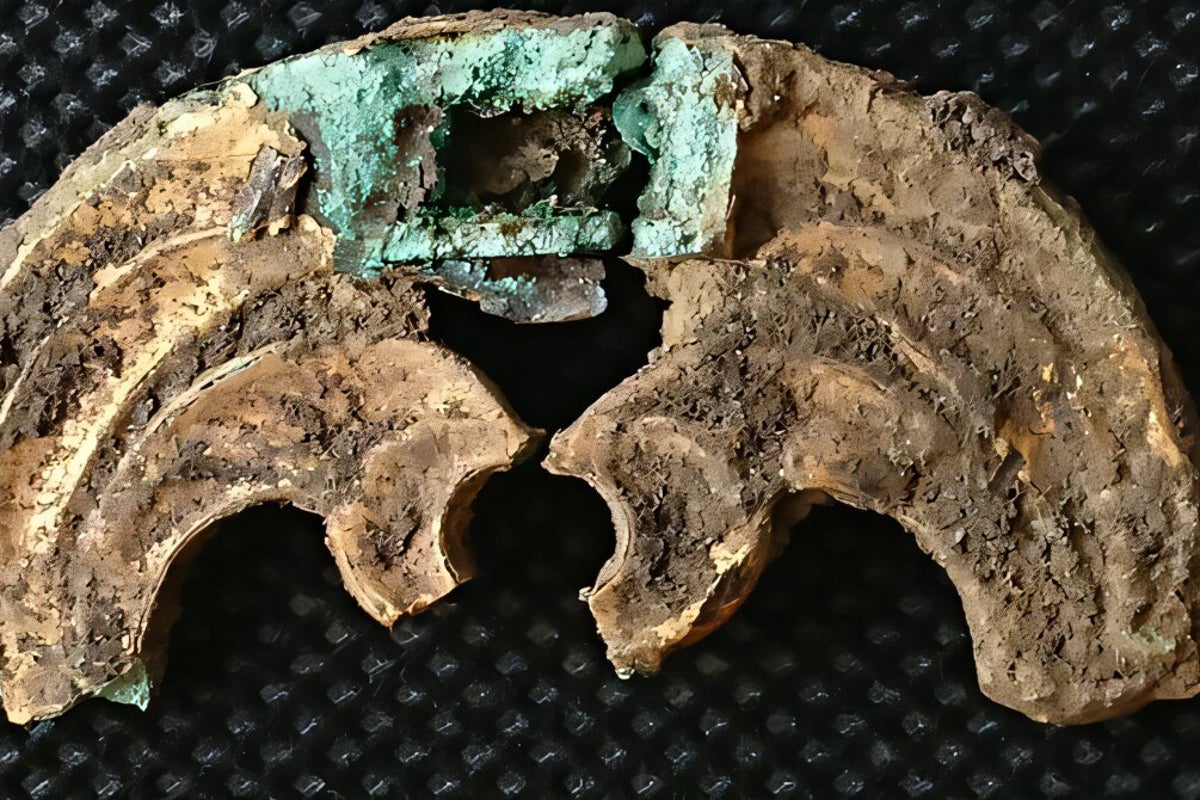
Archaeology students doing their first excavation found a major Roman-era treasure trove in Northumberland, shedding more light on life at the northernmost edge of the ancient empire.
The quantity and quality of the treasure, unearthed earlier this year, was a surprise even to experienced researchers, archaeologists from Newcastle University said.
One of the most remarkable items in the trove was a gold-chain section measuring about 7cm.
It was so well preserved that, if it were complete, it could still be worn today, researchers said.
The chain was likely made using the sophisticated loop-in-loop technique, a hallmark of high-quality Roman goldsmithing. Its individual rings were carefully pinched into figure-eight shapes, folded, and then interwoven to create the chain.
Such chains were typically made from pure gold and associated with elite jewellery, military amulets, or special fittings for high-ranking officers and their families.
"Finding the gold chain was really surreal, especially given that it was the first day of my first dig. I didn't expect to find anything like that in my whole career, so it was definitely a surprise,” archaeology student Elise Zallu said.
"Finding a gold artefact is something many archaeologists can go an entire career without experiencing,” said Eric Tourigny of Newcastle University. “For a first-year student to discover a beautifully preserved Roman gold chain on their first day in the trench is truly remarkable.”
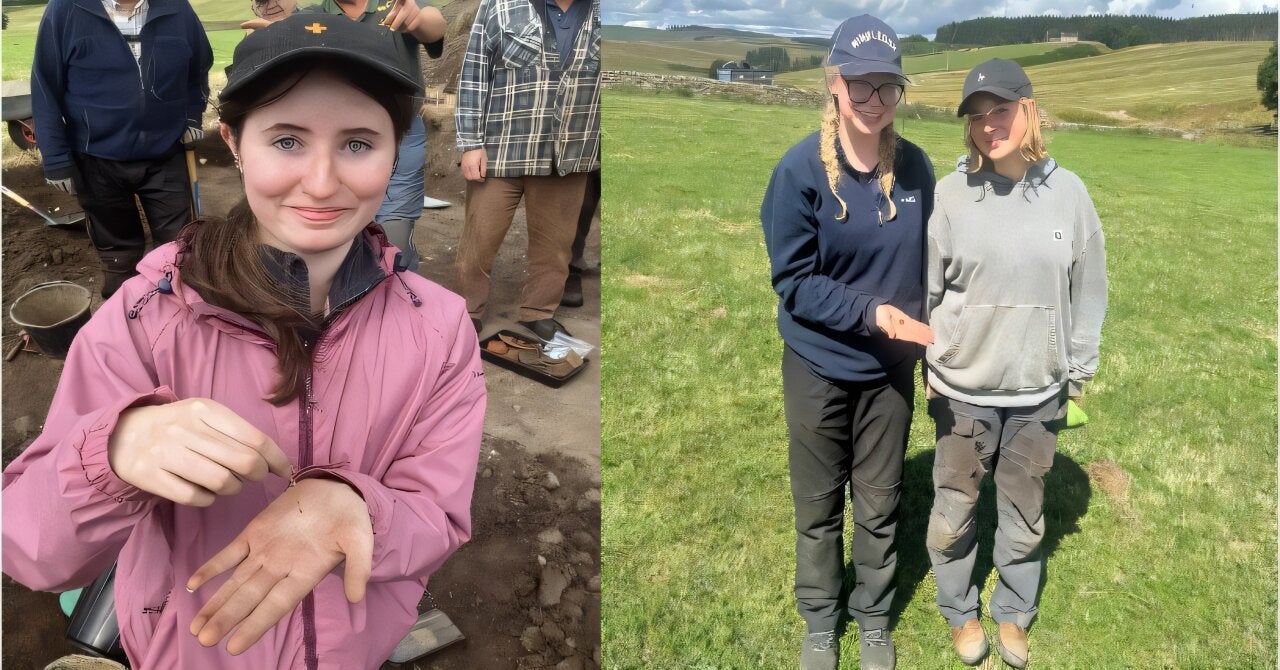
Another student, Shannon Wood, unearthed a folded piece of lead bearing traces of a Latin inscription.
The object was most likely a seal associated with trade, taxation, ownership, or the movement of goods through the Roman military supply network, researchers said. It functioned as a personal message or a “curse tablet”.
In the Roman Empire, people scratched prayers, grievances, requests, and even curses onto thin sheets of lead and deposited them in sacred places.
Researchers hope further studies of the lead sheet will reveal more information about its purpose.
Megan Potter, another first-year student, found a decorative bronze mount that was likely attached to a military belt, sword, or horse harness. It had a crescent-shaped design derived from the small shields associated with classical warriors. Such adornments were typically worn by cavalrymen in the Roman era, signalling status and military hierarchy.
Although the mount was heavily corroded, researchers noted, much of its gilding was still in place.
Other Roman artefacts unearthed during the excavation included coins, spearheads, dress accessories, and pottery vessels, many of which carried Roman graffiti.
A bowl bore the scratched inscription "MARTIN" or "MARTINUS", likely referring to an individual of that name. Several other pottery fragments bearing the same name were unearthed, suggesting that they were ownership marks or personal identification of a person who lived or worked at the site nearly 2,000 years ago.
Students Maisy Watmough and Zoe Yuill unearthed engraved gemstones mounted in rings that were used as personal seals, or intaglios.
“A gold chain, a signet gemstone, inscribed pottery and a decorated brooch illuminate the lives of the people who made this site work almost two millennia ago,” site director Richard Carlton said.
“Combined with the buildings and industrial features the team is excavating, they also help us understand how the frontier operated, and how Roman and Native communities interacted.”
KioskNews shows a cleaned-up reading view extracted from the publisher’s page — the original always lives on their site, not ours.