India survive Japan scare in thrilling Sano contest
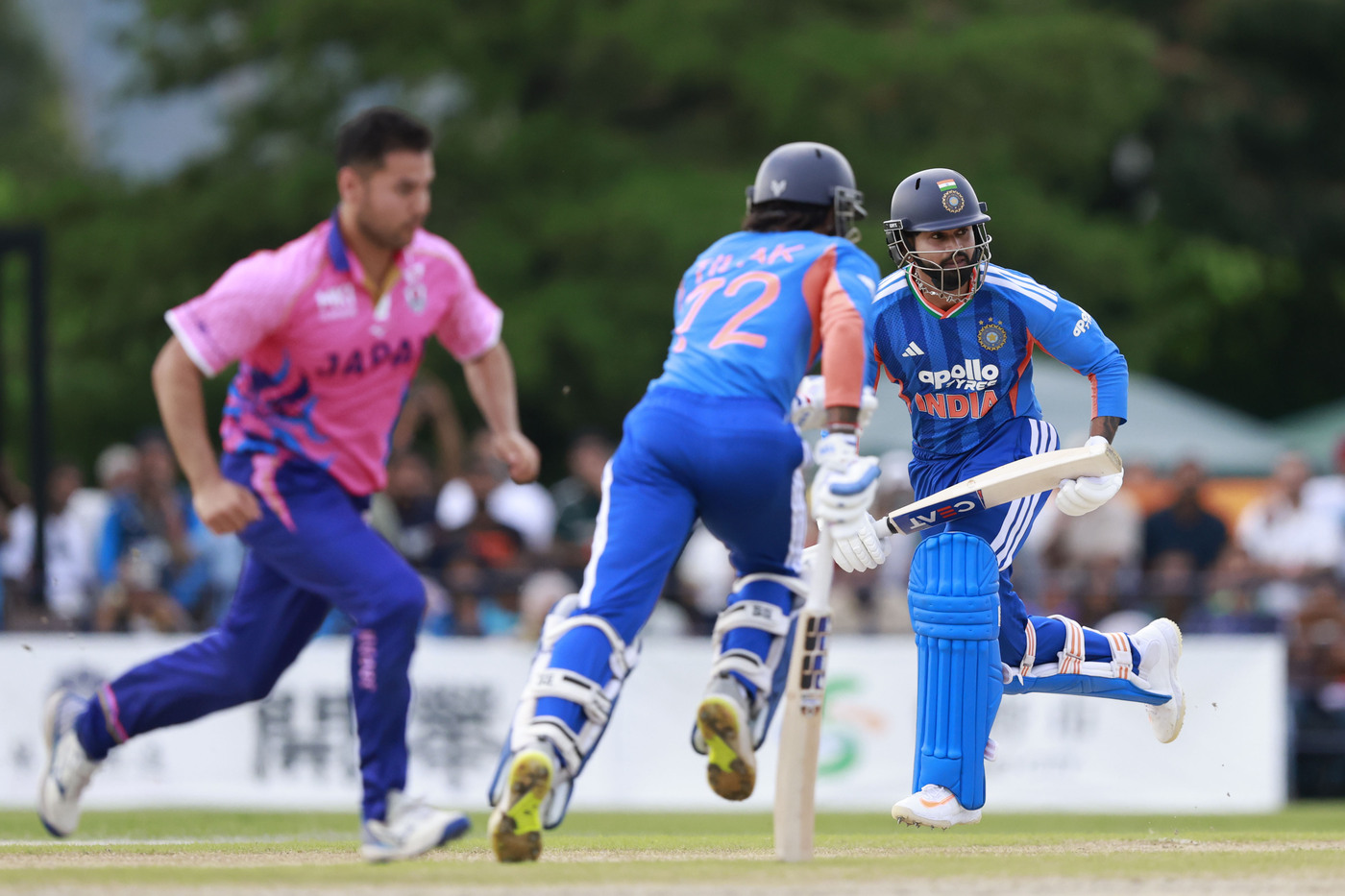

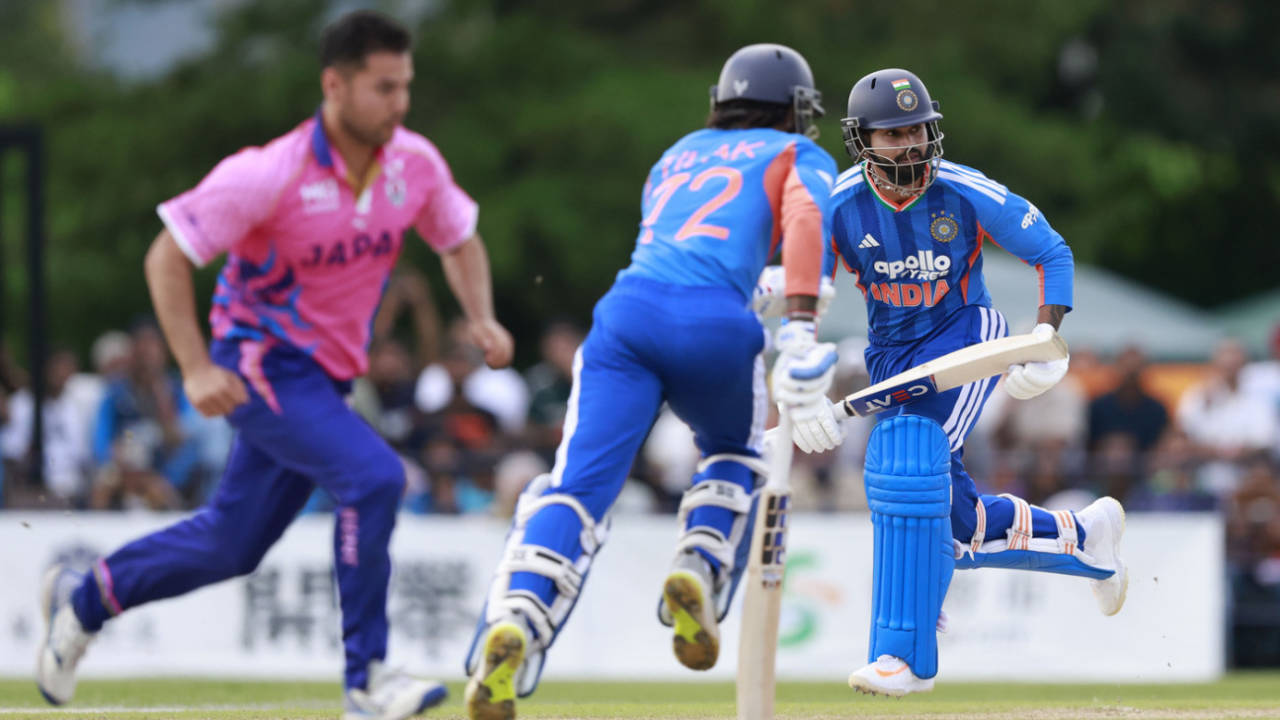
Japan's spinners and fielders did not let India run away with the bat • BCCI
Five overs a side India 32 for 4 (Iyer 16, Hara-Hinze 2-17) beat Japan 30 for 3 (Kadowaki-Fleming 12, Washington 2-13) by two runs
If India playing T20I cricket in Japan is the modern equivalent of Don Bradman playing in Ceylon during a whistlestop in 1930, there was nearly a repeat of Bradman's first-ball hit-wicket dismissal that day.
India, however, survived the banana peel of a five-over shootout on what was a possible reincarnation of the mythical sticky dog. In the process, they created the record for the smallest total successfully defended in a five-over T20, winning a thriller by two runs despite scoring only 32.
It wasn't just the sticky dog in the middle. The outfield was excruciatingly slow, and the umpiring left a lot to be desired. In fact, the square-leg umpire had to intervene and overturn one of the two wides called in the final over as Japan got very close to India's total and the friendly vibes disappeared.
The Japanese umpire Chris Thurgate kept calling leg-side wides even as the left-hand batter Alexander Shirai-Patmore gave up his leg-side privileges by attempting reverse hits. The second of those calls brought the equation down to 5 off 4, turning the bemusement on Indian faces at the first call into displeasure.
This was when the New Zealander Chris Brown called his colleague over and had the call overturned. It was still a tight last over to bowl, but Axar Patel did enough with figures of 2-0-7-0 to save India's blushes.
Japan restrict India to 32
It was a long wait to get the game started after heavy rain on the two preceding days. Understandably, the facilities to dry the surface weren't cutting edge, which delayed play even on a day with no rain. The umpires brought the players on with just enough time left for the shortest possible contest to constitute a T20I match.
Probably expecting the light to deteriorate, India decided to bat first after Shreyas Iyer won his 11th toss in 13 matches. Not quite Bradman, but arguably the best T20 batter in the world, Abhishek Sharma did recreate the golden duck when he tried a shovel-sweep off the first ball he faced.
The pitch was so slow and turned so much that each of the 10 overs was bowled by spinners. Only four boundaries were hit in the entire match. Having seen the top order perish trying to find the boundary, Iyer decided to dial down the ambition and drove India's innings with 16 off 12.
Axar steps up on sticky track
It was apparent from the first ball of the defence that Axar was going to be crucial to the result. He conceded just two runs in the first over, with a direct hit from deep square leg by Ishan Kishan resulting in a close run-out of Lachlan Yamamoto-Lake. It didn't matter how close it was because there was no third umpire in this match.
At 8 for 2 after two overs, Japan looked down for the count, but they took 10 and seven off the third and fourth overs, bowled by Ravi Bishnoi and Washington Sundar respectively. It left Axar eight to defend in the last over, which was too close for comfort, especially with the dubious wide calls. Axar, however, showed remarkable accuracy on a pitch turning so much to deny Japan a winning hit.
KioskNews shows a cleaned-up reading view extracted from the publisher’s page — the original always lives on their site, not ours.