China unveils space mining road map with a big move on the moon within 4 years
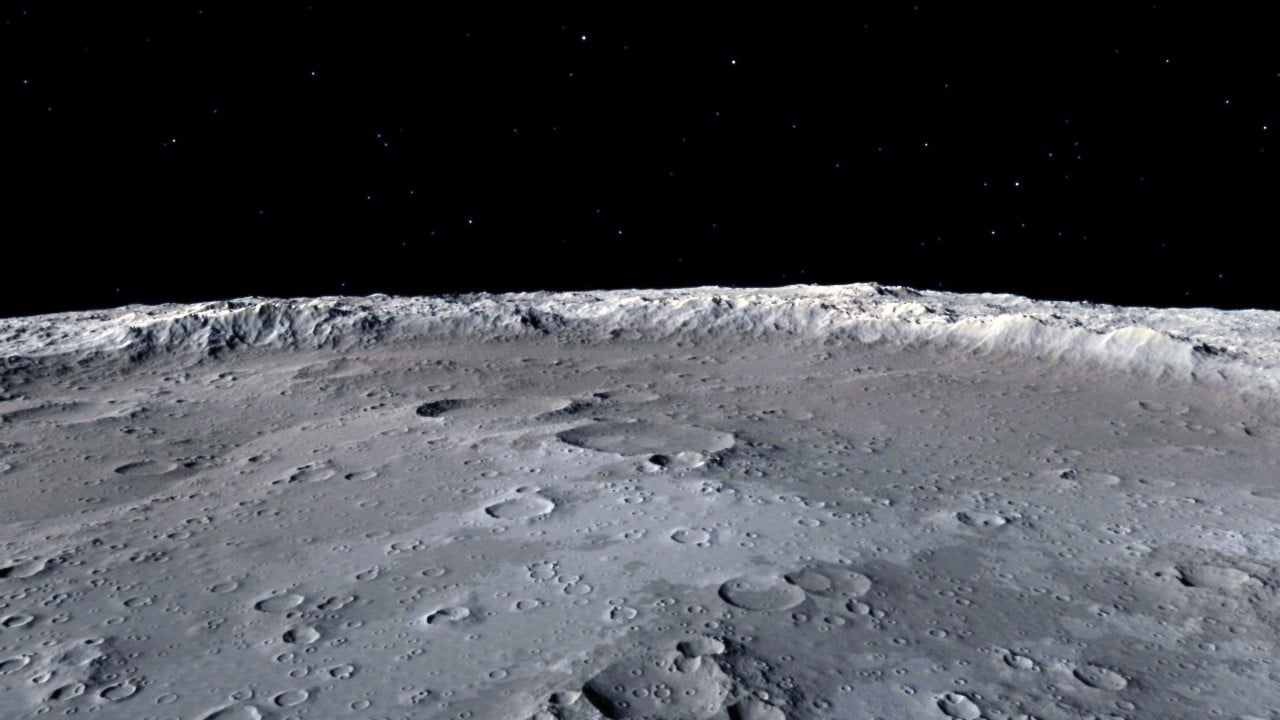
China should test making water or oxygen on the moon no later than 2030, according to the chief designer of its lunar programme, as the country’s race with the US to settle there heats up.
In a paper to be published in the Journal of Deep Space Exploration, physicist Wu Weiren and his team said China needed to prove at least one key technology, such as extracting ice or pulling oxygen from the dusty ground, during its next robotic Chang’e mission or planned crewed landing.
Their road map then calls for a small demonstration plant producing water, oxygen and building materials by 2040 and full-scale mining by 2050.
Space mining could become a real industry within a generation, they predicted. “It is foreseeable that the next 20 years will be a critical period for extraterrestrial resources to move from scientific exploration to development and use, and from technological breakthroughs to industrial application,” they wrote.
The authors also acknowledged that China lags in long-term planning. “China has not yet issued a dedicated development strategy or medium- to long-term plan for extraterrestrial resource development and utilisation,” they said.
The United States, by contrast, has treated lunar resources as key to its space ambitions for more than two decades, they noted. Former president George W. Bush asked Nasa to study using them in 2004, and a 2015 law lets Americans own and sell what they dig up in space.
In 2020, the first Trump administration issued an executive order declaring that the US does not view outer space as a global commons and encouraging Americans to tap its resources. The same year, Nasa’s Artemis plan made those resources the cornerstone of a permanent moon base and future crewed trips to Mars.
But the race is not only about what lies in the lunar soil. Certain locations in space form “a key strategic foothold for defending national space rights and interests”, the researchers warned.
Chief among them are the Lagrange points, where the pull of Earth and the moon – or of the sun and Earth – balances out so a spacecraft can hover in place using little fuel. The team called them ideal perches for keeping watch around the moon and hubs for journeys farther out.
Another region on the researchers’ list was a family of wide, unusually stable loops around the moon known as distant retrograde orbits. A probe parked there can stay for years on barely any fuel.
Both countries have already made use of these spots. China’s Queqiao relay satellite hovered near a Lagrange point behind the moon after launching in 2018, linking Earth with the Chang’e-4 lander on the far side. Nasa, for its part, sent its uncrewed Orion capsule into a distant retrograde orbit during the Artemis I test flight in 2022.
To speed things up, Wu and his colleagues called on Beijing to bring more private companies into deep-space work, saying such firms still lack clear ways to join major missions. In the US, commercial players are already central to Nasa’s lunar plans, with Firefly Aerospace landing a craft on the moon last year.
A national fund should back the industry, with state missions leading the way, private investors following and market demand feeding back into the effort, Wu’s team said.
KioskNews shows a cleaned-up reading view extracted from the publisher’s page — the original always lives on their site, not ours.