REPORTER’S NOTEBOOK: Waiting on the giants — a five-day Durban pavement vigil alongside five seized baobabs
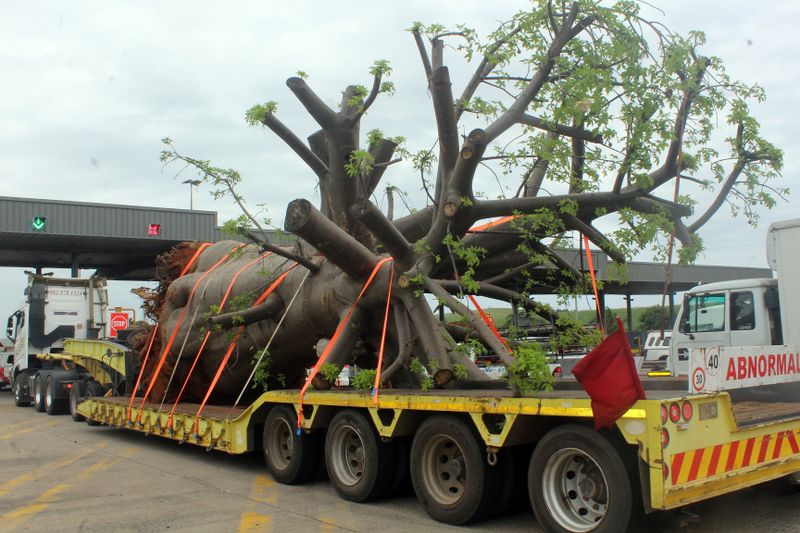
News came through on the grapevine on the morning of Wednesday, 11 November, that five baobab trees – stranded in Durban for more than three months – were about to be loaded onto low-bed trucks for a 900km road trip to the Timbavati Private Game Reserve in Mpumalanga.
Grabbing a camera and notebook, I rushed to the Africa Global Logistics (AGL) warehouse in the Mobeni industrial area, where the trees had been sitting since 27 July due to a legal and administrative wrangle.
I planned to snap a few images and chronicle the start of their long journey homewards after government officials seized the protected trees en route to Georgia in Eastern Europe, allegedly without export permits.
With any luck, I thought, they would be on the road to Timbavati by early afternoon on Wednesday.
But that plan did not work out, and I ended up “camping” near the baobabs for the better part of the next five days.
Not exactly welcomed
On arrival at the AGL warehouse, an independent videographer and I were not welcomed with open arms as we prepared to film and photograph the loading operations. In fact, private security guards from AGL tried to prevent us from doing our work, stating that it was “not permitted to film a customs warehouse”.
Undaunted, we carried on filming through the metal fencing around the warehouse, pointing out politely that we were standing on a public pavement.
Being on the pavement has its advantages, though – as we were to discover as the afternoon and the days wore on – it also comes with several disadvantages.
First, there was no shade from the blazing sun. No food or drink outlets within walking distance. And no toilets.
So, some inventive solutions were called for as our baobab vigil dragged on.
In the ablutions department, we found an old substation next to a railway line that offered a degree of privacy from passing traffic, while local fruit seller Themba Zulu had a selection of chips, oranges, bananas and nectarines at his kerbside stall.
Another vendor had set up a temporary cooking station on a nearby grass verge, but the stewed cow head on offer did not tickle the palate, despite my growing hunger.
In the sun-exposure department, we discovered a shady waterberry tree on the third day.
The food dilemma was resolved by alternating our journeys to the Bluff Shawarma and Mr Chang’s Kitchen about 4km away, so that one of us would still be on site in case the baobabs went walkabout in a hurry.
But they didn’t move anywhere for days.
Why not, we wondered?
Queries to the Department of Forestry, Fisheries and the Environment yielded little fruit, while the truck drivers said they were under strict orders not to speak to the media. Quite why things were so “hush hush” remained unclear.
Unwarranted optimism
Keeping our ears to the ground, we learned on Thursday morning that there had been a delay with one of the five abnormal load permits. But there was still optimism that the trees would leave later in the day.
They didn’t.
Later, the new story from our sources was that they would “definitely” leave pronto at 6.30am on Friday.
Taking no chances, I got there at 5.30am. By noon, however, it was clear that the departure had once again been delayed. Drivers were reported to have rushed off to a nearby PostNet outlet to collect and copy new paperwork, and there were stories that the global Microsoft email collapse was creating further hassle.
Also, we were told, no abnormal-load movements were permitted at weekends. So, nothing was expected to happen till Monday – providing us with a welcome two-day break.
Monday dawned, with WhatsApp messages from sources advising us to be at AGL for an 8.30am departure. Should I pack a camp chair, sunscreen, umbrella and a good book? I wondered.

To cut a long story short, the eThekwini Metro Police escort vehicles only arrived at about 10.30am on Monday, and there was now a further paperwork delay. Though the abnormal-load permits had been submitted to the Metro Police HQ last week, the police escort drivers insisted that each truck carry a permit for every tree.
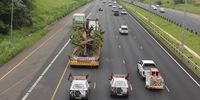
Another frantic trip to the local PostNet outlet ensued, and finally, just before noon, the five trucks rumbled out of Mobeni for the first leg of their 900km long journey to Timbavati, Mpumalanga.
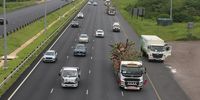
They left so fast that I nearly lost their trail after getting stuck behind another line of trucks. Following my gut instinct, however, I managed to catch up with and overtake the convoy near Umhlanga, snapping the open-road shots I had been waiting five days to get. DM
KioskNews shows a cleaned-up reading view extracted from the publisher’s page — the original always lives on their site, not ours.