Israelis are back to a familiar political deadlock that underscores deep rooted divisions
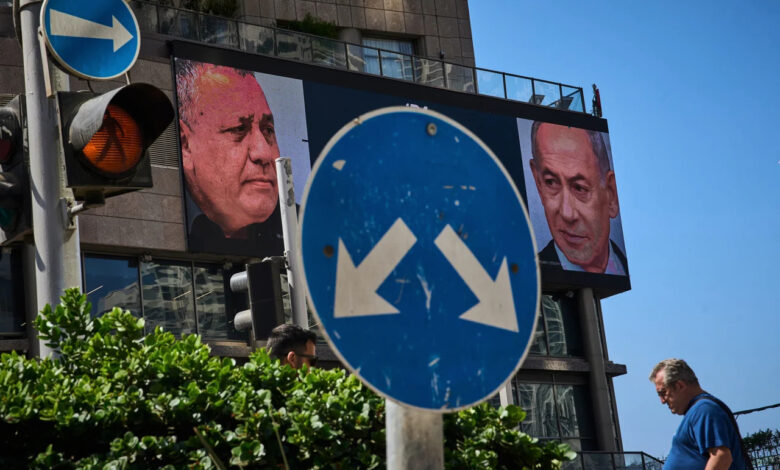
Israelis woke up Wednesday to a familiar political deadlock, with neither Prime Minister Benjamin Netanyahu’s right-wing coalition nor the opposition winning a clear majority to form a government.
These results build on the unprecedented streak of political paralysis that has produced six elections in seven years. Between 2019 and 2022, the country voted in five rounds of elections as no side could secure a clear 61-seat majority in the 120-seat parliament and sustain a viable coalition, reflecting a country deeply divided over leadership and direction.
Netanyahu, Israel’s longest serving prime minister, is also the first sitting prime minister to be indicted for corruption charges. That has broadly shaped the country’s political map during his tenure, as most of the opposition parties have refused to work with him, pushing him deeper into a reliance on far-right and ultra-orthodox parties. Only in the 2022 election did he and his allies win a majority.
Relying on the support of nationalistic and religious parties, Netanyahu held his government together for its full four-years, the first time since 1988 a government had lasted its complete term.
Shortly after the government’s inauguration, it pushed for a sweeping judicial overhaul that was met with widespread liberal protests, that continued up until the October 7, 2023 Hamas attack on Israel, the greatest security failure in the country’s history, and a multi-front war that followed.
Once again, this vote was a referendum on Netanyahu’s leadership, but also about the country’s direction and identity. The results reinforce the deep divide and polarization between Israelis over democratic values, religion and state, military service and accountability.
KioskNews shows a cleaned-up reading view extracted from the publisher’s page — the original always lives on their site, not ours.