9 Books From the 2010s That Are Officially Classics Today

Diego Pineda has been a devout storyteller his whole life. He has self-published a fantasy novel and a book of short stories, and is actively working on publishing his second novel.
A lifelong fan of watching movies and talking about them endlessly, he writes reviews and analyses on his Instagram page dedicated to cinema, and occasionally on his blog. His favorite filmmakers are Andrei Tarkovsky and Charlie Chaplin. He loves modern Mexican cinema and thinks it's tragically underappreciated.
Other interests of Diego's include reading, gaming, roller coasters, writing reviews on his Letterboxd account (username: DPP_reviews), and going down rabbit holes of whatever topic he's interested in at any given point.
Sign in to your Collider account
What makes a book a classic? It's a text that has stood the test of time for at least a few years and has proven to be substantially influential and widely celebrated over time. It's a text that attained cultural and artistic relevance and maintains it as the years pass; it's historically relevant, universally significant, and worthy of being counted among history's "greats." Thankfully for those who love modern literature, there are a handful of 2010s books that are officially classics today.
Of course, artistic appreciation is and always will be an almost entirely subjective matter, but looking back at the biggest classics from the 2010s, it's almost undeniable that they still hold the elements that make up a classic book: historical relevance, cultural impact, and artistic merit without equal. From non-fiction masterpieces like The Warmth of Other Suns to speculative fiction cornerstones like The Way of Kings, these are books that definitely live up to the hype.
'The Warmth of Other Suns: The Epic Story of America's Great Migration' (2010)

No conversation about 2010s literature could possibly be complete without getting into non-fiction, which was absolutely massive (both commercially and culturally) throughout the whole decade. The biggest masterpiece that the genre produced was Isabel Wilkerson's The Warmth of Other Suns, which traces the decades-long Great Migration of nearly six million Black Americans fleeing the Jim Crow South for Northern and Western cities between the 1910s and 1970s.
It took Wilkerson 15 years of extensive research to complete The Warmth of Other Suns, and the result ended up being one of the best American book masterpieces of the 21st century. It's a towering work of non-fiction art that reads like a sweeping novel, anchoring its research in the deeply personal biographies of three real individuals. It was modern classics like this that sparked the non-fiction boom of the 2010s.
'Normal People' (2018)
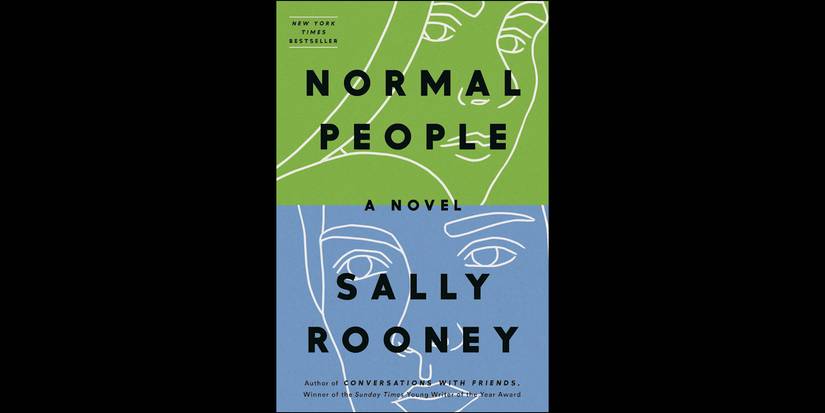
Before it became one of the best Irish TV series of the 21st century, Normal People was a romance drama novel by Sally Rooney. A massive bestseller and winner of several awards, it's one of the most perfectly written books of the 21st century, about two young Irish teenagers from vastly different social backgrounds who navigate an intense, on-and-off romantic bond from high school through university.
The coming-of-age genre produced several great romance novels over the course of the 2010s, but it's hard to point to one that had more of a substantial pop-cultural impact than Rooney's sophomore novel. Normal People captures the emotional, social, and economic anxieties of the millennial generation through a story of such profound thematic and emotional power that just about anyone should be able to appreciate it, no matter their age.
'Circe' (2018)
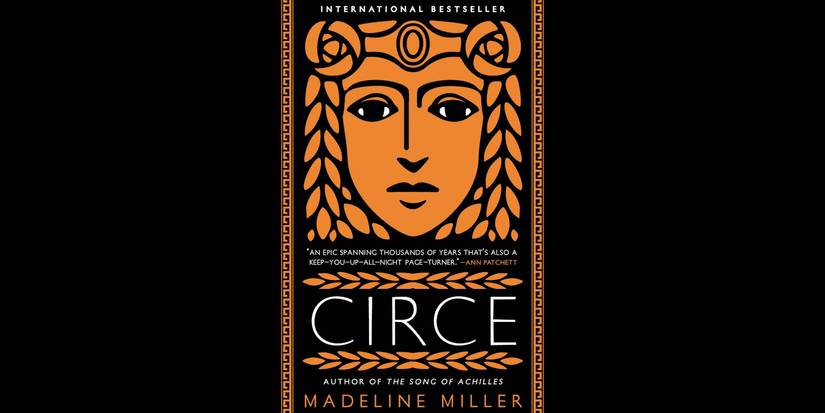
In Madeline Miller's Circe, an overlooked nymph banished to a remote island masters witchcraft and carves out her own destiny amid gods and mortal heroes. It's an unforgettable retelling of the story of one of Greek mythology's most iconic characters (mostly framed as a reimagining of Homer's Odyssey), and it's absolutely worth reading even for people who don't typically have much interest in mythology-inspired fantasy books.
The 2010s gave us several fantasy books that are perfect masterpieces, but few quite as exceptional or popular as Circe. Miller took a character that had long been seen as a villainous seductress and flipped the narrative altogether, exploring Circe's interiority in a way far too complex to catalog the book as one of those typical "misunderstood villain" narratives that plagued the 2010s. The prose is beautiful, the character writing is powerful, and the book was so popular that it sparked a whole new wave of feminist mythological retellings.
'Americanah' (2013)
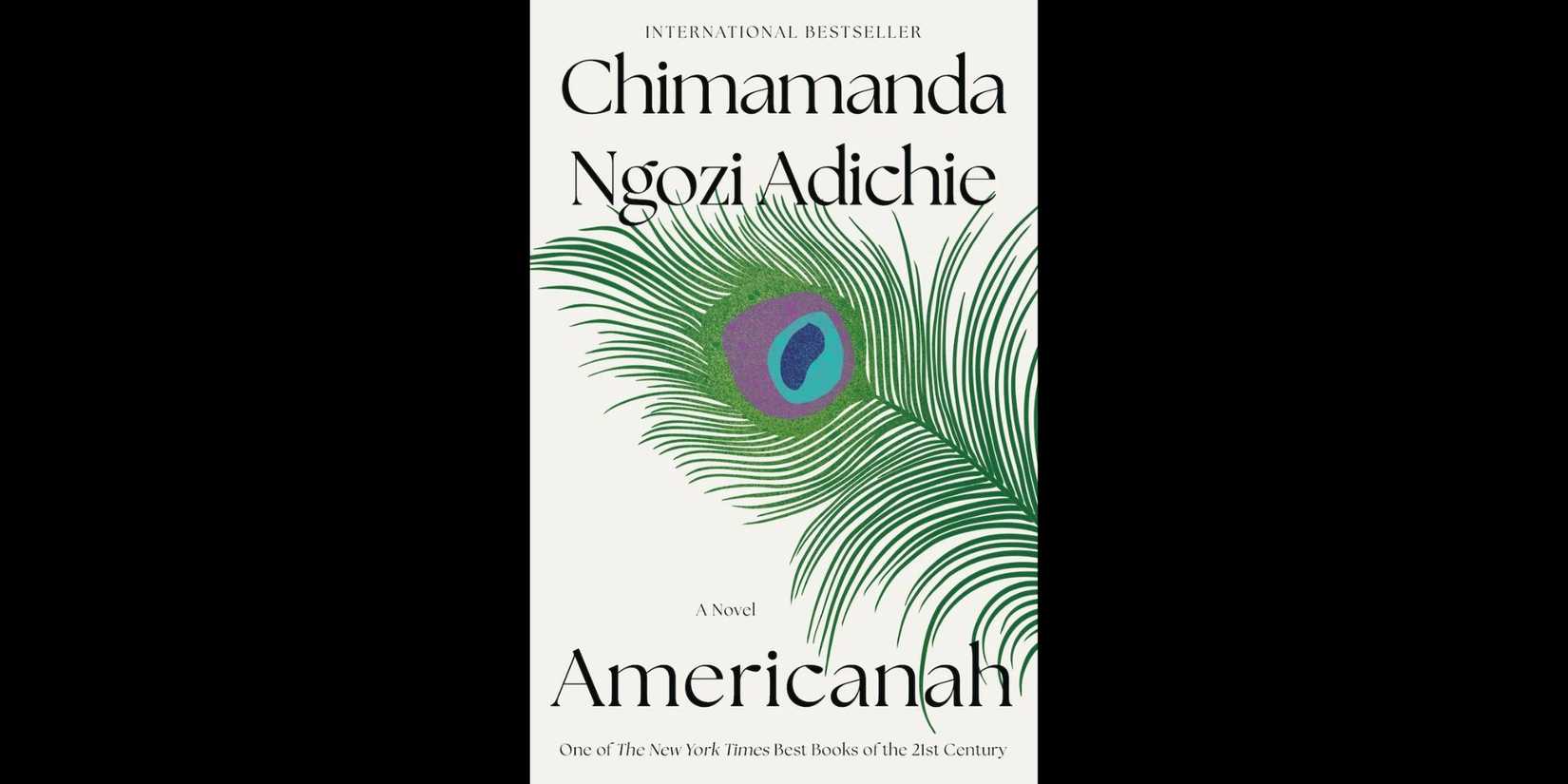
Far and away one of the best books of the 2010s, the Nigerian novel Americanah came as part of a major boom in popularity and cultural relevance that African literature saw throughout the 2010s. It follows two young Nigerian lovers, whose paths diverge across the United States and the United Kingdom as they're forced to navigate race, class, and cultural identity abroad before they can reunite in a changed Nigeria.
Books about the immigrant and diasporic experiences became far more prevalent and popular during the 2010s, and few masterpieces demonstrate the quality of such writing better than Americanah. Written with a perfect balance between razor-sharp wit and sweeping narrative scope, it's a brilliant redefinition of traditional immigrant stories and one of the most sincere love stories that 2010s literature ever told. If there's any African novel that's today an official classic, it's surely this one.
'The Way of Kings' (2010)
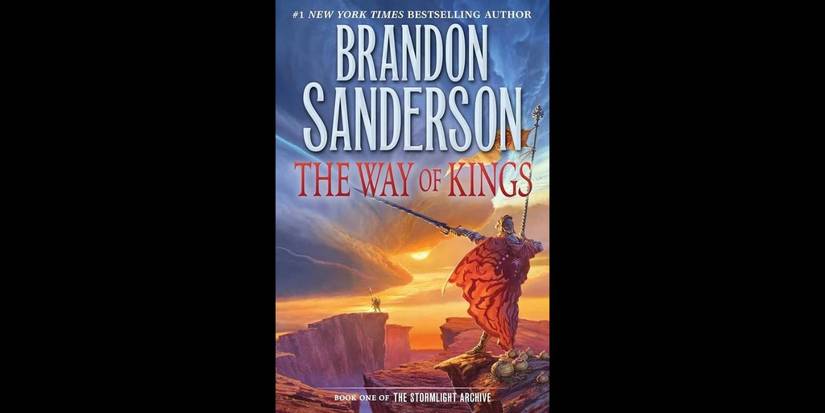
The subgenres of high, epic, and heroic fantasy have also delivered many an incredible masterpiece throughout the 21st century so far, and the 2010s were certainly no exception. The decade saw the bulk of the output of Brandon Sanderson, who has quickly become one of the most prolific speculative fiction authors currently working. Case in point: The Way of Kings, about a brutal war of vengeance on a storm-ravaged world where ancient magic is fading.
Far and away one of Sanderson's best books, this first chapter in The Stormlight Archive is arguably also the author's novel that is most worthy of being considered a modern classic. Tremendously vast in scope, ambitious in plotting and worldbuilding, and emotionally resonant in its psychologically profound character work, The Stormlight Archive is undeniable evidence of the unmatched power of epic high fantasy.
Collider Exclusive · 8 Questions · 2 Minutes What Fantasy World Do You Belong To? Middle-earth · Grand Line · The Continent · Camp Half-Blood
Pick your magic, your crew, where you want to wake up and who you would rather be fighting, and we will tell you which world you actually belong in. Four are open to you: an ancient kingdom living through its last good age, an endless sea full of pirates, a continent that pays people to kill monsters, and a summer camp where the Greek gods are extremely real and mostly a nuisance.
💍Middle-earth(Rings of Power)
👒Grand Line(One Piece)
🐺The Continent(The Witcher)
🔱Camp Half-Blood(Percy Jackson)
01
What kind of power do you want? Every one of these worlds runs on a completely different sort of magic.
02
Who is travelling with you? Nobody gets through any of these stories entirely on their own.
03
Where do you want to wake up tomorrow? The best fantasy is usually just somewhere you would genuinely like to live.
04
How are you making a living out there? Even in fantasy somebody has to pay for the horse.
05
There is something in the woods. What do you do about it? All four of these worlds keep something unpleasant out there in the dark.
06
Who is the villain of your story? The enemy tells you far more about a world than the hero ever does.
07
What do you actually believe in out there? Every world hands its heroes one rule and asks them to hold onto it.
08
A thousand years from now, how are you remembered? Eight questions in, this is the one that decides your world.
The Map Is Drawn Your World Is…
Four worlds and four completely different ideas of what a good life looks like. This is where you belong, what it would ask of you, and what you would get back in return.
Middle-earth
You belong somewhere old enough that the mountains have names and somebody can still tell you who gave them. Middle-earth is for people who think the right thing is worth doing even when it will not be finished in their lifetime.
- This is the only world on the list where doing good is understood as a very long defeat, fought anyway, by people who will never see how it ends.
- You are drawn to grandeur, to white cities and deep forges and the sense that almost everything you touch is older than your entire family line.
- The Rings of Power is set in the last good age before it all goes wrong, which gives every quiet scene in it a slightly unbearable weight.
- You would take the hard road, and you would take it on foot.
The Grand Line
You want the sea, a crew, and absolutely nobody telling you where you are allowed to go. The Grand Line is the world for people whose main ambition in life is finding out what is over there.
- One Piece has run for decades on one very simple engine, which is a group of people who each want something impossible and have decided to go and get it together.
- You collect people. Your ideal crew is a set of misfits who were each written off somewhere else before you turned up and offered them a better idea.
- The world is enormous and deliberately ridiculous, and the emotional gut punches land harder because of that rather than in spite of it.
- You would set sail knowing the map runs out, which is more or less the entire point of it.
The Continent
You would rather be feared and useful than liked and useless. The Continent is a world where the monsters are the straightforward part of the job and the people are where it all gets complicated.
- Witchers get paid to do what nobody else will and resented for existing at all, which is a trade most people would refuse and you would probably accept.
- You have no real illusions about which side is the good one, largely because on the Continent that question tends to have a disappointing answer.
- The best of these stories are not about the fighting. They are about somebody with a rigid code being repeatedly cornered into caring about people.
- You would take the coin, finish the job properly, and be out of town before the story got told wrong.
Camp Half-Blood
You want the myths to be real and loose in the actual world, and you want to find out at about thirteen that you were never anywhere near as ordinary as everybody kept telling you.
- Percy Jackson takes the oldest stories we have and drops them into car parks and diners, which makes the gods considerably funnier and a great deal worse.
- You would be the kid every school gave up on, who turns out to have been built for something nobody thought to test for.
- The series is genuinely about friendship rather than destiny, and it says so out loud every time a prophecy tries to get in the way.
- Camp Half-Blood is the real fantasy here: a place where the thing that made you difficult everywhere else is the thing that makes you belong.
'Pachinko' (2017)

Further proof of how ingrained in the mainstream books about marginalized experiences became throughout the 2010s is the success of author and journalist Min Jin Lee's epic historical fiction novel Pachinko, which just so happens to be one of many great books recommended by Barack Obama. In it, a young Korean woman pregnant by a married man marries a gentle minister and moves to Japan, sparking a four-generation saga of survival and resilience.
Before Pachinko, few readers outside East Asia knew about the Zainichi, ethnic Koreans living in Japan during and after Japanese colonial rule who were subjected to systemic discrimination for generations. But far from just serving as a learning experience, reading Pachinko is also a journey elevated by the incredible moral complexity and psychological depth with which Min Jin Lee writes.
'The Goldfinch' (2013)

Back in 1992, Donna Tartt wrote The Secret History, easily one of the best and most impactful debut novels of the '90s. The reception for her second novel, 2002's The Little Friend, was significantly more mixed. Nine years later came her third novel, the Pulitzer-winning The Goldfinch, and it may just be Tartt's magnum opus. In it, a teenage boy steals a priceless painting as he navigates the grief of surviving a terrorist bombing that killed his mother.
It's one of the best books published since 2010, an absolute masterclass in modern Dickensian storytelling that, at nearly 800 pages in length, somehow manages to not have a single page of fluff or wasted space. Combining energetic thriller plotting with profound meditations on loss, obsession, and the redemptive power of art, Tartt delivered one of the defining masterpieces of 21st-century English-language literature.
'The Fifth Season' (2015)

N. K. Jemisin's Broken Earth trilogy made history by becoming the first book trilogy ever to have each installment win the Hugo Award for Best Novel in consecutive years. But as great as books two and three are, this is one of those book series that peaked with their first entry: The Fifth Season, a science fantasy masterpiece about a mother journeying across an apocalyptic supercontinent to rescue her kidnapped daughter as the world tears itself apart around her.
Speculative fiction delivered so many of the 2010s' greatest masterpieces that it deserves immense amounts of credit, and there is arguably no speculative fiction book from the decade more fit to be called a modern classic than The Fifth Season. Boldly experimental and daring in its structure and creative elements (including some chapters written in the second person), it's a visceral allegory of oppression that has somehow only gotten timelier and more potent with age.
'Gone Girl' (2012)
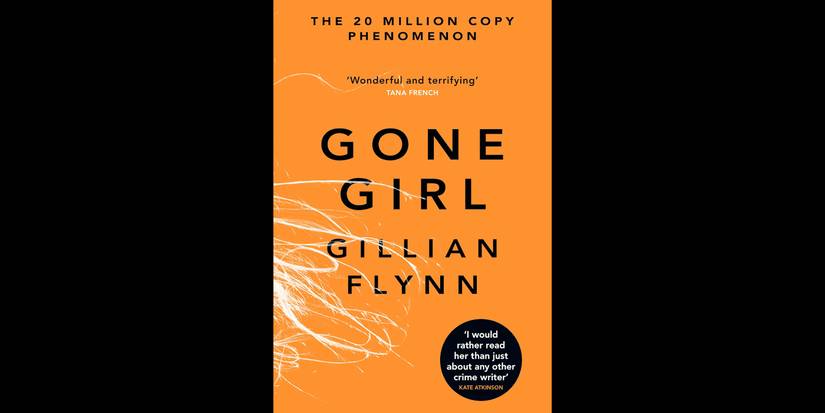
Upon publication in 2012, Gillian Flynn's Gone Girl revolutionized modern thriller writing, reshaping both publishing trends and narrative tropes across the domestic thriller subgenre in particular. In it, after Nick Dunne's wife vanishes on their fifth wedding anniversary, mounting evidence and a media circus turn him into the primary suspect in the investigation. The narrative that comes from such a premise makes for the single biggest, most official modern classic of the 2010s.
One of those mystery books that are a masterclass in prose, Gone Girl is not only an enrapturing thriller baked into layers upon layers of suspense and subtext, but also an intelligent dissection of modern marriage and media sensationalism. It's cool, tense, timely, subversive, and it pushed a new wave of domestic noir fiction whose influence can still be felt to this day. If there's any modern classic from the 2010s that's an absolute must-read, it's this one.
KioskNews shows a cleaned-up reading view extracted from the publisher’s page — the original always lives on their site, not ours.