Supreme Court orders Rajasthan to seal illegal discharge points into polluted rivers, recover fines
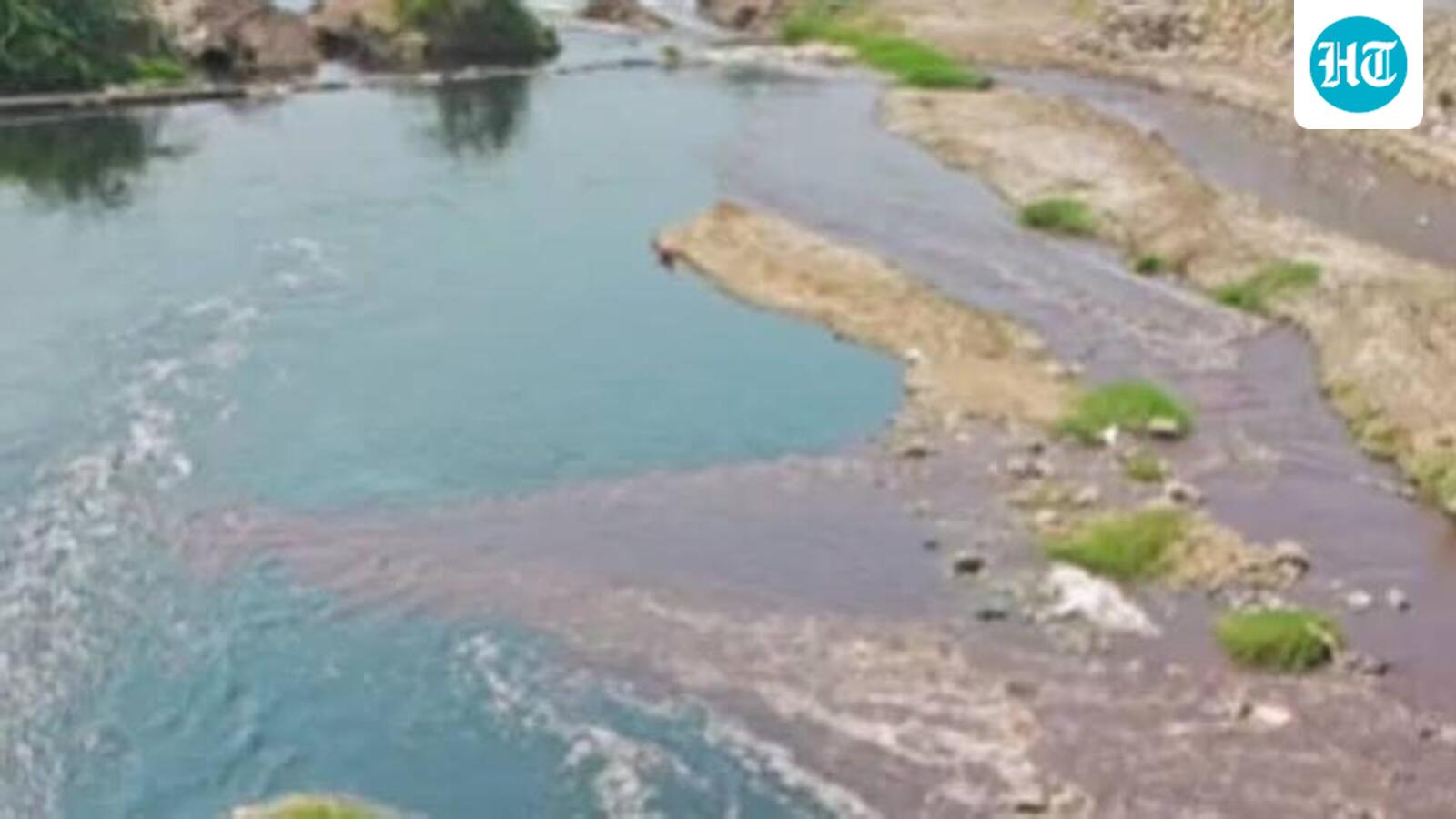
The Supreme Court has directed the Rajasthan government to seal and dismantle all illegal discharge points into the Jojari-Luni-Bandi river system and recover environmental compensation from polluters for the entire period of violations, while calling for a shift from a reactive to a proactive approach to tackling environmental damage.
The directions form part of suo motu proceedings initiated by the court last year after a news report highlighted alarming levels of pollution in the Jojari river, which serves as a lifeline for a population of 2 million in the state.
In its order issued on September 29 and uploaded recently, the court directed the state government to “seal and dismantle” all illegal and unauthorised discharge points into the river, including bypass arrangements, manholes, chambers, pipelines and conduits. The concerned state authorities were also directed to initiate appropriate proceedings against the landowners or occupiers and state officials responsible for the lapses.
The order further directed the Rajasthan State Pollution Control Board (RSPCB) to “initiate proceedings for assessment, imposition and actual recovery of Environmental Compensation” for the entire period of the violations from the industrial units, persons or entities that benefited from them.
The court said environmental issues did not merit an incident-based response in which the state bureaucracy reacts only after a violation is reported. It called for a “fundamental shift” in the approach, requiring the state machinery to anticipate potential environmental risks and act proactively.
The bench of justices Vikram Nath and Sandeep Mehta said, “There is a dire need for a fundamental change in the manner in which the bureaucracy approaches these issues.”
It added, “The state machinery must shed its traditional reactive posture, move away from a practice of responding only after violations are brought to its notice, and bring about an internal reorientation in its functioning so as to anticipate environmental risks, act proactively and ensure continuous coordination amongst the concerned authorities.”
The latest order is part of a series of directions issued by the court over the past few months to halt industrial activities along the three rivers, strengthen common effluent treatment plants (CETPs) and prevent industrial waste from being discharged directly into the river system.
Survey of bridges, road crossings
To maintain the natural flow of the rivers, the court directed the Rajasthan government and the concerned authorities to undertake a “comprehensive technical survey” of all bridges and road crossings across the Luni, Jojari and Bandi river systems and their tributaries. The survey will identify structures that impede or could impede the rivers’ natural flow. The state was also directed to remove such obstructions and put safeguards in place to prevent future construction that could disrupt the flow.
Action against illegal sand mining
The court also focused on river sand mining, another potential impediment to the natural flow of the rivers.
A nine-member committee headed by former Rajasthan high court judge justice (retd) Sangeet Lodha, which is assisting the court in efforts to improve the Jojari-Luni-Bandi river ecosystems, said it had sought information from state authorities on existing sand mining leases, the quantity of sand mined and restoration obligations. However, the information had not been provided to the committee so far.
The bench directed the state and the concerned authorities to take immediate and effective enforcement action against “all illegal and unauthorised Bajari/sand mining activities which have an adverse impact upon the riverbed, riverbanks or the natural flow and ecology of the river system.”
The state chief secretary was directed to provide the committee with details of permitted and illegal mining areas, mining leases, quantities extracted, replenishment and mining depths, among other information.
The court also directed the state to establish a permanent, district-wise and coordinated enforcement mechanism involving the RSPCB, district administration, police, revenue, transport, local bodies and other concerned agencies. The mechanism must designate nodal officers for regular field surveillance and interdepartmental coordination to ensure prompt action when illegal industrial activities are identified.
Single-window mechanism for CETPs
The court directed the state chief secretary to ensure that all pending proposals relating to Common Effluent Treatment Plants (CETPs) and their upgradation to zero liquid discharge (ZLD) are processed and decided through a single-window or designated nodal mechanism. This would facilitate the simultaneous technical, financial and statutory processing of the proposals.
After examining the justice Lodha committee’s report, the bench said the challenges facing the Jojari-Bandi-Luni river ecosystem stemmed from several factors. These included inadequate treatment capacity, the continued operation of unauthorised industrial activities, ineffective control over land use and discharge mechanisms, insufficient surveillance and enforcement, and interventions that disrupted the rivers’ natural course and flow.
“The recurring nature of these concerns, despite the directions issued by this Court from time to time, demonstrates that a purely incident-based response is inadequate,” the court said, directing the state government to submit a further affidavit detailing compliance with its latest directions. The matter is scheduled for hearing on Monday.
Earlier directions on construction near rivers
In August, the Supreme Court had directed that no construction or development activity be undertaken within 100 metres of the edges of the three rivers. It had also restrained the establishment of hazardous industries or activities within 500 metres on either side of the rivers’ existing flood lines.
The court took suo motu cognisance in September 2025 after news reports highlighted severe pollution in the Jojari river, which serves a population of 2 million. It found that sewage and water mixed with industrial effluents had adversely affected crops. Cattle consuming the contaminated water and fodder grown using it had also reportedly suffered health problems, including infertility, miscarriage and skin diseases.
In November, the court constituted the justice Lodha committee to propose a River Restoration and Rejuvenation Plan for the Jojari-Luni-Bandi river system.
The court has also constituted an Integrated Coordination Group and a River Rejuvenation Commission or Authority, both headed by the state chief secretary, to scientifically determine the high flood lines of the three rivers and identify encroachments on the rivers and their basins.
KioskNews shows a cleaned-up reading view extracted from the publisher’s page — the original always lives on their site, not ours.