Opinion: What Sonia Gandhi's Book Says On Pranab Mukherjee, What It Doesn't
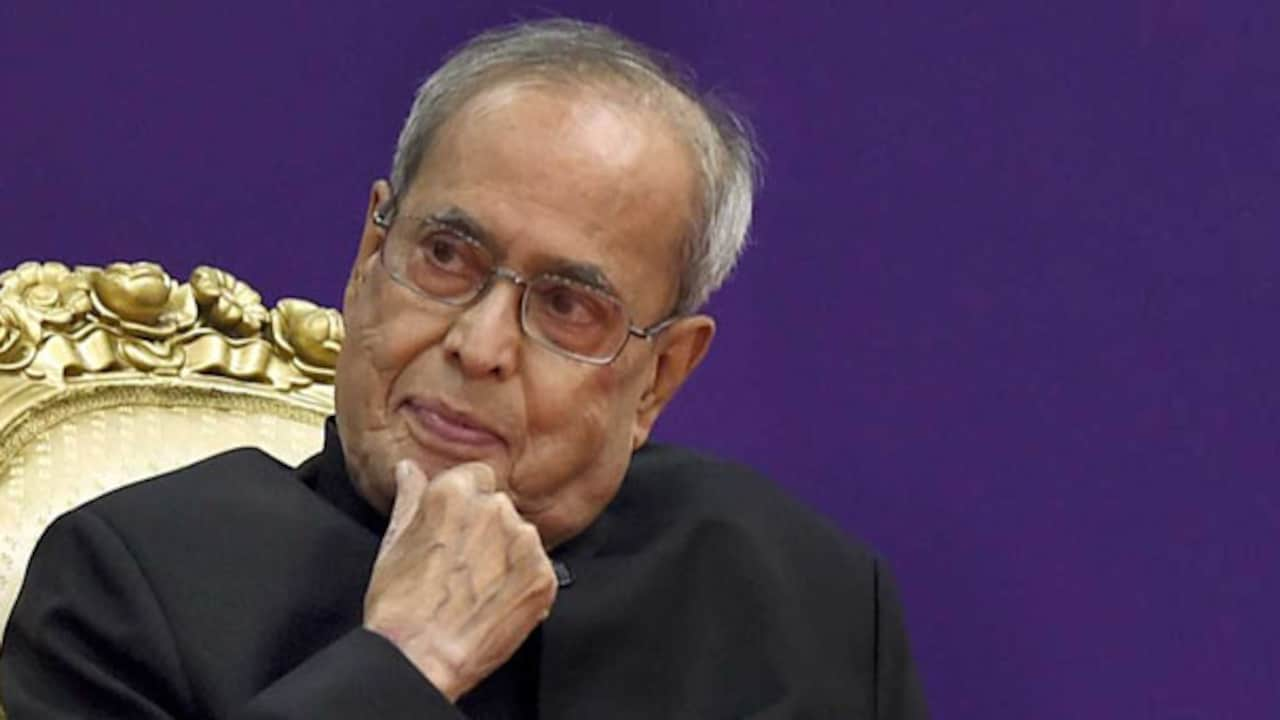
Sonia Gandhi's recently published autobiography has created a major storm across the country, but in a primarily personal account of her life, the part about Pranab Mukherjee is among the more politically revelatory bits. She writes that, during a private conversation in 2010, Pranab Mukherjee had expressed a desire to replace Manmohan Singh as the head of the UPA government. She says she diverted the conversation.
Sonia has also suggested that Pranab Mukherjee nurtured the ambition of becoming PM throughout his political life, carrying it quietly within.
Pranab Mukherjee's daughter, Sharmistha Mukherjee, has naturally come out in support of her father. She has questioned whether ambition should be considered a fault, particularly when it is backed by decades of political and administrative experience, extraordinary hard work and an exceptional intellect.
READ | 'Pranab Mukherjee Shocked Me With Change At Top Suggestion': Sonia Gandhi
She posted on X, "Once, when asked by me whether he wanted to become PM, he very candidly answered that any politician worth his salt has this ambition". She has also raised a more pointed question: should anyone outside the Gandhi family be discouraged from aspiring to the country's highest political office?
These are facts that have appeared in the media. Several journalists have interpreted and analysed her account. But a larger question remains unanswered.
Indira Gandhi, Rajiv, Sonia and even Rahul publicly gave Pranab Mukherjee considerable political importance at different points in time. Rajiv Gandhi brought him back into the Congress, and Pranab subsequently held several important ministerial portfolios. Yet, beneath this public recognition, the Gandhi family, after Indira Gandhi's death, never fully accepted him as one of its own. Neither Rajiv nor Sonia, and later Rahul, appeared to regard Pranab as someone who could be trusted unconditionally.
I want to examine this enduring political bitterness between Pranab Mukherjee and the Gandhi family after Indira Gandhi. As a journalist, I followed Pranab Mukherjee's political activities very closely, studied his career, and witnessed several interactions involving him. His relationship with 10 Janpath was complex, and I had the opportunity to observe many aspects of it. Why Sonia Gandhi chose to include this particular account in her autobiography is a separate question.
READ | Narasimha Rao's Grandson Slams Sonia Gandhi For Omitting Ex-PM In Memoir
I recall an interesting remark made to me by a senior Congress leader who was close to Sonia Gandhi, ahead of a budget presentation by Pranab Mukherjee as finance minister. Everyone was discussing the likely budget deficit and its implications. That leader told me that if Pranab Mukherjee's budget showed a deficit, Sonia Gandhi would not be angry. Pranab's real problem, he said, was not the budget deficit but the trust deficit.
Consider the example of another leader from Bengal, Priya Ranjan Dasmunsi. His political stature was never comparable to that of Pranab Mukherjee. Sonia gave Pranab far greater political importance, something Priya Ranjan may not have enjoyed to the same extent. Yet Priya Ranjan Dasmunsi was a trusted loyalist.
Priya Ranjan had left the party once, and Rajiv Gandhi later brought him back. From then on, he became a trusted lieutenant of both Rajiv and Sonia. Pranab Mukherjee, however, enjoyed greater political importance within the party. This distinction is significant because political importance and personal trust were not necessarily the same thing in the Gandhi family's assessment.
READ | Why Sonia Gandhi Wrote Her Book At All: There's An Unnamed Natwar Singh Connection
Manmohan Singh offers another example. He was not a political associate of Indira Gandhi in the same sense, but Sonia Gandhi always regarded him as her trusted "Doctor Sahib". During Indira Gandhi's tenure as PM, Manmohan was not a political figure. It was PV Narasimha Rao who brought him into the political arena by appointing him as finance minister. Yet Sonia trusted Manmohan more than she trusted Pranab.
Several other leaders, including Shashi Tharoor, Kamal Nath and Digvijaya Singh, were politically important within the Congress. However, for various reasons, they too could never become particularly close to 10 Janpath. This suggests that age was never the central issue. The decisive factor was loyalty and the extent to which the Gandhi family felt it could personally trust an individual.
Mallikarjun Kharge, for instance, is an elderly leader, but he became Congress president because he is regarded as a loyal party man. Sonia Gandhi knows that he would never behave like Sitaram Kesari. She trusts him not to act in a manner that could challenge the family's authority.
Pranab Mukherjee, on the other hand, was an extremely important figure in both the organisation of the Congress and the functioning of its governments. Sonia Gandhi had to acknowledge his importance and accept his contribution. However, the importance she gave him was professional rather than emotional. She recognised his abilities and relied on his political judgement when necessary, but there was no corresponding emotional commitment or personal attachment.
The episode involving Sitaram Kesari's removal as Congress president is a telling example. Sonia Gandhi wanted him out, but the question was how to accomplish it. It was Pranab Mukherjee who suggested a way forward.
He argued that the Congress Working Committee was the supreme authority in the party and could even remove the party president. Acting on this interpretation, the CWC passed a resolution to remove Sitaram Kesari without informing him beforehand. Kesari was subsequently informed of the decision. He was deeply hurt and said that he had not even been told that he was no longer the party president. Pranab had played a crucial role in making this happen.
Sonia Gandhi should, in principle, have been pleased with Pranab Mukherjee's intervention, as she had used his political and organisational understanding to achieve what she wanted. Yet, even after this episode, he remained an important but permanently second-ranking figure in the party.
Another episode involving Shivraj Patil illustrates the difference in how Indira and Sonia Gandhi treated their respective political colleagues.
After Shivraj Patil lost the Lok Sabha election from Surat, he was brought into the Rajya Sabha by the Sonia Gandhi-led Congress.
Pranab Mukherjee once told me that Indira Gandhi had extended a similar opportunity to him after he lost a Lok Sabha election. She had brought him into the Rajya Sabha from Gujarat.
Pranab understood that Sonia Gandhi was not prepared to do for him what Indira Gandhi had once done. The question, therefore, is why this trust deficit existed.
After all, during the UPA-II government's most difficult period, when Manmohan Singh's government was facing a series of crises involving the coal allocation controversy and the 2G spectrum case, it was Pranab Mukherjee who played the role of crisis manager.
Sonia Gandhi's account in her memoir 'Belonging' refers to the private conversation in 2010 about Pranab Mukherjee's ambitions, but the wider political context is important. By 2011, the Manmohan Singh government was already under considerable pressure. Whether Pranab Mukherjee actually expressed a desire to replace Manmohan Singh is by now a separate matter. That he was eventually made President of India, with a largely ceremonial position, is also a matter of fact. But a larger question remains: if he was so important to the government and the party during a crisis, why did the Gandhi family continue to have reservations about trusting him as PM, the real head of government?
With it come more questions: Was there an element of class or elitism involved? Did Pranab Mukherjee fail to represent a particular social and cultural elite with which the Gandhi family identified?
If social and cultural distance was the reason, it does not fully explain the treatment of other leaders. Shashi Tharoor, for example, possessed considerable intellectual ability, yet he was never made Congress president or even appointed leader of the opposition. Despite his intellectual standing, he was also not allowed to establish himself fully in the politics of his home state, Kerala. Rahul Gandhi, too, did not give him that space.
There is another interpretation worth considering. Was his political merit, his sharpness, something that made the family apprehensive? Could the Gandhi family have feared that his political stature might eventually become so great that he could challenge its authority?
The relationship between Pranab and the Gandhi family had several layers, and the origins of the tension can be traced back to the period immediately after Indira Gandhi's death.
Following Indira Gandhi's assassination, several people close to Rajiv Gandhi, including Arun Nehru, ML Fotedar, and Balram Jakhar, were politically active against Pranab Mukherjee. Gani Khan Choudhury was also among those opposed to him.
At the time, a campaign was being carried out suggesting that Pranab Mukherjee wanted to become PM.
This allegation appears to have deeply affected Rajiv Gandhi's thinking. However, PC Alexander later clarified an important detail in his account. When Indira Gandhi's body was lying at the All India Institute of Medical Sciences in New Delhi, Rajiv Gandhi arrived there, and Pranab Mukherjee was present. Alexander recalled that he advised everyone that Rajiv Gandhi should take the oath immediately. Arun Nehru was also part of the discussions. Pranab Mukherjee, according to this account, gave his full support to Rajiv taking over. Alexander subsequently addressed the controversy in his autobiography, suggesting that the issue had been resolved.
Nevertheless, the political consequences of the controversy did not disappear.
When Rajiv Gandhi formed his cabinet, Pranab Mukherjee was not included, leading to the latter forming a regional party of his own. By the end of that term, Rajiv Gandhi brought him back into the Congress, when he apparently felt that his experience and abilities were needed because the government and the party were facing difficulties.
Earlier, at the turn of the 1960s, the political struggle between Indira Gandhi and the Congress Syndicate, which included the Morarji Desai group and other leaders opposed to her, had shaped several relationships within the party. Pranab Mukherjee had been part of that political history, siding then with Indira. Over time, however, his relationship with the Gandhi family did not return to the same footing.
During Rajiv's political crises, there were media reports suggesting that Pranab Mukherjee was associated with VP Singh, who resigned from Rajiv's cabinet in 1987 and united the opposition to defeat him in the 1989 general elections on an anti-corruption plank.
The relationship between Pranab and VP Singh was, however, complicated tooo. By the time Pranab was back in the Congress, his association with corporates had already become part of political discussion.
So, when VP Singh became the prime minister, he removed Niti Sengupta, who was the revenue secretary and was earlier a secretary of Pranab Mukherjee, without offering any other position. For a senior IAS officer, such treatment was considered deeply insulting.
By the turn of the decade into the 1990s, Rajiv Gandhi began recognising Pranab's importance, but never gave him an assurance that he would be made a minister if and when he became PM again. Rajiv Gandhi did begin assigning him important responsibilities. Pranab was involved in preparing the party manifesto and was entrusted with organisational work, including responsibilities connected with internal elections. Rajiv was assassinated in 1991 during the Lok Sabha election campaign. PV Narasimha Rao became PM as the Congress managed to put together the numbers.
The larger question remains: whenever an opportunity arose, why did Rajiv Gandhi, Sonia and later Rahul never consider Pranab Mukherjee a possible PM?
At different moments, the requirements of the government and the party may have dictated the choice.
But one thing about Pranab Mukherjee must be acknowledged without any illusion or romanticisation: he was not a particularly popular mass leader.
His greatest strengths were his intellect, his understanding of political affairs, and his extraordinary bureaucratic and administrative skills. However, becoming Prime Minister of India requires more than that. A candidate who wants the post on his own also needs broad public support, particularly in the Hindi-speaking heartland.
VP Singh, for instance, had a political base in Uttar Pradesh. Whether a leader comes from the South or the North, the ability to emerge as a popular national figure is crucial.
READ | As LK Advani Turns 99, PM Modi Explains BJP Veteran's 2 Defining Qualities
The comparison between LK Advani and Atal Bihari Vajpayee of the BJP is relevant here. Advani was an exceptionally intelligent political leader, but Vajpayee was more popular. His political charisma and ability to connect with ordinary people gave him an advantage.
The same distinction could be seen in the BJP's leadership in 2014. There were several capable leaders, beginning with Advani and including Sushma Swaraj and others. Yet, the party's electoral victory and Narendra Modi's rise became closely connected in the public imagination. The BJP's victory and Modi's political stature came to be seen almost as one and the same phenomenon. The public mood was increasingly centred on Narendra Modi. If the country wanted Modi, that sentiment had to be understood as a powerful expression of public opinion.
Had Pranab Mukherjee, who died in 2020, been able to generate a similar wave of public support and build a strong national mass base, the situation might have been very different, and the Gandhi family's support might not have been the deciding factor then. Sonia Gandhi's personal trust in him, or the absence of it, would not have mattered to the same extent.
But he did not have that kind of mass support. That, perhaps, made it easier for the Gandhi family to keep him in the position of a highly important political number two, rather than consider him for the country's highest office.
KioskNews shows a cleaned-up reading view extracted from the publisher’s page — the original always lives on their site, not ours.