Missed MBBS by one mark in 2016; decade later clears UPSC with AIR 812
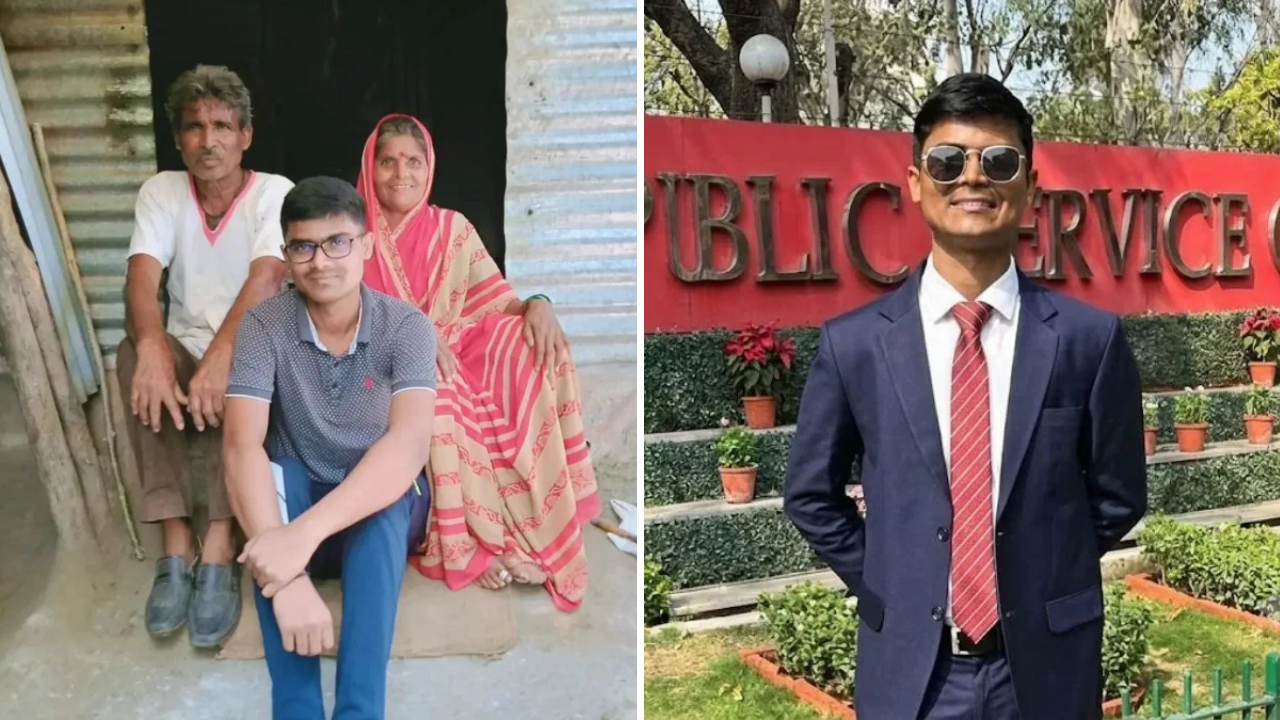
Photos courtesy: BBC Marathi
For 26-year-old Bhikan Rojekar, success in one of India’s toughest competitive examinations came after years of preparation and repeated attempts. When the results of the Union Public Service Commission (UPSC) Civil Services Examination 2025 were declared on March 6, Rojekar secured All India Rank (AIR) 812 on his fifth attempt.
But the achievement carries particular significance for the young man from Jalgaon Sapkal village in Maharashtra’s Jalna district, whose parents worked as agricultural labourers and whose home is a modest paper shed.Rojekar’s journey has been marked by setbacks as well as opportunities. In 2016, he missed securing an MBBS seat by just one mark. He eventually pursued a degree in Agriculture, a decision that would become important not only for his education but also for the alternative career he kept open while preparing for the civil services.“They worked very hard, and the fruits of that hard work and dedication have brought them to where they are today,” he told BBC Marathi, referring to his parents.
From a farming family to Delhi’s UPSC preparation circuit
Rojekar’s father, Jagan Rojekar, worked as a salgadi, a worker employed on a farm, while his mother worked as a farmhand. His father had also spent years working in Khandesh before returning to his native village.Recalling his father’s early working life, Bhikan told BBC Marathi: “My father had gone to Khandesh before I was born.
He worked as a saldar (farm labourer) there. His life was spent working as a saldar and doing paid labour for others.”His father’s happiness was evident after the UPSC result. For a family whose livelihood depended on agricultural work, his son’s achievement represented years of effort finally bearing fruit.Jagan Rojekar also had a message for his son as he prepared to enter public service.“The son passed, he is very happy. Just as you worked honestly, you should continue to serve the people well.
This is our message,” he told BBC Marathi.The advice reflects the expectations that accompany the achievement. Clearing the UPSC examination is a major milestone, but for Rojekar’s family, the hope is that it will translate into an opportunity to serve people with honesty.
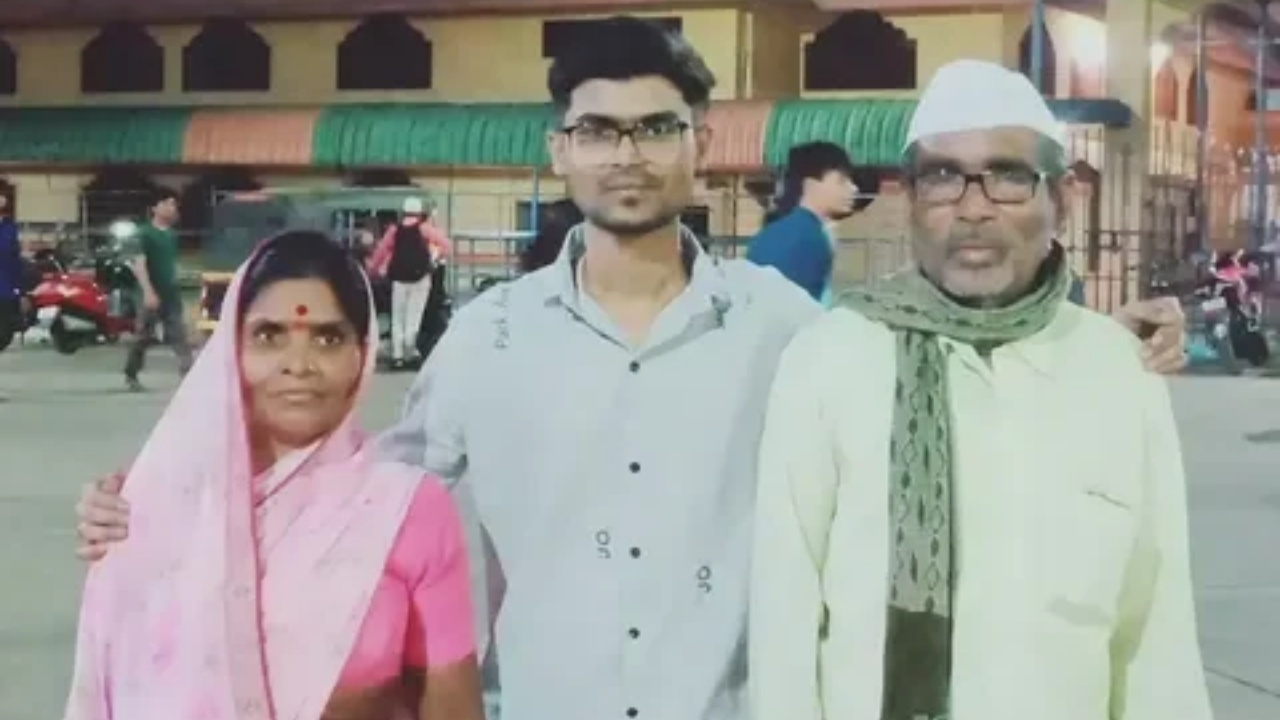
Bhikan Rojekar’s parents worked as farm labourers as he pursued his education and prepared for the UPSC examination.
How a Maharashtra government scholarship helped him prepare
Rojekar completed his schooling up to Class 10 in Marathi medium. He then studied Science in Classes 11 and 12 before pursuing a Bachelor of Science degree in Agriculture.He began preparing for the UPSC examination in 2021 and moved to Delhi the following year to continue his preparation.“I started preparing for UPSC completely from 2021. In 2022, I went to Delhi. In 2023, I got the BARTI Scholarship from the Maharashtra Government. Through that, I got good classes,” he told BBC Marathi.The scholarship was an important source of support during his preparation. BARTI, or the Dr Babasaheb Ambedkar Research and Training Institute, is an autonomous organisation under Maharashtra’s Department of Social Justice and Special Assistance.
Among its activities is providing training support for UPSC preparation to eligible Scheduled Caste candidates.Explaining the scheme, Rojekar said it enables eligible students from rural and urban backgrounds to access coaching facilities in Delhi. He also described the financial assistance available to candidates during different stages of preparation.“The government takes care of all the expenses and you get a stipend of Rs 13,000 every month,” he said, explaining the support available under the scheme.
He also outlined additional financial assistance for candidates who clear the preliminary examination and progress to subsequent stages.For aspirants who have to balance preparation with limited family resources, such support can make access to coaching and a place to study away from home more feasible.
He reached the final stages of three competitive examinations
Rojekar’s preparation involved more than one examination cycle. He appeared for the UPSC Civil Services Main examination in 2024 and 2025.
In 2025, he also qualified for the Main examination of the Indian Forest Service and reached the interview stage of the Central Armed Police Forces Assistant Commandant examination.“I wrote the Mains in 2024 and 2025. In 2025, I qualified for the interview for UPSC Civil Mains, UPSC Forest Mains and UPSC CAPF Assistant Commandant. I reached the last stage for all three Class One posts,” he told BBC Marathi.The result in the Civil Services Examination came after four unsuccessful attempts.
His experience illustrates how competitive examination preparation can involve several rounds of testing, reassessment and continued effort before a candidate secures the desired result.It also offers a reminder that progress is not always limited to one examination. Rojekar’s performance across multiple competitive examinations showed that his preparation was opening other possibilities even before he secured his civil services rank.
His advice: study the syllabus, analyse 10 years of question papers
For Rojekar, preparation is not simply about studying for long hours. He believes aspirants need to understand the pattern of the examination and plan their preparation carefully.“UPSC has been conducting exams for many years. Their questions have a pattern. So we should take 10 years of question papers. We should understand its pattern. We should understand its proper theme. We should complete the proper syllabus, give mock tests, solve the question papers and then give the paper,” he said.He also emphasised the importance of answer writing for the Main examination, where candidates need to present information clearly and support their arguments with relevant facts.“There is a proper syllabus for the main exam, it is written. A lot of details are written. We must complete the syllabus. Data, facts should be visible in our answers. We must have command over language. Because language is important in essays.”He advised candidates to develop a strong understanding of their optional subject and prepare detailed solutions to questions asked in previous years.His approach focuses on systematic preparation: knowing the syllabus, understanding the examination pattern, practising with mock tests and using previous question papers to identify the themes candidates need to master.
Why he believes every aspirant needs a Plan B
One of Rojekar’s most practical messages to UPSC aspirants concerns the uncertainty of competitive examinations.
Syllabuses and examination requirements can change, and even years of preparation cannot guarantee selection.“Competitive exams are unpredictable. That is, it is not possible to clearly predict when there will be any changes in the syllabus of competitive exams. Therefore, young people preparing for competitive exams should always keep a Plan-B ready,” he said.He elaborated on why students should not neglect their formal education while preparing for a competitive examination.“There must be a Plan B in competitive exams. Because it is impossible to say which papers will be included and which papers will be cancelled. Whether they will remain optional or not, the syllabus changes every year. Due to this, there is an insecurity. Therefore, the degree education should be good. Even if it is not good, there must be some Plan B,” he told BBC Marathi.In his own case, Agriculture became that alternative.“Like my family, my brothers used to say, get a professional degree so that you can get a job somewhere, so I did agriculture. So that was my plan B in agriculture,” he said.The advice is grounded in his own experience. Pursuing a professional degree did not prevent him from preparing for the UPSC; instead, it gave him another option while he worked towards his goal.
‘Come after passing’: the pressure of returning home without success
Rojekar also spoke about the social pressure faced by candidates who spend years preparing for competitive examinations.
In smaller communities, where people know a candidate’s academic record and ambitions, an unsuccessful result can invite questions and criticism.“If you come to the village, it will set a negative example. People will say that you stayed there for 4-5 years, you were very intelligent. If you don't pass, you won't be able to pass,” he told BBC Marathi, describing the perceptions surrounding repeated attempts.He added that the pressure can create an expectation that candidates should return home only after clearing the examination.His comments point to a dimension of competitive examination preparation that extends beyond books, coaching and mock tests: the challenge of managing expectations while dealing with uncertain results.For Rojekar, the fifth attempt brought the result he had been working towards. His AIR 812 in the UPSC Civil Services Examination 2025 marks the culmination of years of preparation, supported by his family’s work and the scholarship that helped him access coaching.His message to other aspirants, however, goes beyond persistence. Study the syllabus thoroughly, understand previous question papers, practise answer writing and, above all, keep another career option open.For a young man whose parents worked as farm labourers, that advice is as much about preparing for uncertainty as it is about preparing for an examination. His own journey shows how a difficult ambition can coexist with a practical backup plan - and why an alternative path need not mean giving up on the one a student hopes to pursue.
KioskNews shows a cleaned-up reading view extracted from the publisher’s page — the original always lives on their site, not ours.