Warner Bros.’ Paramount Merger Makes Hollywood’s Franchise Problem Even Bigger

Thomas Butt is a senior writer. An avid film connoisseur, Thomas actively logs his film consumption on Letterboxd and vows to connect with many more cinephiles through the platform. He is immensely passionate about the work of Martin Scorsese, John Ford, and Albert Brooks. His work can be read on Collider and Taste of Cinema. He also writes for his own blog, The Empty Theater, on Substack. He is also a big fan of courtroom dramas and DVD commentary tracks. For Thomas, movie theaters are a second home. A native of Wakefield, MA, he is often found scrolling through the scheduled programming on Turner Classic Movies and making more room for his physical media collection. Thomas habitually increases his watchlist and jumps down a YouTube rabbit hole of archived interviews with directors and actors. He is inspired to write about film to uphold the medium's artistic value and to express his undying love for the art form. Thomas looks to cinema as an outlet to better understand the world, human emotions, and himself.
Just when we thought we were out, they pulled us back in. As the entire filmmaking industry shifts after the landmark merger between Paramount and Warner Bros., two of Hollywood's most iconic legacy studios, the trends that moviegoers embraced over the last year now face their greatest threat yet. 2025/2026 signaled a new era for the industry, headlined by two original movies, Sinners and Obsession, that became box office behemoths and cultural sensations. These films and other surprise hits, along with the disappointment of franchise films that were once considered financial guarantees, were supposed to be the catalysts for a new wave of movie-making that showed interest in fresh ideas, rather than sequels, IP, and old brands. But now, with the consolidation of studios and the subsequent increased influence of shareholders over studio output, the return of franchise omnipresence is a real threat to the industry's creative prosperity.
Skydance Owns a Vast Number of Brands and IP

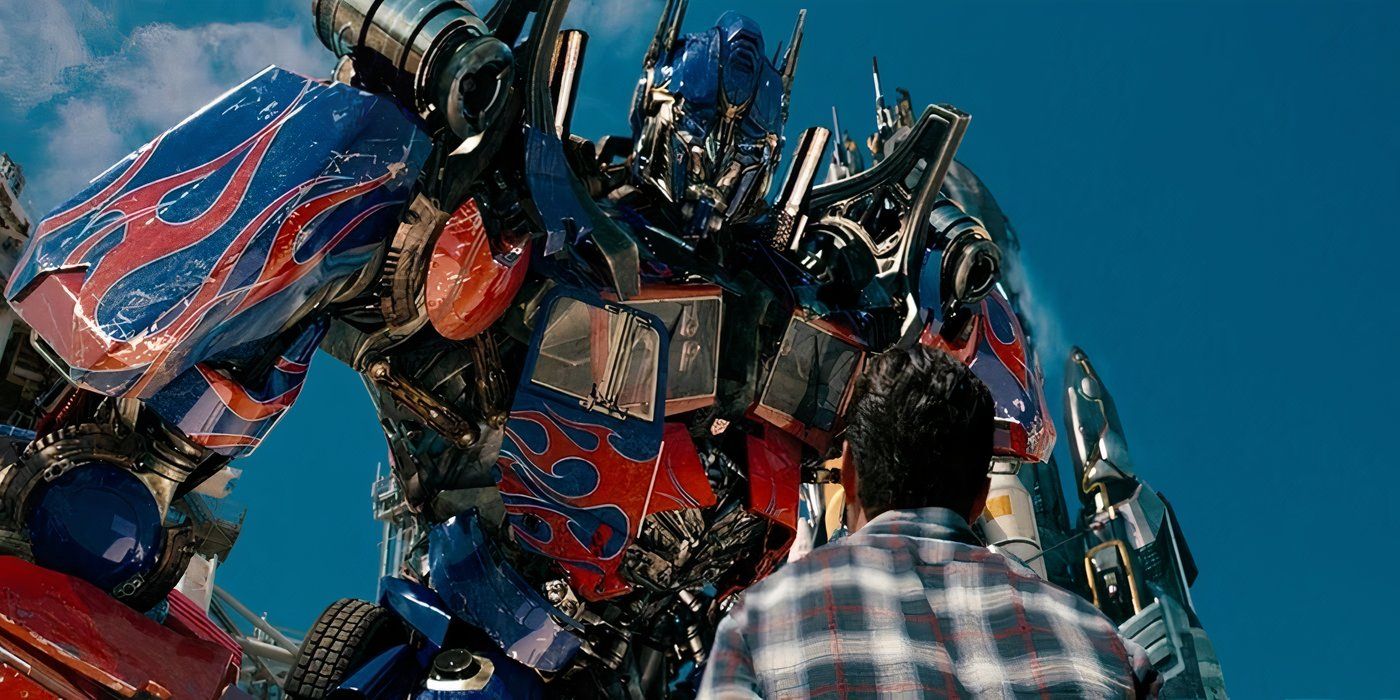
For decades, a corporate stranglehold has been growing on Hollywood, marked by the tech industry's foray into movie production and distribution. The Paramount-WB merger, now operating as Skydance, is the culmination of this unfortunate industry trend. Despite Skydance CEO David Ellison's claim that he is a "believer" in original storytelling, the company's upcoming movie lineup suggests that they are doubling down on safe, familiar franchises. Within no time, Deadline reported that the new mega studio had enlisted Stephen Spielberg and Michael Bay to revive the Transformers franchise.
The combined forces of Paramount and Warner Bros. result in a vast pool of IP ripe for further big-screen adaptations. Just to name a few, Skydance now has ownership of the aforementioned Transformers, DC Comics characters, Harry Potter, Star Trek, the Middle-earth saga, Barbie/Mattel, and many more. Each franchise has a new movie or series in the works, many of which were inherited from Warner Bros., such as The Batman: Part II, the Potter HBO series, and a rumored sequel to Greta Gerwig's 2023 mega blockbuster. It's hard to imagine that Paramount was pursuing a $110 billion acquisition of WB without wanting to capitalize on its lucrative properties, even if the company's newly developed indie/arthouse label, Clockwork, remains intact. Ellison and company have promised to give their major releases a proper theatrical release, but if the majority of their output is going to be franchise-oriented, then the business will be back to square one.
How the Paramount-Warner Bros Merger Could Affect the State of Filmmaking
Warner Bros.' final years as an autonomous studio will likely be remembered fondly by cinephiles — an era overseen by Michael De Luca and Pamela Abdy, who will not be part of Ellison's management team. At a time when the arts frequently capitulate to shareholders, De Luca and Abdy were among the last bastions of upholding creative freedom and backing auteur filmmakers in the major studio system. Under their leadership, Warner Bros. released a handful of original films that were both beloved and commercially successful, notably Sinners and Weapons, as well as the Best Picture-winning One Battle After Another. Of course, considering that they invested in polarizing movies with unconventional sensibilities, they also greenlit a fair share of noisy flops, including Mickey 17, The Bride!, and Digger, the latter of which released concurrently with the official approval of the merger.
A business merger of this magnitude doesn't go through to take financially reckless decisions, such as lending $100–200 million to Bong Joon-ho, Maggie Gyllenhaal, and Alejandro G. Iñárritu to make provocative black comedies with elaborate concepts and sets. And with all this IP under their belt, Skydance doesn't have to look too far to churn out a profit. While it appears that audiences will have to suffer from a continued onslaught of safe, predictable franchise entries and reboots, keep in mind that legacy brands and superheroes on their own no longer guarantee a blockbuster. Recent flops/financial disappointments like Supergirl, Scream 7, Masters of the Universe, and Star Wars: Mandalorian and Grogu suggest that audience tastes have moved on.
Box office numbers prove that most audiences want something familiar, but it has to present itself as fresh, as evidenced by the rise of new films with pre-established fanbases from other media like Minecraft and Backrooms. The media landscape is not too inspiring from afar, but if the market still dictates how decisions are made, then we can expect more breakthroughs like Sinners and Obsession.

Transformers
- Release Date
- July 3, 2007
- Runtime
- 144 minutes
- Director
- Michael Bay
- Writers
- Alex Kurtzman, Roberto Orci, John Rogers
-

Sam Witwicky
-

Mikaela Banes
-

Mark Ryan
Bumblebee (Voice)
-

Peter Cullen
Optimus Prime (voice)
KioskNews shows a cleaned-up reading view extracted from the publisher’s page — the original always lives on their site, not ours.