Explainer: How China Got Access To Nvidia's AI Chips Despite Tough Rules
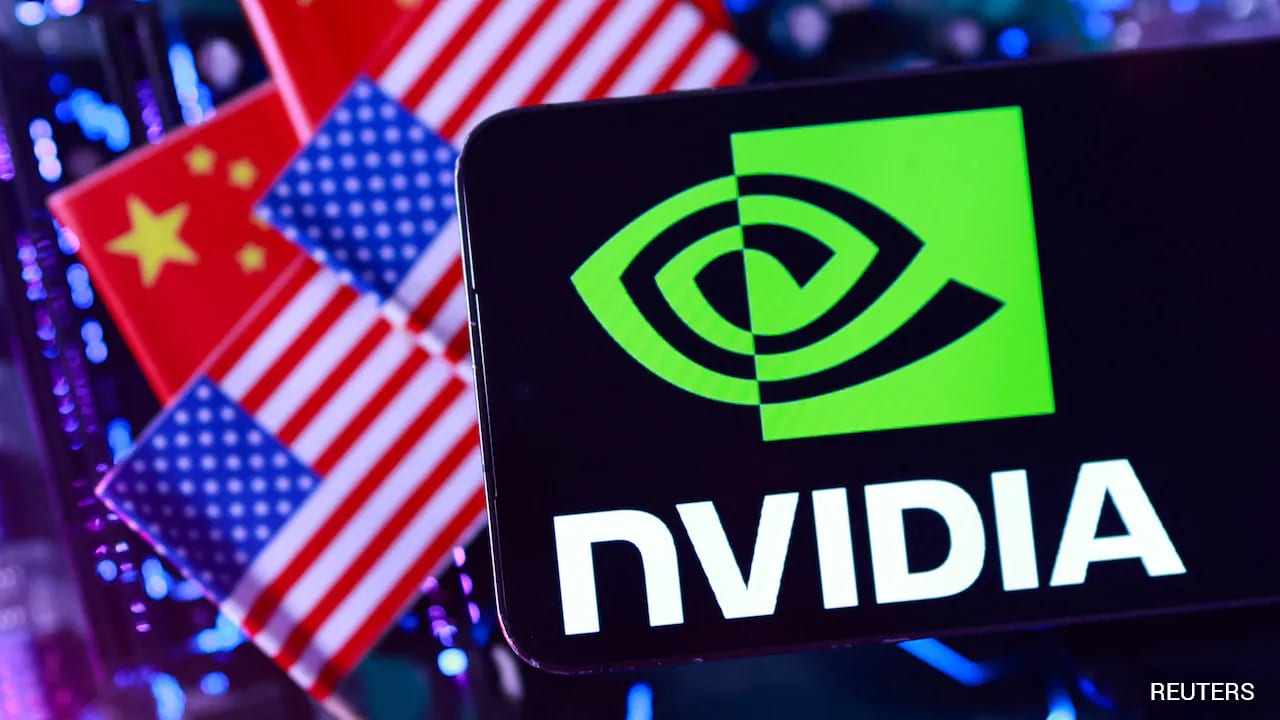
AI chips are a central battleground in the US-China technology race. To preserve its lead, in recent years Washington has imposed and revised rules to restrict China's access to advanced semiconductors and chipmaking technology, while balancing national security concerns with trade considerations.
The drama around Nvidia, the top US exporter of AI chips to China, has thrust those rules into the spotlight.
Delving into the resulting regulations is a quagmire. Export control rules are often likened to the US tax code in their complexity and constant revision.
Here are some basics for understanding what's legal, and what's not, when it comes to China's access to US AI chips:
When did the US start to restrict chips to China?
In October 2022, the US unveiled sweeping restrictions on advanced chips to China, marking the biggest shift in US policy toward exporting technology to China in decades.
A year later, it tightened the rules to capture more chips and stop chip designers such as Nvidia from selling products engineered to fall just below the performance thresholds of the earlier restrictions. It also expanded the restrictions to countries in the Middle East and restricted chips to overseas companies headquartered in China.
In January 2025, the Biden administration extended the restrictions globally, imposing a worldwide license requirement. But in May, days before it was set to take effect, the Trump administration announced it would not enforce that rule.
The Trump administration only formally rescinded and replaced the rule last week, leaving a gap that allowed data center capacity to proliferate in countries such as Singapore, where Chinese companies could rent computing power remotely to train and deploy AI models.
Did Megaspeed, the Singapore cloud company whose former executive allegedly had an affair with Nvidia CEO Jensen Huang, operate legally?
For over two years, authorities have been investigating whether Megaspeed diverted chips to China, which would be illegal. But companies in countries including Singapore were allowed to buy advanced AI chips for their data centers license-free until the US issued a new rule last week cutting off that practice.
Megaspeed likely won't be getting any more chips. It was added to a US trade blacklist this week, along with its Thai and Malaysian subsidiaries, essentially blocking shipments. Nvidia also said it cut off sales to Megaspeed in June 2025.
Are Nvidia's shipments of AI chips to China legal?
About a year ago, President Donald Trump allowed Nvidia to ship its H200 chip to China, drawing criticism from experts who said the chips would help jumpstart China's military modernization and erode the US lead in AI. The H200 chip is one of Nvidia's more advanced chips, but not top-of-the-line.
Nvidia cannot simply ship the chips to Chinese companies that pay for them. Nvidia must apply for licenses from the US Department of Commerce, which has issued them since last spring on a case-by-case basis.
Last week, the House Foreign Affairs Committee released licensing data showing the Trump administration approved shipments of nearly 900,000 advanced AI chips made by Nvidia and AMD for Chinese companies from December 2025 through May 2026.
What does the new Trump administration rule do?
Last week, the Trump administration issued a new regulation, adding license requirements for five countries including Malaysia, Singapore and Thailand, in an effort to crack down on chips being smuggled into China.
Prior to that, the chip-based license requirement generally applied to countries like Russia that raise national security concerns, along with companies headquartered in arms-embargoed countries. Now they also apply to Southeast Asian countries viewed as transshipment points with a high risk for illegal diversion to China.
The rule also clamped down on AI chip sales to non-US data centers that supply a high volume of computing power to Chinese-headquartered firms.
How big a problem is chip smuggling?
For years, Nvidia's Huang has said there is no evidence of chip smuggling to China.
But that assertion, which experts already viewed skeptically, was further questioned in March when US prosecutors charged three people associated with California-based AI server maker Super Micro Computer, including its co-founder, in a scheme to divert about $2.5 billion of US technology into China, including AI servers packed with Nvidia AI chips.
Critics say Nvidia has tried to minimize a well-known risk. Huang once said Nvidia's sophisticated Grace Blackwell AI chip platform weighed nearly two tons (1.8 metric tons) and could not fit into a pocket or backpack. But servers are not smuggled in backpacks. They are routed through third countries and intermediary companies.
Supporters say Nvidia may not have had verified evidence of diversion and that the company cannot keep tabs on all its products after they're sold.
Can Nvidia track its chips to see where they end up?
Nvidia has built location verification technology that could indicate which country its chips are operating in, the company confirmed in December 2025. It has offered the feature as a software option for customers.
But the company has opposed proposed legislation that would require location verification and diversion reporting for advanced AI processors.
A measure known as the Chip Security Act is among several export control bills that gained new momentum in the wake of the Nvidia scandal, and may be included in the National Defense Authorization Act that Congress is expected to pass next month.
(Except for the headline, this story has not been edited by NDTV staff and is published from a syndicated feed.)
KioskNews shows a cleaned-up reading view extracted from the publisher’s page — the original always lives on their site, not ours.