Let women live. Lock up the men
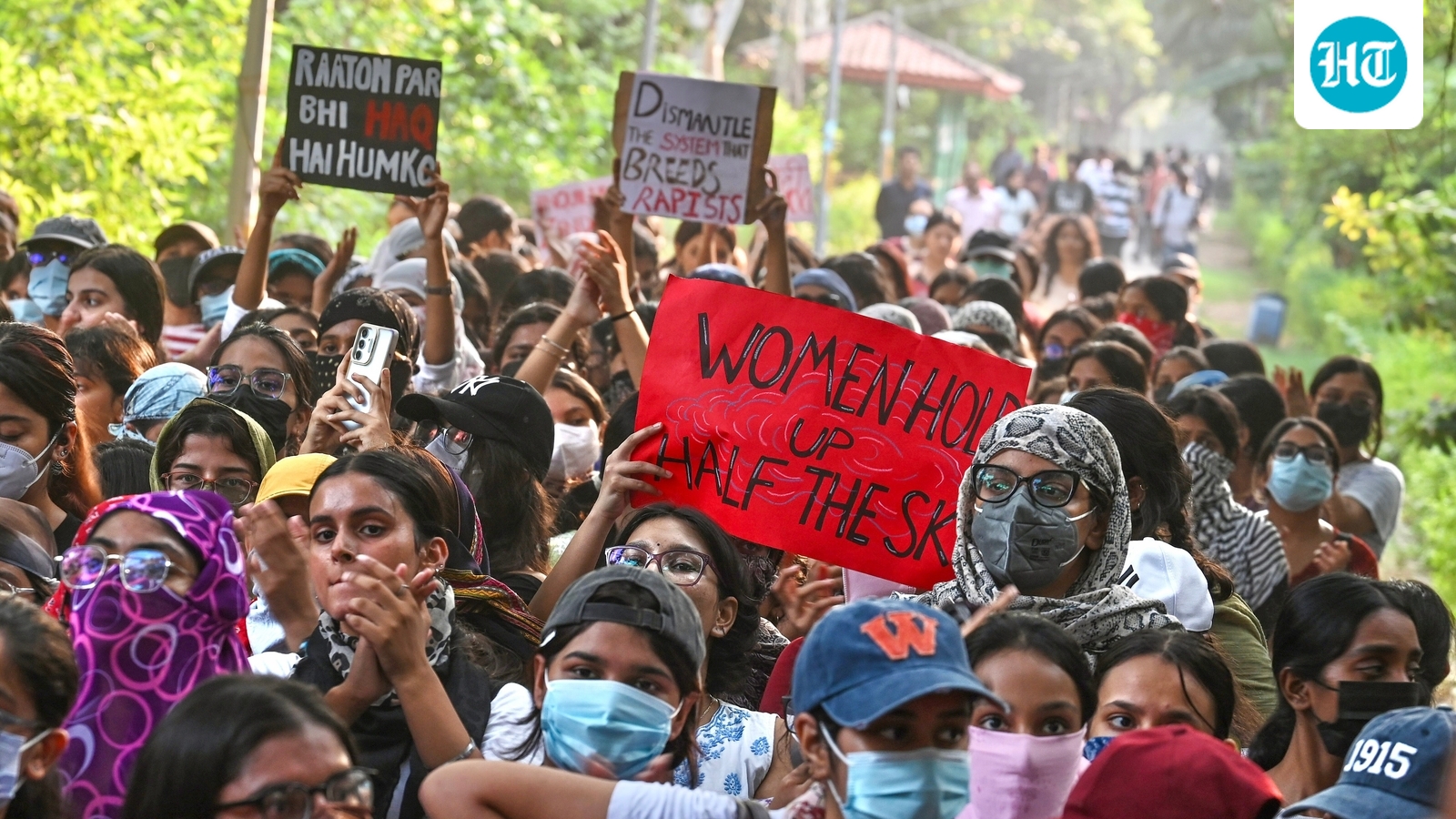
Dismantling rape culture cannot be a piecemeal project. Yet another gangrape in Delhi reminds us of the work that is yet to be done—and undone.

 Prefer HTon Google

Comprehensive safety audit of all city parks: ordered. Increased patrolling: begun. Pink police: planned.
Another gangrape in Delhi, this time of a 17-year-old girl at Aastha Kunj park, near Lady Shriram College (LSR), at around 7.30 pm on September 21. It has been followed by a spate of administrative actions that might have prevented the crime had they already been in place.
That argument is moot. But restricting access to public parks after sundown, and the decision by all-women’s LSR, one of India’s top-ranked institutions, to switch to online classes, even if only for a day, carried an unambiguous message: men commit crimes for which women must be locked up.
The mobility of women has been one of India’s great challenges. Ever since the December 2012 gangrape of a young physiotherapy student in a moving bus, women have been trying to claim their rightful share of space — whether in education or the workplace, on the sports field or in public transport. In many ways, we’ve made progress, but somehow violence against women, including sexual assault, remains a battle we keep circling back to.
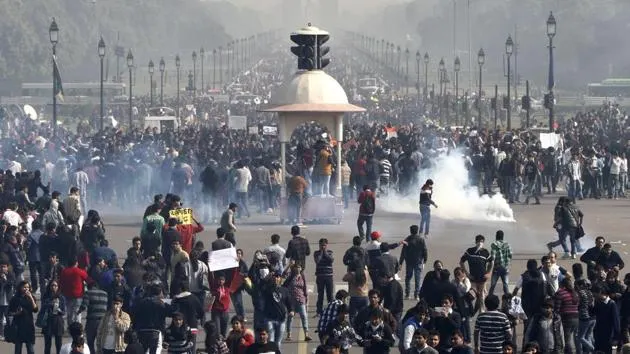
In 2012, the crime was gruesome enough for us to march in anger. In response, the government amended the criminal law, expanded the definition of rape, introduced tougher punishments and increased the age of consent from 16 to 18.
Earlier, in 1972, the rape of Mathura, a young tribal girl, inside a police station in Maharashtra and the subsequent acquittal of the accused policemen led to massive protests. The nationwide campaign eventually led in 1983 to a change in the law that recognised custodial rape and modified the idea of consent in certain rape cases, such as those by men in uniform.
And here we are in 2026, back on the street. While the Aastha Kunj park case has received inordinate attention, September’s list of shame includes the rape of a 10-year-old child by a 56-year-old tailor at his shop at Sadar Bazar; the assault of a six-year-old by a 34-year-old man; and the gangrape and murder of a 16-year-old by a group of four teenagers, three of them minors. According to one estimate, there have been 13 reported cases in Delhi this month—and September is not yet over.
The problem with raja betas
The number of children who are rape survivors shot up from 10,934 in 2015 to 43,675 in 2024, according to National Crime Records Bureau (NCRB) data analysed by NDTV. Teenage girls face the highest risk, with those aged between 16 and 18 accounting for more than half the number of child rape survivors.
Amongst metros, Delhi’s disgraceful title of rape capital of India remains intact with the highest number of reported rape cases, 1,058 registered in 2024, according to NCRB.
India’s rape problem is very much a male problem. Men and boys are growing up with the belief that they have a right to women’s bodies. Our education system has failed to teach them ideas of consent, bodily autonomy and equality. Steeped in patriarchy, many grow up watching their fathers brutalise and belittle their mothers at home—one in three ever-married women is subject to spousal violence, according to the National Family Health Survey—and replicate the same behaviours because, in many cases, they simply don’t know better.
On September 19, in the name of moral policing, a group of young boys accosted two class 10 students, a girl and boy, in Jamui, Bihar. The students were returning from their coaching class when they stopped enroute. Why were they are, the thugs wanted to know. Did they plan to marry? Brazenly, the group was shooting a video after taking care to hide their faces. In it, one of them, his face covered in an orange scarf, can be seen lifting the girl physically while groping her. After apologising and begging to be allowed to leave, the two kids managed to return home. Two days later, after the video went viral, the police made arrests.
Instead of apologising for the lapse in law and order, Bihar’s chief minister Samrat Choudhary gloats: “If there was no reel would they have been caught?” Then, his official handle tweets a photograph of the minor girl and her family, in contravention of the law. Patna police has reportedly registered a case against employees of the CM’s office.
Minister Shravan Kumar calls the incident a “chutphut ghanta”, of no consequence, betraying possibly a mindset in which crimes against women and girls don’t really matter. And Jamui’s MLA, Shreyasi Singh, one of 29 women in the 243-member Assembly, reportedly told a journalist that “moral policing can be done in a more decent and elegant fashion”.
Other videos are emerging of young women being accosted and assaulted in different parts of Bihar by groups of boys, though the dates of the alleged incidents have not been verified. From Samastipur, there’s a video of a young girl in jeans being touched and heckled. And from Banka, a minor girl is being harassed by a group of boys.
India’s infamous preference for sons has resulted in yet another generation of “raja betas” brought up to believe they can do no wrong.
At the same time, we have India’s most aspirational generation of teenage girls who have bridged the education gap, are excelling in sports and, in many cases, are supported by their parents. Yet, we still bring up girls to be compliant and obedient. Family honour is still vested in their supposed sexual purity. Love marriage is still frowned upon and inter-caste and interfaith love remain taboo.
These are boundaries supported by the patriarchal State. Independent India’s first uniform civil code in Uttarakhand has a strong element of moral policing by requiring live-in relationships to be registered with government authorities. In several BJP-ruled states, anti-conversion laws make interfaith marriage virtually impossible.
In Jalgaon, this week, a caste council reportedly fined a family ₹100,000 after their daughter chose to marry a man from her own community thereby violating customary rules. In Haryana’s Hisar, residents of a village met to ‘ban’ love marriages in order to “preserve the local fabric”.
Newer mediums of communication including social media are infected by misogyny. AI tools are used to sexualise women politicians—the BJP Gujarat unit’s official party handle has no problem using a morphed image of the 79-year-old Sonia Gandhi that is intended to be derogatory.
A half century after women marched to demand changes in rape law, we remain stuck in the same place, trapped in a time warp.
Free women
A modern nation cannot claim to lock up half its citizens for “their own good” and protection. Yet, again and again we come back to the idea of a woman’s place in society. Numbers establish that it is not in Parliament, in courts, in workplaces but at home.
In public speeches and policy, Prime Minister Narendra Modi talks of nari shakti and women-led development. His flagship scheme, Beti bachao is now the subject of memes because we literally have to save daughters from the jungle that passes as public space. Every walk to the bus-stop, every visit to the park or market becomes a negotiation: Is there a safer route? Are there enough bystanders? Why isn’t the streetlight working? Did you remember to share your location when getting into an Uber?
Dismantling rape culture cannot be a piecemeal project. It cannot happen within the boundaries of patriarchy where women remain subordinate to fathers, husbands and sons and face backlash for challenging traditional roles by claiming space.
It cannot happen in a society where mainstream politics sexualises women. It will certainly not happen where courts continue to pass judgements that blame women or counsel young girls to marry their rapists, and where the government says rape by a husband cannot be a crime.
It will not happen as long as we search for mitigating reasons to exonerate our ‘friends’. How was he to understand her ‘no’ which was too feeble? The woman had very liberal sexual views, of course, he misunderstood. And on it goes…
It’s time to stop asking women to shrink their lives, their ambitions, their selves. Let colleges require men to stay at home and take online classes. Let their presence in streets, parks and any public space be banned after sundown. Let women live. Let women breathe.

Namita Bhandare writes on gender and other social issues and has 35-plus years of experience in journalism. She has edited books and features in a documentary on sexual violence. She tweets as @namitabhandareRead More

KioskNews shows a cleaned-up reading view extracted from the publisher’s page — the original always lives on their site, not ours.