The 10 Best Drama Movies in Film History

Diego Pineda has been a devout storyteller his whole life. He has self-published a fantasy novel and a book of short stories, and is actively working on publishing his second novel.
A lifelong fan of watching movies and talking about them endlessly, he writes reviews and analyses on his Instagram page dedicated to cinema, and occasionally on his blog. His favorite filmmakers are Andrei Tarkovsky and Charlie Chaplin. He loves modern Mexican cinema and thinks it's tragically underappreciated.
Other interests of Diego's include reading, gaming, roller coasters, writing reviews on his Letterboxd account (username: DPP_reviews), and going down rabbit holes of whatever topic he's interested in at any given point.
Sign in to your Collider account
Any film is either a comedy or a drama, and though both genres have produced several of the greatest films ever made, dramas in particular have delivered the movies that are most often counted among the biggest masterpieces the Seventh Art has ever seen. These are genres all about serious conflicts, characters clashing, and dialogue propulsing the story and plot forward.
For the purposes of this list, genre films will be excluded. Here, dramas will be considered non-comedy movies where the main focus is on emotionally-driven conflicts between characters and realistic struggles, leaving things like plot-driven thrillers, fantasy and sci-fi films, and horror movies off the table. Whether it's an underrated biopic like Mishima: A Life in Four Chapters or a hyper-acclaimed classic like The Godfather, history's greatest dramas are all essential viewing for cinphiles the world over.
10 'Cinema Paradiso' (1988)

Winner of the Academy Award for Best Foreign Language Film and of the Cannes Film Festival's Grand Prix, Giuseppe Tornatore's Cinema Paradiso is not only the greatest Italian drama in history, but even one of the greatest films of all time. With its wonderful coming-of-age tale featuring one of the best depictions of childhood in movies, it's no wonder why it has aged as well as it has.
Beautifully emotional without ever feeling saccharine, hopelessly romantic without ever feeling naive, and delightfully long without ever feeling excessive, Cinema Paradiso works simultaneously as a love letter to the movies and as one of the best of the '80s. Anchored by Tornatore's emotionally stirring direction and Ennio Morricone delivering one of the greatest musical scores in film history, it's an international classic that everyone should watch at least once in their lives.
9 'Mishima: A Life in Four Chapters' (1985)

The biopic genre is one that has become increasingly tired and trite over the years. At some point, directors started feeling comfortable delivering movies that felt more like cinematic version of a Wikipedia article than like an actual encapsulation of a subject's life and work. That isn't the case with Mishima: A Life in Four Chapters, a revolutionary masterpiece written and directed by screenwriter-turned-filmmaker Paul Schrader.
Mishima is one of the most underrated drama movie masterpieces the world has ever seen. Its director uses surrealism and creative elements from the books created by writer, martial artist, and model Yukio Mishima to create a drama that genuinely feels like it captures Mishima's spirit perfectly. Impeccably written, visually stunning, and entirely unique, it's right at the peak of what biopic dramas have to offer in the arthouse space.
8 'Persona' (1966)

Rarely has history seen filmmakers quite as great or influential as Swedish legend Ingmar Bergman, one of the most impactful directors in the history of European cinema. There are sprinkles of surrealism across all of his wonderfully complex, emotionally riveting filmography, but nowhere are those sprinkles more intense than in Persona. Fittingly, it happens to arguably be Bergman's magnum opus.
Persona is one of the best psychological dramas in history, and a must-see for all those who love arthouse dramas. Magnificently directed by Bergman in full control of his craft, full of haunting black-and-white images, and bolstered by Bibi Andersson and Liv Ullmann's performances, it's a masterpiece about identity, duality, and gender which only keeps getting better with age.
7 'Schindler's List' (1993)
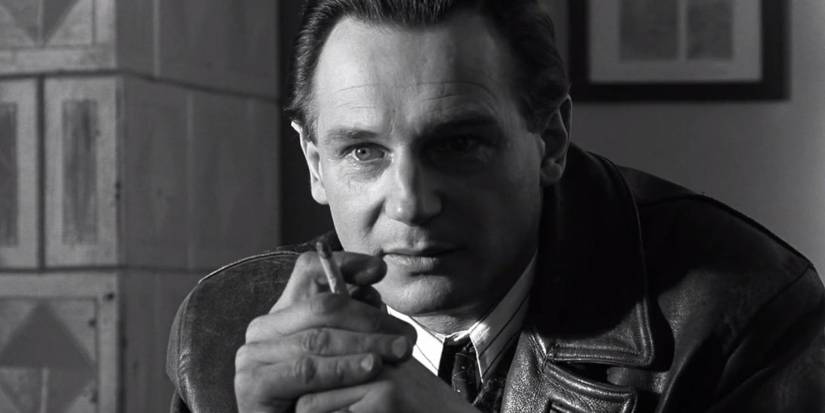
Steven Spielberg is the father of blockbusters and a master of popcorn genre flicks, but it just so happens that his best film to date is a biopic drama through and through: the World War II period piece Schindler's List, one of the most powerful war movies of all time. It deservedly earned Spielberg his very first Best Director and Best Picture Academy Award victories.
It's impossible to know where to begin singing Schindler's List's praises. Spielberg's direction is beautifully humanist and necessarily hopeful, but he never shies away from the purely harrowing nature of the material. John Williams' score is probably the most haunting he has ever composed for a motion picture. All the performances, from Liam Neeson to Ralph Fiennes, are absolutely flawless. All around and from top to bottom, Schindler's List is one of the greatest drama movies the war genre has ever seen.
6 'The Shawshank Redemption' (1994)

Frank Darabont is perhaps the best creative that Hollywood has at its disposal when it comes to adapting Stephen King stories, and it just so happens that The Shawshank Redemption is perhaps the most notorious Stephen King movie that's better than the book. It has been sitting as the highest-rated movie of all time on IMDb for many years, and that's likely to continue being the case for many more.
It's fully deserved praise, too, because The Shawshank Redemption is much more than just a drama movie. It's a wonderfully emotional study of themes like justice, redemption, and male friendship, one told with such passionate love for life that it's impossible not to be infected by it. Full of memorable set pieces and unforgettable performances, Shawshank Redemption really is one of the most perfect dramas the big screen has ever seen.
5 'The Godfather Part II' (1974)

How do you follow up what many refer to as the greatest film of all time? By making a sequel that some people think is even better, of course. Francis Ford Coppola set the bar sky-high for himself going into The Godfather Part II, but saying that he exceeded those expectations would be an understatement. Part prequel, part sequel, this is considered by some to be the greatest crime drama of all time.
The Godfather Part II is pretty much universally accepted to be one of the best American movies of the '70s. Even though its being part period piece and 100% a gangster film may lead some to argue that it's more of a genre movie, the focus is never on its genre conventions, but rather on its characters and their conflicts—and how flawlessly that focus is pulled off by Coppola and his team.
Collider Exclusive · Oscar Best Picture Quiz
Which Oscar Best Picture
Is Your Perfect Movie?
Parasite · Everything Everywhere · Oppenheimer · Birdman · No Country
Five Oscar Best Picture winners. Five completely different visions of what cinema can be — and what it can do to you. One of them is the film that was made for the way your mind works. Ten questions will figure out which one.
🪜Parasite
🌀Everything Everywhere
☢️Oppenheimer
🐦Birdman
🪙No Country for Old Men
01
What kind of film experience do you actually want? The best movies don't just entertain — they leave something behind.
02
Which idea grabs you most in a film? Great films are driven by a central obsession. What's yours?
03
How do you like your story told? Form is content. The way a story is shaped changes what it means.
04
What makes a truly great antagonist? The opposition defines the protagonist. What kind of opposition fascinates you?
05
What do you want from a film's ending? The final note is the one that lingers. What do you want it to sound like?
06
Which setting pulls you in most? Where a film takes place shapes everything — mood, stakes, what's even possible.
07
What cinematic craft impresses you most? Every great film has a signature — a technical or artistic element that makes it unmistakable.
08
What kind of main character do you root for? The protagonist is the lens. Who you choose to follow says something about you.
09
How do you feel about a film that takes its time? Pace is a choice. Some films sprint; others let tension accumulate slowly, deliberately.
10
What do you want to feel walking out of the cinema? The best films leave a mark. What kind of mark do you want?
The Academy Has Decided Your Perfect Film Is…
Your answers have pointed to one Oscar Best Picture winner above all others. This is the film that was made for the way your mind works.
Parasite
You are drawn to films that operate on multiple levels simultaneously — that begin in one genre and quietly, brilliantly migrate into another. Bong Joon-ho's Parasite is a film about class, desire, and the architecture of inequality that manages to be darkly funny, deeply suspenseful, and genuinely shocking across a single extraordinary running time. Your instinct is for cinema that hides its true intentions until the moment it's ready to reveal them. Parasite is exactly that — a film that rewards close attention and punishes assumptions, right up to its devastating final image.
Everything Everywhere All at Once
You want it all — and this film gives you all of it. The Daniels' Everything Everywhere All at Once is one of the most maximalist films ever made: action comedy, multiverse sci-fi, family drama, existential crisis, and a genuinely earned emotional core that sneaks up on you amid the chaos. You are someone who responds to ambition, who doesn't want cinema to choose between being entertaining and being meaningful. This film refuses that choice entirely. It is overwhelming by design, and its overwhelming nature is precisely the point — because the feeling of being crushed by infinite possibility is exactly what it's about.
Oppenheimer
You are drawn to cinema on a grand scale — films that understand history not as a backdrop but as a force, and that place their characters inside that force and watch what happens. Christopher Nolan's Oppenheimer is a film about the terrifying gap between what we can do and what we should do, told with the full weight of one of the most consequential moments in human history behind it. You want your films to feel important without feeling self-important — to earn their ambition through sheer craft and the gravity of their subject. Oppenheimer does exactly that. It is enormous, complicated, and refuses easy comfort.
Birdman
You are drawn to films that foreground their own construction — that make the how of the filmmaking part of the what it's about. Alejandro González Iñárritu's Birdman, shot to appear as a single continuous take, is cinema examining itself through the cracked mirror of a fading actor's ego. You respond to formal daring, to the feeling that a film is doing something that probably shouldn't be possible. Michael Keaton's performance and Emmanuel Lubezki's restless camera create something genuinely unlike anything else — a film that is simultaneously about creativity, relevance, self-destruction, and the impossibility of ever truly knowing if your work means anything at all.
No Country for Old Men
You are drawn to cinema that trusts silence, that refuses to explain itself, and that treats dread as a form of meaning. The Coen Brothers' No Country for Old Men is a film about the arrival of a new kind of evil — implacable, arbitrary, and utterly indifferent to the moral frameworks we use to make sense of the world. It is one of the most formally controlled films ever made, and its controlled restraint is what makes it so terrifying. You want your films to haunt you, not comfort you. You are not interested in resolution if resolution would be dishonest. No Country for Old Men is honest in a way that most cinema never dares to be.
4 'Citizen Kane' (1941)
Other cinephiles point to Orson Welles' Citizen Kane as the greatest film of all time, and it isn't exactly easy to offer arguments to disagree with them. After all, upon release, Welles' jaw-dropping big-screen debut was unlike anything else Hollywood had ever seen. It may not seem so revolutionary by modern standards, but Citizen Kane is still the peak of what the filmmaking art form has to offer.
One of those movie masterpieces that were ahead of their time, Citizen Kane still feels remarkably modern thanks to its groundbreaking non-linear structure, its unforgettable visuals, its many incredible performances, and its thematically and emotionally powerful script. Golden-Age Hollywood rarely—if ever—produced dramas this timeless and worthy of the utmost praise.
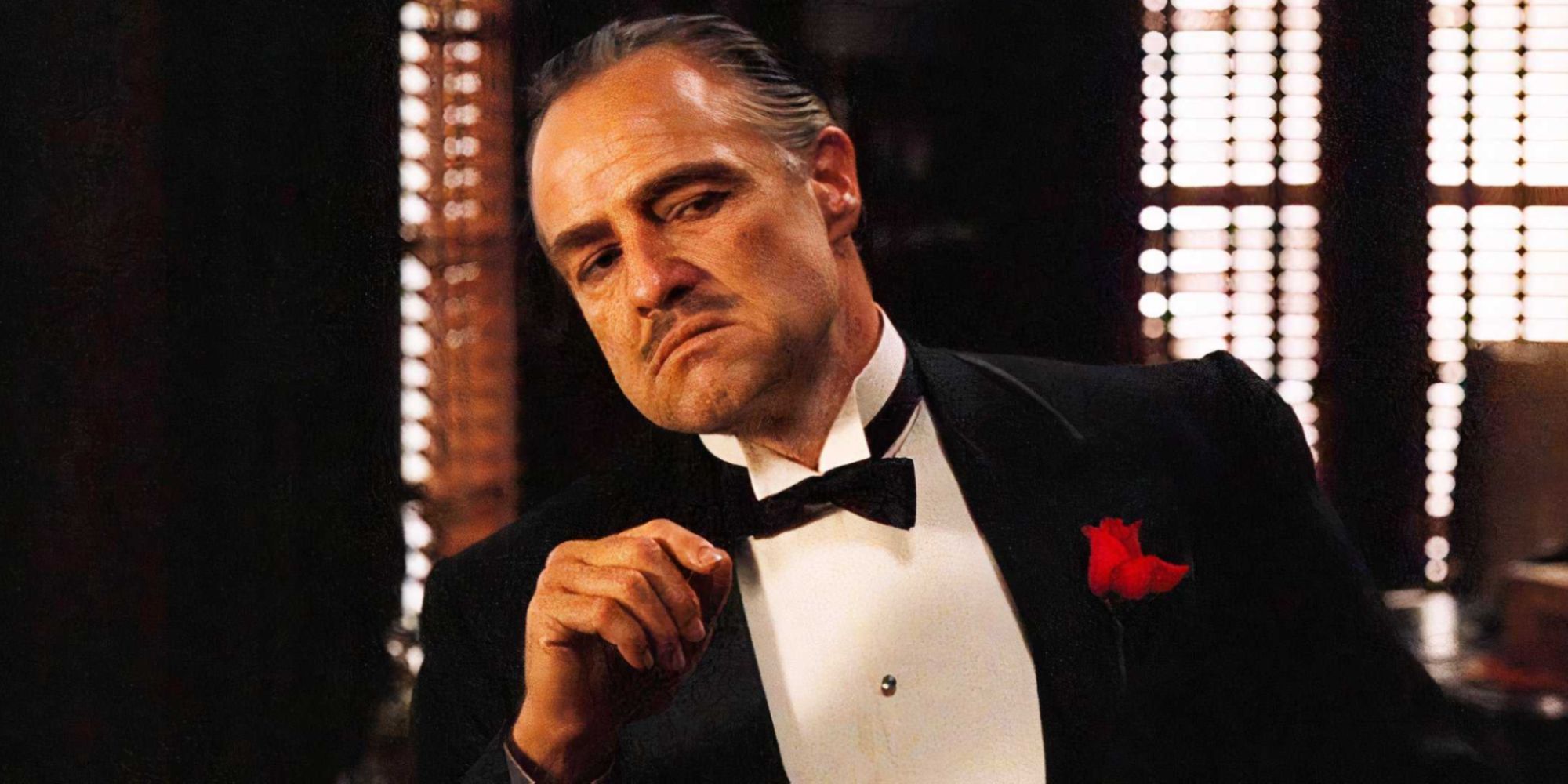
3 'The Godfather' (1972)
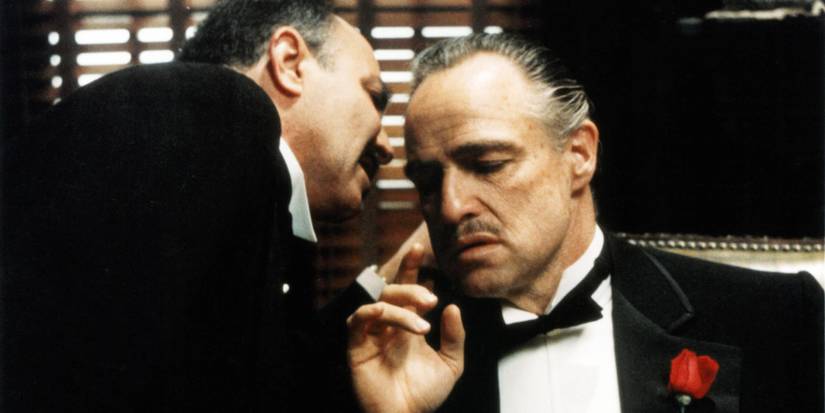
As incredible as The Godfather Part II may be, there's simply no beating The Godfather, regarded by a staggering number of people as the single greatest feature film of all time. Indeed, it's one of the most universally beloved movies ever, a masterpiece that Francis Ford Coppola was initially reluctant to make but which ended up being widely accepted as his magnum opus.
The Godfather is the crime drama par excellence, an exquisitely character-driven and technically masterful gem that deconstructs the American Dream in ways that cinema had never seen before. From its game-changing performances, to its stunning visuals, to Coppola's faultless direction, it has aged like fine wine in virtually every sense that matters.
2 'High and Low' (1963)

Akira Kurosawa is praised by many cinephiles not just as the greatest Japanese filmmaker of all time, but at times even the greatest filmmaker in general. He was, of course, a director best known for his contributions to the samurai genre, but he also dipped his toes into several other genres over the course of his career—including dramas like High and Low.
This is another instance of a film whose status as an adrenaline-pumping thriller may lead some to count it as a proper genre film, but Kurosawa keeps the focus on the characters and plot rather than on genre conventions so intensely that High and Low deserves to be counted among the greatest dramas in film history. Structurally, tonally, thematically, and in every other sense, it's one of the boldest and most essential pieces of dramatic filmmaking in history.
1 '12 Angry Men' (1957)
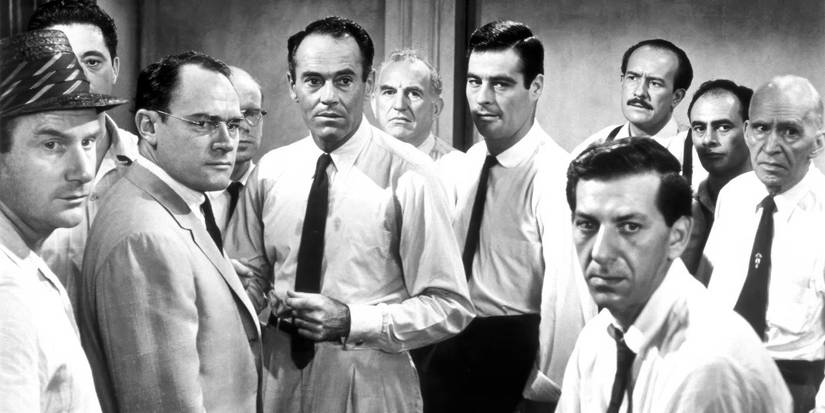
There's a strong argument to be made that 12 Angry Men is not only the greatest feature film of Hollywood's entire Golden Age, but perhaps even the greatest drama in film history. It is, at the very least, the peak of the many must-watch movies of the 1950s, a single-location psychological drama which proves that you don't need a gargantuan premise or a dozen sets in order to make an absolutely timeless masterpiece.
Indeed, thanks to the many complex and layered ways in which 12 Angry Men explores ideas of justice and guilt, it's a movie that doesn't seem to age in the slightest. From its performances to its exceptional black-and-white cinematography to its universally compelling writing, it's one of those dramas which prove just how remarkably close the Seventh Art can come to genuine perfection.
KioskNews shows a cleaned-up reading view extracted from the publisher’s page — the original always lives on their site, not ours.