China calls on Netherlands to help safeguard industrial and supply chains
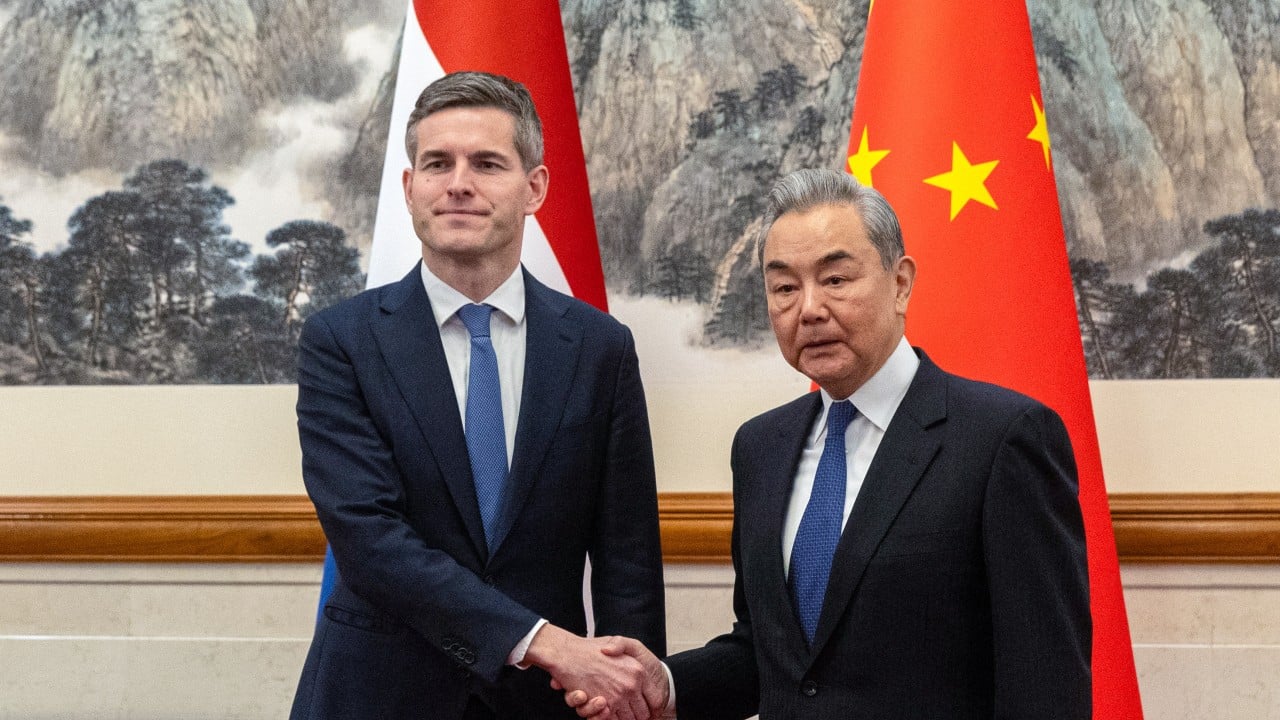
China has called on the Netherlands to help safeguard supply chain stability and stabilise Beijing’s relations with the European Union during Dutch Foreign Minister Tom Berendsen’s visit to Beijing.
The visit follows that of Swiss Foreign Minister Ignazio Cassis earlier this week, making the pair the first top European diplomats to visit China following the historic three-way summit between Presidents Xi Jinping, Donald Trump and Vladimir Putin in Shenzhen, where they pledged to reduce nuclear risks and bolster global energy security.
Chinese Vice-Premier Ding Xuexiang told Berendsen on Wednesday that the two countries should “make joint efforts to safeguard the stability and smooth flow of industrial and supply chains”.
In a separate meeting, Foreign Minister Wang Yi said Beijing hoped the Netherlands would provide a “fair, transparent and predictable” business environment for Chinese enterprises.
“China attaches great importance to the Netherlands’ role as a gateway in China-Europe cooperation, and hopes the Dutch side will play a constructive role in the sound and steady development of China-Europe relations,” Wang said.
Berendsen stressed that the Netherlands was willing to strengthen high-level exchanges with Beijing, deepen cooperation across various fields and “properly handle differences through dialogue and consultation”, according to the Chinese foreign ministry.
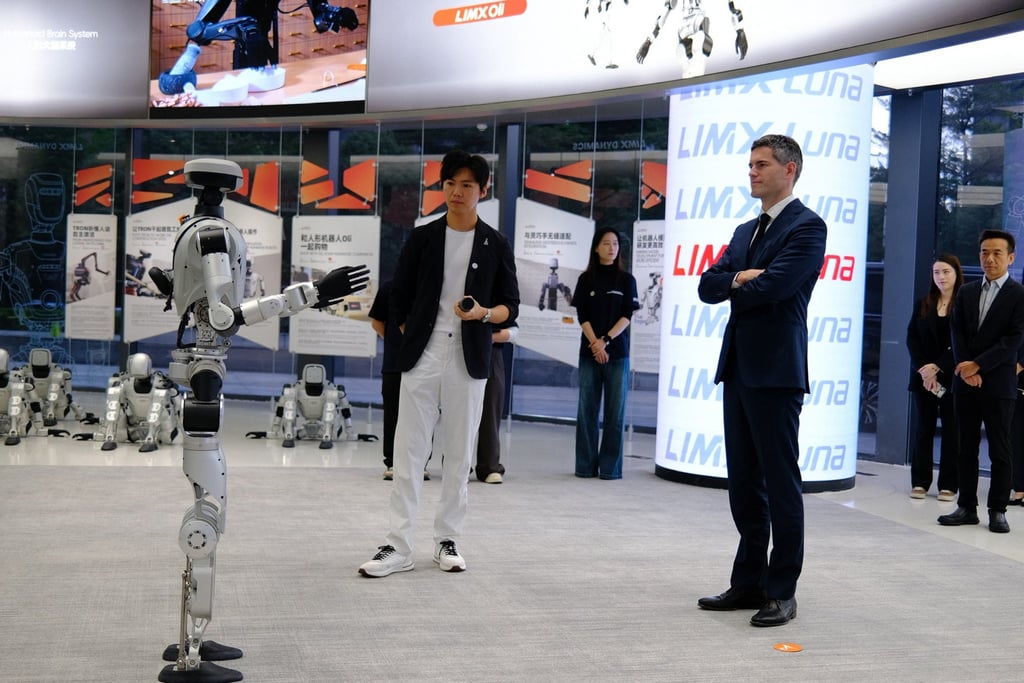
It was Berendsen’s first trip to China since taking office in February. Before travelling to Beijing, he visited Dutch tech companies and a Chinese robotics start-up in the southern tech hub Shenzhen.
He served as a member of the European Parliament for over six years before becoming foreign minister. In Brussels, he built his profile as one of the sharpest critics of Chinese state-linked influence over critical infrastructure, supply chains and digital networks.
Ding Chun, director of the Centre for European Studies at Fudan University in Shanghai, said Berendsen’s trip meant economic, trade and technological cooperation had been given a “relatively high priority”.
Despite Berendsen’s previously hawkish stance towards Beijing, the current Dutch administration is a minority coalition, and the visit signalled that a fragile cabinet was seeking to stem economic losses, he added.
Ties between the two countries came under strain during last year’s stand-off over Dutch chipmaker Nexperia, but relations have since eased through renewed high-level diplomacy under the new government.
Earlier this month, the two sides held talks on export controls, agreeing to maintain close communications and work together to “keep semiconductor and other supply chains stable and unobstructed”.
SCMP Plus is a new premium news platform that gives you an
all-inclusive edge to stay ahead on China news.
To access our exclusive content you’ll need to subscribe.
Already a subscriber?
LOG IN
The Dutch foreign ministry said “extraterritorial measures” in the bill were “unacceptable” between partners, according to Politico.
“The Netherlands needs to safeguard the commercial interests of its own companies while still aligning with the US security framework – it has constantly been trying to strike a balance,” Ding Chun said.
The Dutch diplomat’s trip is also aimed at preventing the Nexperia row from further eroding the Netherlands’ credibility as an investment destination, as well as securing a stable and predictable regulatory environment for companies such as ASML, he added.
The dispute over Nexperia – a Dutch semiconductor manufacturer acquired by Chinese firm Wingtech Technology in 2019 – has escalated sharply over the past year.
Following Dutch government intervention and court rulings that suspended Wingtech’s management control, a Dutch court this month empowered court-appointed administrators to seek outside investors while barring the Chinese parent firm from interfering. Wingtech has vowed to challenge the decision.
Fudan University’s Ding noted that the Netherlands was seeking to strip Chinese investors of control, whereas Chinese firms viewed the move as a forced expropriation of legitimate investments.
Such a fundamental clash could not easily be resolved in a diplomatic visit aimed at managing differences, avoiding direct confrontation and preventing decoupling, he said.
On Monday, in talks with Cassis, Wang said that China-Switzerland cooperation had proved that “protectionism is no panacea and converging interests are by no means a security risk”.
The talks marked the fifth round of foreign ministers’ strategic dialogue between China and Switzerland.
The Chinese diplomat reiterated his call for the Swiss side to help facilitate “a smooth resolution” of economic and trade differences between Beijing and Brussels.
“China and Europe should break free from the so-called trade imbalance narrative trap, properly manage differences through dialogue and consultation, and achieve mutual benefit and win-win results by expanding the pie of cooperation,” Wang said.
China has long viewed Switzerland, which is not a member of the European Union, as a trailblazer among European nations in building ties with Beijing.
The contrast between China’s relations with Switzerland and the EU has sharpened in recent months, as Beijing and Brussels struggle to manage mounting trade tensions amid the looming threat of a trade war.
In a meeting with Swiss President Guy Parmelin in Beijing last month, Xi highlighted the two countries’ free-trade agreement as the “brightest calling card” of their relationship amid rising currents of unilateralism and protectionism.
Xi also underscored Switzerland’s “important exemplary role” in economic relations between China and Europe, urging him to help foster the steady growth and balance of trade.
During the Swiss president’s visit, the two countries upgraded their free-trade agreement, which took effect in 2014 as the first such pact between China and a continental European nation.
In recent months, Beijing and Bern have also maintained communication on international flashpoints, including the conflict in Iran.
KioskNews shows a cleaned-up reading view extracted from the publisher’s page — the original always lives on their site, not ours.