In Numbers: What Is Fueling Protests In France

Over the weekend, France witnessed one of the most violent protests in its recent history as thousands rallied in major cities against schooling conditions and the cost of living. Around 2,400 people have been arrested for rioting, looting and arson across France.
The protests were launched by students demanding better learning conditions. Students and teachers have expressed their anger against overcrowded classrooms and the cut of more than 4,000 teaching posts outlined in the government's 2026 budget.
Government data shows that French high school classrooms have an average of 30 students, an ideal figure for developing countries. But in developed countries, this number ranges from 17 to 25. In many low-income areas, the numbers are higher, and conditions are bad.
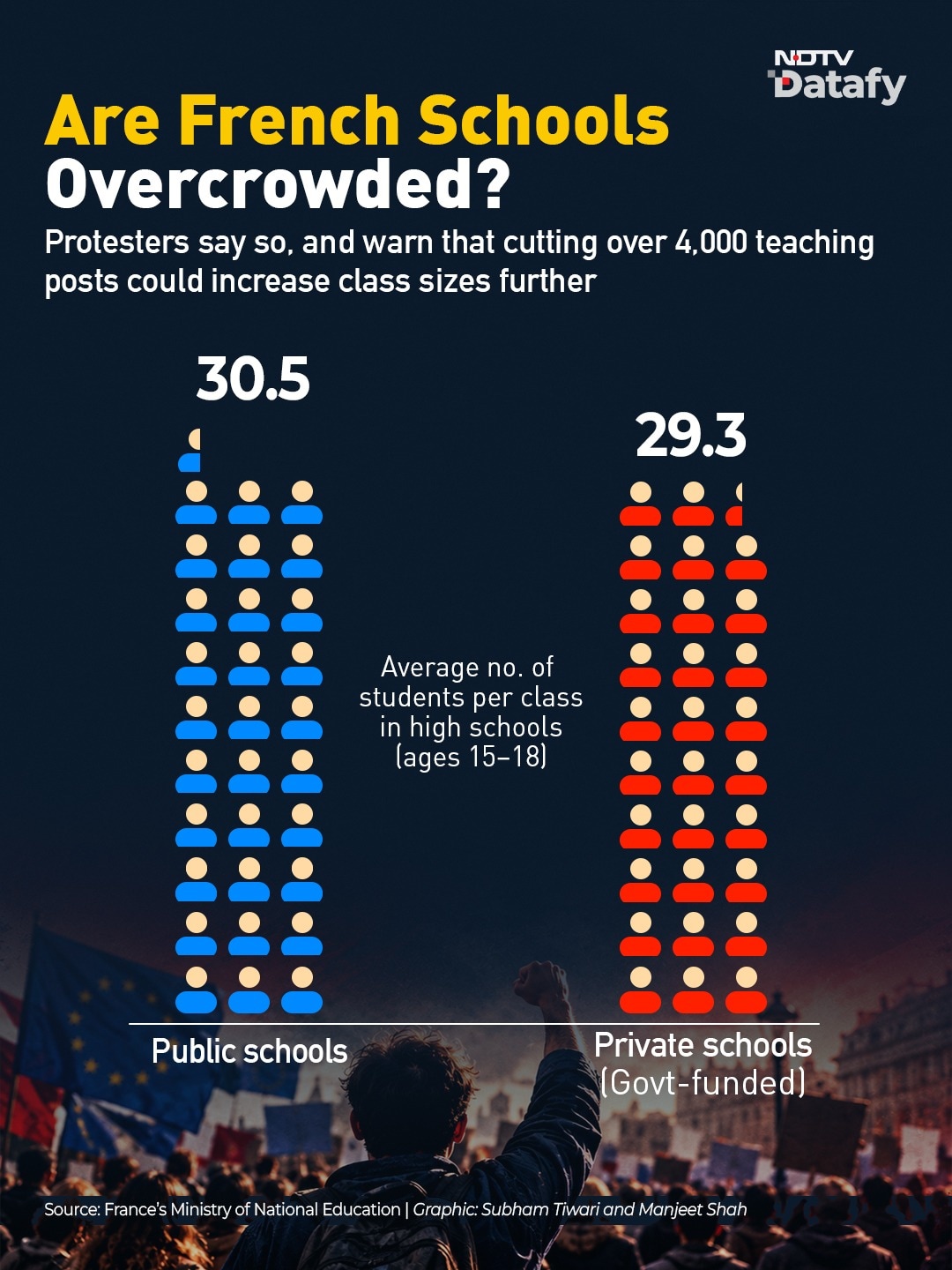
In the Paris suburb of Seine-Saint-Denis, students have shown reporters pictures of broken chairs and desks, holes in walls, leaking ceilings, mould, shattered toilets and defective audiovisual equipment, as per The Guardian.
But the students' fear is larger than their classroom conditions. The younger generation fears diminishing prospects, unstable jobs, poor salaries, and unaffordable cost of living. In short, they fear a lack of socioeconomic security that their parents have enjoyed.
That fear is shared by older generations. Within a few weeks of its start, the protest turned into a broader movement capturing widespread discontent over affordability, perceived government inaction, a growing wealth divide, fuel prices, low wages, and unemployment.
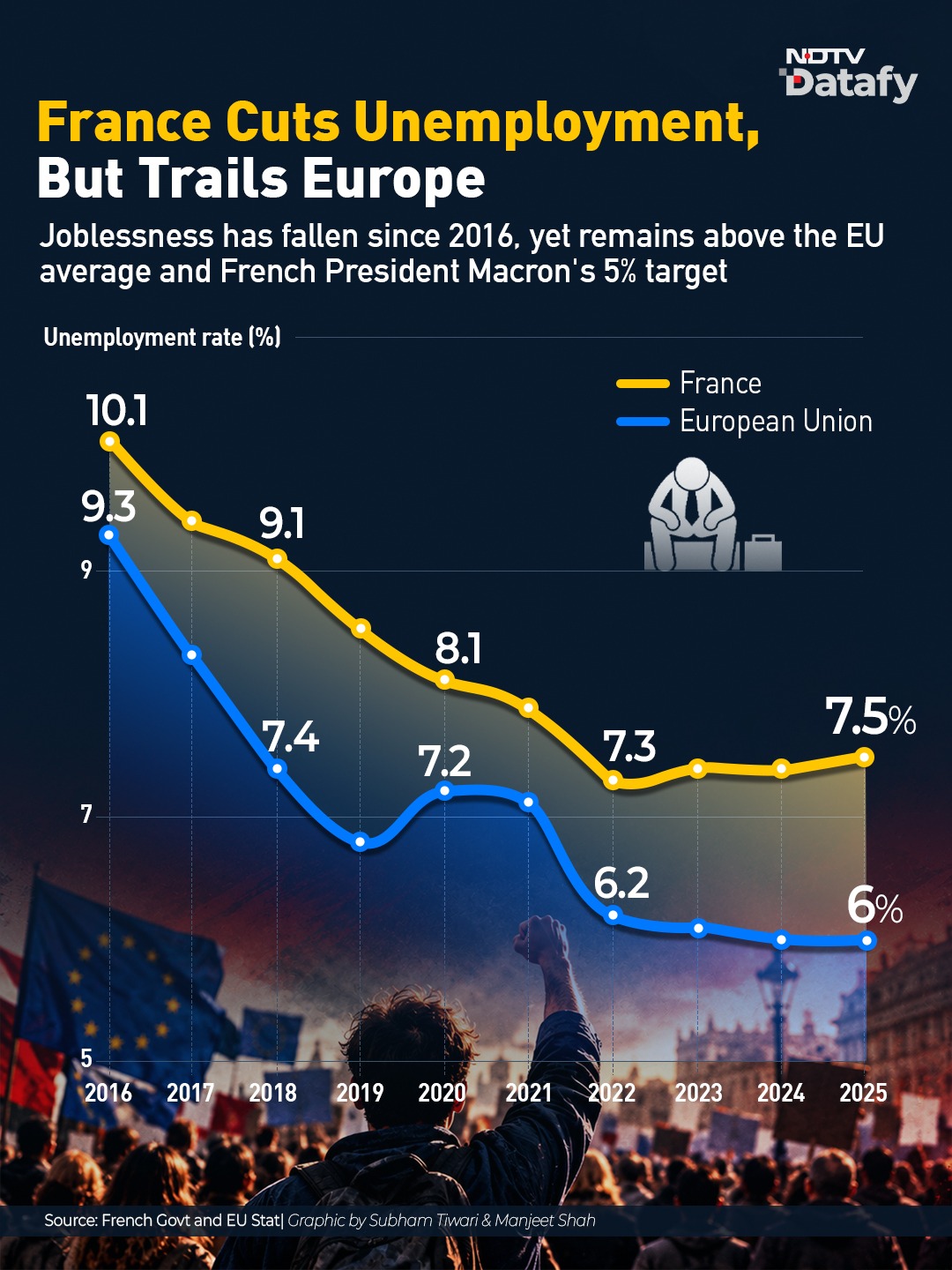
"This can't go on," Maria Pallas, 57, told CNN in Paris on Saturday. "There's the cost of living. There's unemployment. There's a bunch of things. A young person will go looking for work, we'll promise him a lot, and he'll end up with nothing."
In recent years, France has cut public spending to curb its high debt and budget deficit in the face of inequality and poverty.
According to official figures, poverty hit its highest since 1996 to reach 15.4 per cent in 2024.
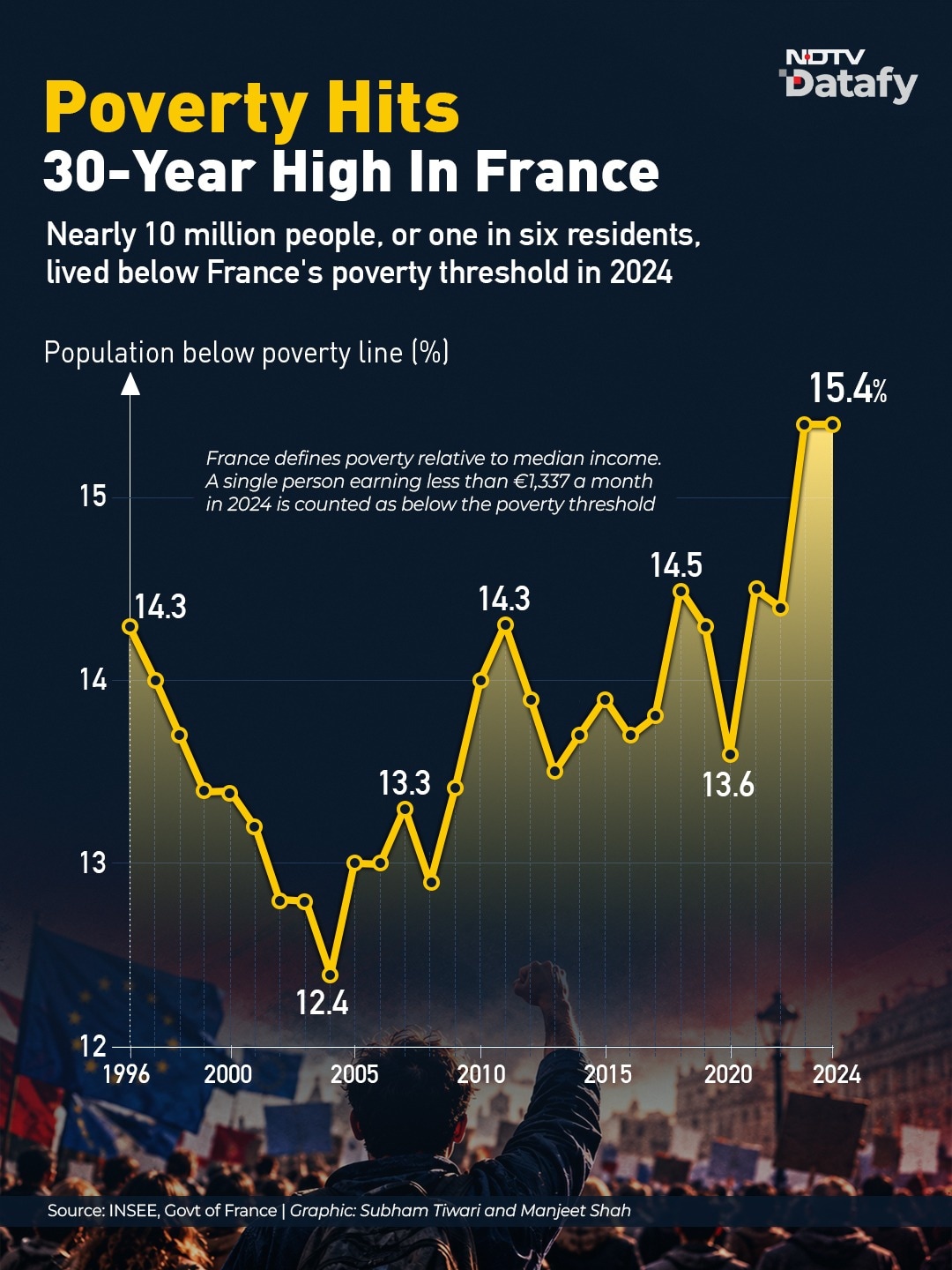
Unlike India, which measures poverty based on whether people can meet basic needs, France measures how far people have fallen behind the rest of society. It counts as poor anyone whose income is below 60% of the national middle income.
The rising prices of fuel have been a major driver of these protests. According to French government data, prices of petroleum products like petrol and diesel were up by 36 per cent in September compared to the same month last year.
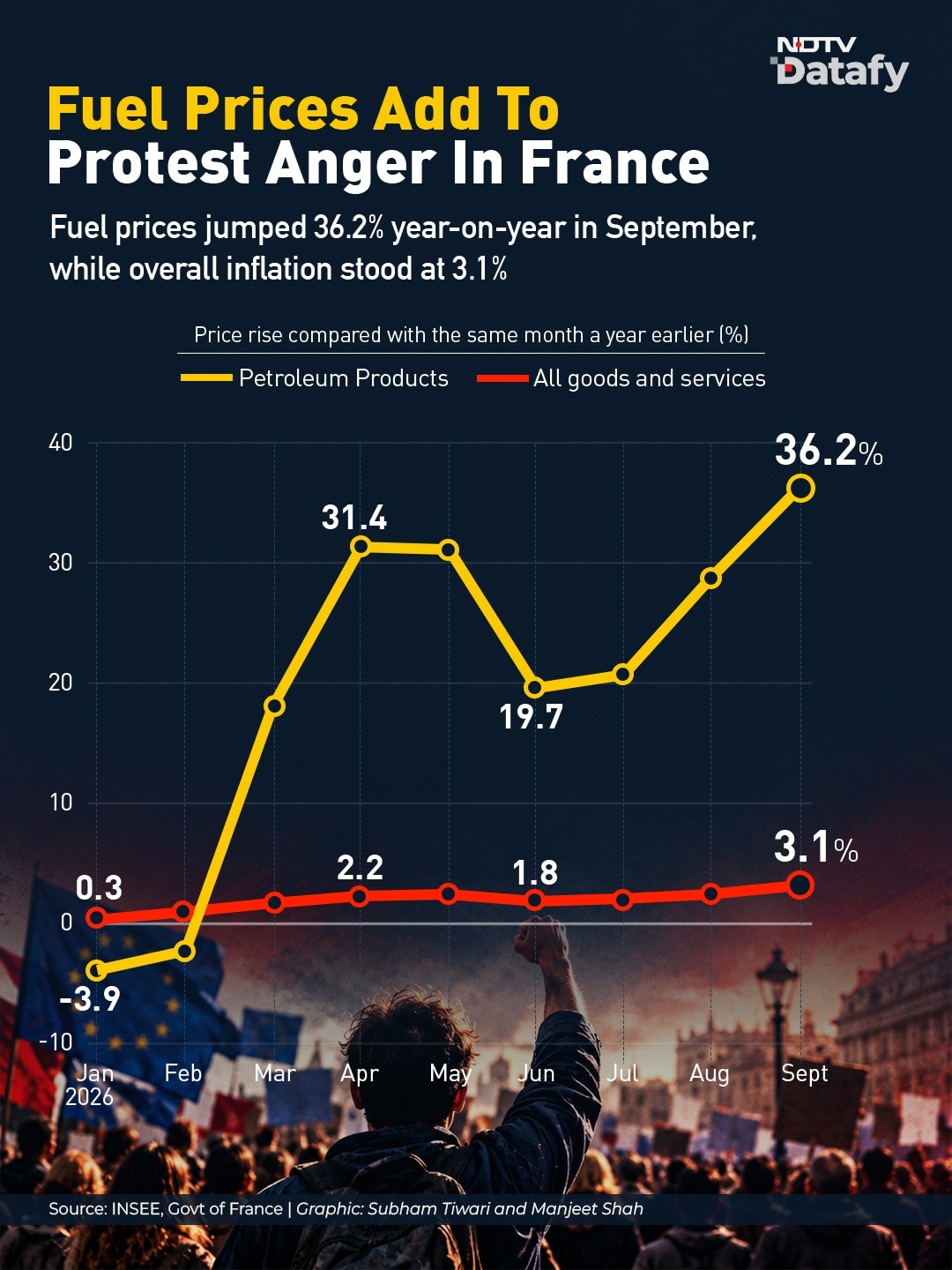
Fuel prices have risen sharply across the globe due to disruption in global supplies as the Iran-US war stopped the flow of oil and gas through the Strait of Hormuz, a major maritime route through which around 20 per cent of global energy passes. Overall inflation has also risen to 3.1 per cent in September, the highest since January 2024.
In a speech, French President Emmanuel Macron linked rising living costs and fuel prices to the conflict in West Asia. On Monday, he embarked on a four-nation tour of West Asia from Kuwait, seeking energy security and the reopening of the Strait of Hormuz.
KioskNews shows a cleaned-up reading view extracted from the publisher’s page — the original always lives on their site, not ours.