RBA’s worst nightmare as oil pushes up inflation threat
There are growing concerns within the Reserve Bank that the fallout from the war against Iran means inflation will remain elevated and force it to push up interest rates higher, even if it means more people may end up unemployed as the Australian economy slows.
Ahead of two critical meetings in the run-up to Christmas, the bank is wrestling with the trade-off between bringing down inflation – which has remained above its 2-3 per cent target for three of the past four years – and the broader economic damage that would be caused by tighter monetary policy.
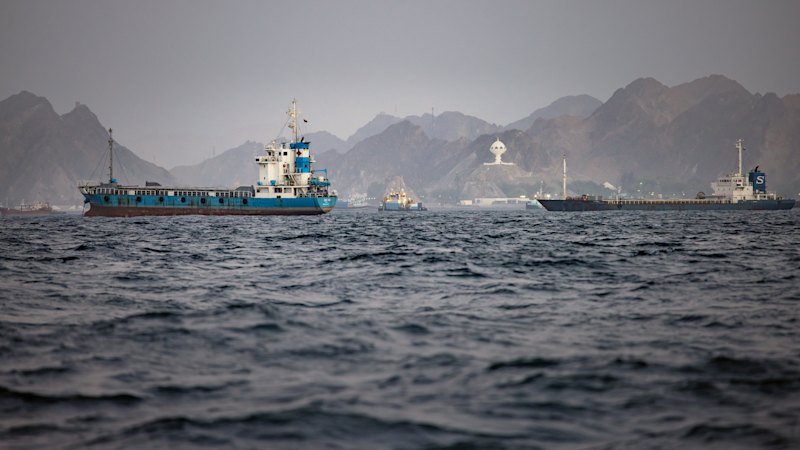
Senior sources within the bank, not authorised to comment publicly, have expressed growing concern that oil prices – which finished last week at $US106 a barrel – are showing no sign of falling as the war in the Middle East broadens to Saudi Arabia and the Gulf of Aden.
While there is ongoing concern that spending by state and federal governments is also fuelling inflation, the RBA’s own economic forecasts – due to be updated next month – were based on oil prices being as much as $US20 a barrel lower.
Diesel prices are much higher – around the level they hit at the start of the Russia-Ukraine war. Diesel is a major concern for every central bank, as it feeds into transport, manufacturing and food production costs.
Australian inflation, which rose by 0.4 per cent in August, would have fallen but for the increase in petrol prices that month.
It’s not just oil with prices for almost all commodities climbing due to the war and weather conditions.
LNG prices are around $US28 per unit more than double they were before the war.
Food commodity prices are also being pushed higher, by both the increase in oil and fertiliser prices and the impact of this year’s “super” El Nino. Wheat prices have climbed by 37 per cent this year, soybeans are up by 24 per cent, sugar prices have soared by 42 per cent while cocoa beans have more than doubled.
After weaker-than-expected job figures last week, which showed unemployment climbing to a five-year high of 4.7 per cent in September, financial markets sharply wound back expectations of a further interest rate increase.
Ahead of the figures, markets believed there was a one-in-three chance the RBA would push the cash rate to 4.85 per cent at its November meeting. Markets now put the chance at closer to one in five.
But the bank, and its counterparts overseas, continue to fret over the inflation pressures largely caused by the war and the global AI construction boom.
On Friday, the RBA released papers from a conference on “monetary policy trade-offs” it held earlier this month.
Bank governor Michele Bullock, with senior RBA researcher Anthony Brassil, noted the problems caused by a supply shock to the economy such as the current surge in oil prices.
They said that a supply shock coupled with the bank’s dual mandate – low inflation and full employment – meant it faced a difficult choice between supporting the economy or taking sterner action to control prices.
“If prices are rising faster than nominal incomes, households experience a direct loss of purchasing power. At the same time, weaker activity may mean that unemployment and underemployment are already increasing,” they said.
“The costs on both sides of the mandate are then visible together, and monetary policy cannot eliminate the real economic loss caused by the shock. It can only influence how that loss is distributed over time.”
The bank has already come under fire for taking official interest rates to a 15-year high of 4.6 per cent, prompting complaints that this is putting borrowers under extreme pressure.
Despite higher rates, most borrowers remain well ahead on their repayments, with many holding large balances in offset mortgage accounts. In the three months to June, Australian home borrowers paid a record $21 billion in interest on their loans, but the share of household disposable income servicing mortgages is lower than in 2024, when the cash rate peaked at 4.35 per cent.
But there are concerns that high inflation is doing more damage to low-income earners who are unlikely to hold a mortgage. These people have been the hardest hit by the ramp-up in rents over the past three years.
“High inflation makes budgeting and planning harder, increases uncertainty and distorts price signals,” Bullock and Brassil said.
“High inflation also tends to impose the most significant burdens on households with limited financial buffers.”
It’s not only a problem for the Reserve Bank. Central banks around the world have lifted interest rates over the past three months as inflation has climbed.
The International Energy Agency last week noted that global diesel prices, while easing from the all-time high of $US200 a barrel reached in September, are still almost double their pre-war levels and are now starting to affect “real incomes, economic activity and inflation”.
AMP chief economist Shane Oliver said at the weekend that the war against Iran and the ongoing Russian-Ukraine conflict was hurting the global economy through oil prices.
“Disruptions in the Strait of Hormuz, coupled with recent Ukrainian strikes on Russian refineries, have driven up the cost of refining crude into end products,” he said.
Last week, the International Monetary Fund’s chief economist Silvana Tenreyro noted that the global economy had shown surprising resilience in the face of the turmoil unleashed by the war against Iran.
She revealed that the global economy would have been much weaker, and inflation higher, but for the re-routing of oil supplies, an increase in energy efficiency and the shift in some countries towards renewable energy.
But there are concerns the ability to mitigate the drop in oil production out of the Middle East has almost run its course. A squeeze on global supplies through 2027 is increasingly expected by analysts.
Tenreyro noted not only the fallout from the war on oil supplies, but the pressure being put on the world economy by the surge in activity by tech companies as they build new data centres for their AI plans.
Cut through the noise of federal politics with news, views and expert analysis. Subscribers can sign up to our weekly Inside Politics newsletter.
KioskNews shows a cleaned-up reading view extracted from the publisher’s page — the original always lives on their site, not ours.