Mao’s Last Dancer Li Cunxin on his long-awaited follow-up: ‘I don’t think my publisher expected it to take 14 years!’
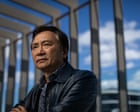
Some people live such extraordinary lives that a single autobiography simply won’t suffice. Li Cunxin has now written two. The renowned ballet dancer and former artistic director of Queensland Ballet had hoped he was finished writing his story after the phenomenal international success of his 2003 memoir, Mao’s Last Dancer. But life had other plans.
“Actually, I had signed a contract with Penguin Random House for a follow-up,” Cunxin says, from his home in Brisbane. “It was going to be about the lives of my brothers and friends in China, and the ways the country has changed over time. But then I was offered the job at Queensland Ballet and I had to dedicate all my time to that. I don’t think they were expecting [the sequel] to take 14 years!”
His second memoir, The Lucky Son, takes up precisely where Mao’s Last Dancer left off: as Cunxin and his ballet dancer wife Mary fly to their new lives at Houston Ballet under the directorship of Ben Stevenson. That outline of the proposed book on China can be glimpsed under the surface of this one, like a palimpsest; Cunxin’s six brothers’ lives are sketched, and a fascinating portrait of a country lifting itself from abject poverty to world superpower emerges.
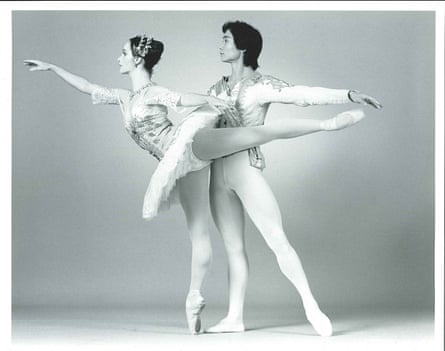
“One of the things my mother taught me was to keep moving forward at all times,” Cunxin says. “Don’t think about the past, just concentrate on what is ahead.” That grit kept her children alive and was instrumental in shaping Cunxin’s dogged, highly ambitious personality.
Determination runs in the family. Mary was a deeply respected dancer herself, a career she sacrificed when she and Cunxin discovered their daughter Sophie was born profoundly deaf. “We were so fearful that Sophie would miss out on so much,” Cunxin says. “Music and dance and all the magical things.”
Mary immediately left the world of ballet (she would return years later as ballet mistress at Queensland Ballet) to teach Sophie to talk. “Mary was incredible,” Cunxin recalls. “She gave everything to the task.”
One one hand, it was a complete success. Sophie was fitted with a bionic ear (then known as a cochlear implant) and thrived; she embraced dance, had a successful education and excelled in the workplace. Cunxin and Mary assumed they’d done all that was needed.
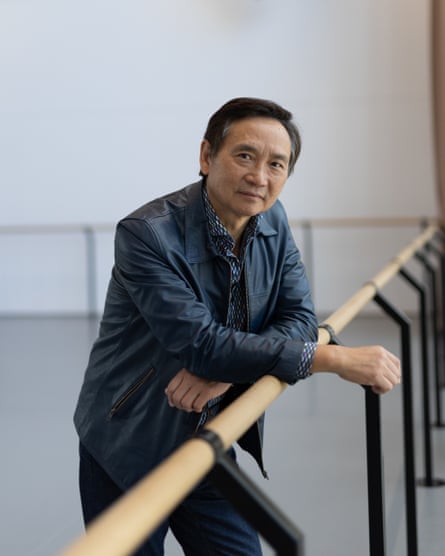
But then in 2015, Sophie sent an email to her parents that shocked and devastated them. Sophie expressed frustration at her parents for wanting their daughter to hear; she felt she’d come halfway to meet their world, but they had not met hers. They had not even bothered to learn sign language. Her “deafness was her birthright”, Cunxin writes in the book. Now, he says, Sophie “is a kind of ambassador between the hearing and deaf communities”. And he and Mary have begun learning Auslan.
Cunxin’s dance career was so exemplary – moving from the Beijing Dance Academy to Houston Ballet, and then to principal artist at Australian Ballet – he could have been forgiven for hanging up his pointe shoes and walking into a lucrative position in a stockbroking firm. Indeed, that’s exactly what he did. An unsuccessful tilt at the artistic directorship of Australian Ballet (the role eventually went to David McAllister) utterly crushed him, and it seemed for a few years he would never return to the world of professional ballet.
Of course, that wasn’t how it panned out: despite being burned by that failure, Cunxin reluctantly put his name in the hat when Queensland Ballet were looking for their next artistic director. That tenacity and resolve was once more poured into the theatre.
“To be a leader of any kind takes vision,” Cunxin says. “I had a very strong vision for Queensland Ballet. But you also have to be a good communicator, because you need to inspire others to join in your vision.” And you need to apply yourself, which wasn’t such an issue for someone trained at Beijing Dance Academy, with its brutal rehearsal regime and exacting standards.
One of the delights of The Lucky Son is the way it tracks some of our favourite characters from Mao’s Last Dancer, including The Bandit, Cunxin’s bestie at the Beijing Dance Academy; his gorgeous instructor Teacher Xiao; and his astonishing mum and dad, Niang and Dia. There are echoes in the events too: Stevenson’s trip to Queensland to watch his protégé mount Cinderella recalls the unforgettable moment in Mao’s Last Dancer when his parents leave China for the first time to see their son dance and the audience gives them a standing ovation.
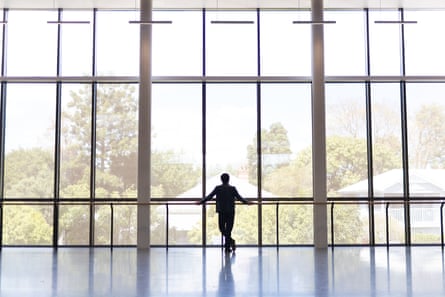
Central to Cunxin’s success at Queensland Ballet – where he oversaw a massive improvement in standards and built a stunning new home for the company, the Thomas Dixon Centre – were the lessons he learned from his time away from ballet, when he was a stockbroker: “I learned so much from the business world – when we had to approach donors for money, I could speak their language.” Relationships with Elisabeth Murdoch and the Ian Potter Foundation came in handy, and he and Mary also contributed some money of their own. It’s now a world-class organisation.
Looking back on his life now, Cunxin feels an overwhelming sense of “gratitude, for the opportunities I was given and the people and artists who shaped me”. The Lucky Son concludes on stage – hardly surprising, given so many of the key moments in Cunxin’s life have been there – but this time it is in Switzerland, where he was awarded ballet’s most prestigious award, the Prix de Lausanne, in 2025.
After a few years of serious health issues (Mary is a cancer survivor and Cunxin has a major heart condition), the couple are increasingly happy to chill. “Our health has forced us to slow down,” he says with the emphasis on forced, as if there were no way they would slow down on purpose. “I worked very hard for two years on this book – it’s been all-consuming. So yes, I am enjoying taking things a little slower.”
Is he confident that ballet will survive the coming AI tsunami, given how hard the art form is to perfect and how much time and effort is required? “I am worried, but I do think ballet is special,” he says. “When people come to see ballet, they are blown away by the artistry, the physicality and the music. I think it’s more important than ever to connect people.”
KioskNews shows a cleaned-up reading view extracted from the publisher’s page — the original always lives on their site, not ours.