Pyre is a love story. For those from Uttarakhand, it is also the story of our home
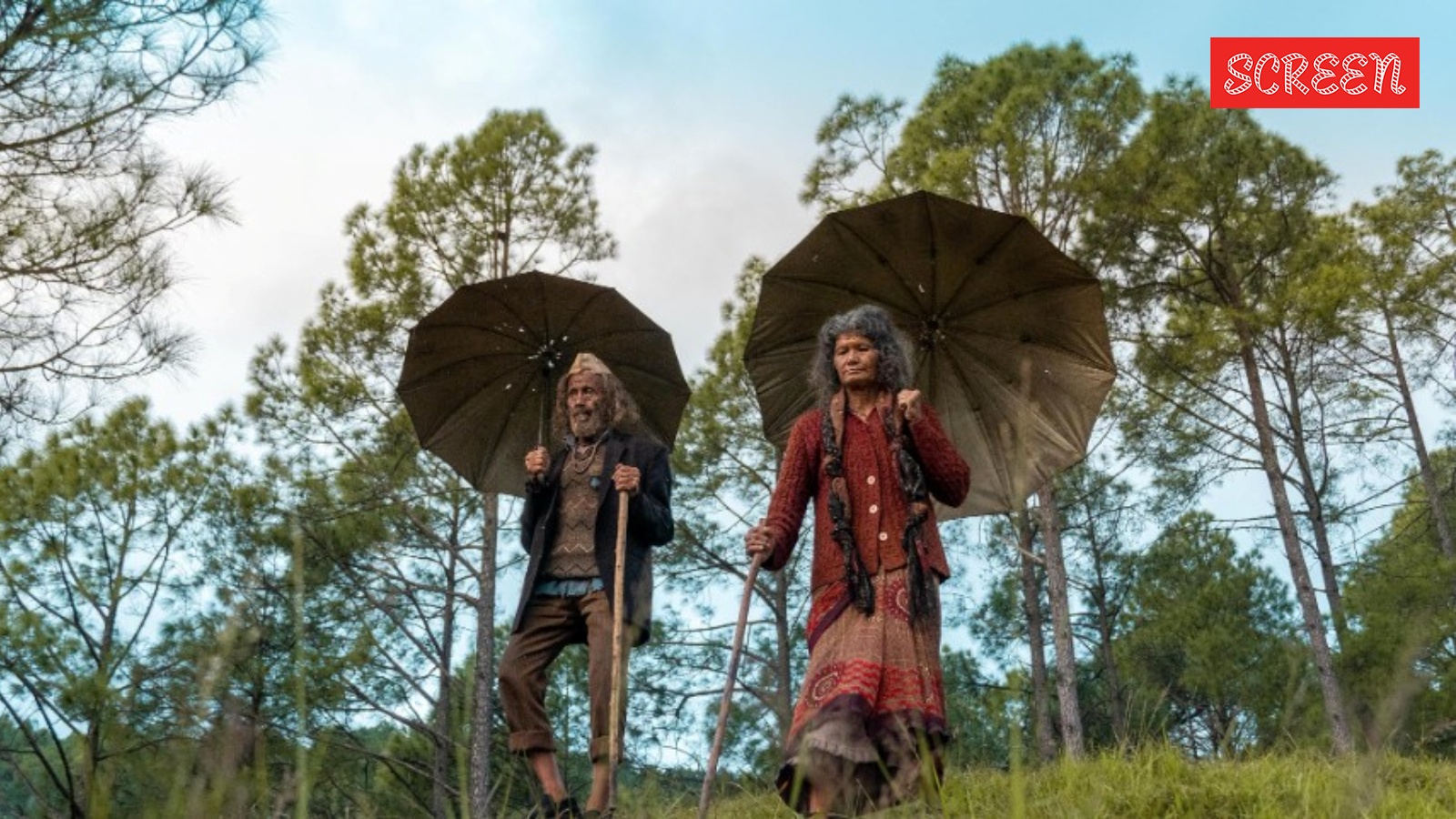
Pyre opens with Padam Singh (played by Padam Singh Kapri) walking along a hill path with a small drum in his hand, singing. Beside him is his wife Tulsi (Heera Devi). To someone from outside, it is an old couple on a mountain path, with a folk song in the air. To people from Uttarakhand, it is something we have known all our lives.
The song is a Jaagar, a traditional ritual to invoke the spirits of ancestors and the devi-devta of the mountains. The small drum is the hudka. In the film, Padam and Tulsi are Bubu and Aama, the Kumaoni words for grandfather and grandmother.
Such moments keep you fixated in Pyre. When Bubu needs to call for help, he reaches for the bhankora, the horn we associate with worship and village gatherings. The song he hums is “Sarg Tara Junyali Raat” by Uttarakhand’s folk singer Gopal Babu Goswami. When Aama snaps at him, “Teri buddhi mein bajra pad gaya”, we laugh out loud, because it is exactly how our own grandmothers scolded us, with the same mix of irritation and love. Bubu and Aama are not characters for us; they are family.
Director Vinod Kapri has said that Pyre is ultimately a film about love, between two people who have spent their lives together, and their loneliness. It is a universal story: an old couple, their companionship, their dependence on each other. Anyone can relate to it, but it hits too close to home for us, because it is a story we have witnessed first-hand.
A couple, a few goats, and a letter
What do two people say to each other after about 65 years of marriage? Mostly, they bicker. Padam teases, Tulsi complains, and the quarrelling is their love language. They live with their goats in a village that is slowly running out of people, and their son, Hariya, has been in Mumbai for 28 years. When a letter arrives saying he will visit, Tulsi’s spirits lift, and the film settles into the long, aching business of waiting. Padam, meanwhile, keeps pleading with the young men still in the village not to leave.
Pyre is based on the real story of a couple Vinod Kapri met in Munsiyari. The old man would give a goat to anyone who helped him carry his sick wife to a doctor. Asked what would happen when the goats ran out, he said he would be gone before that.
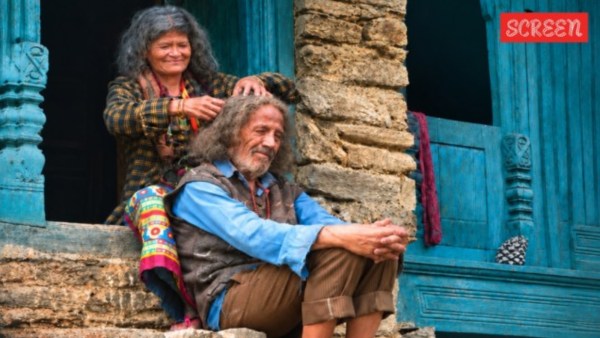 A still from Pyre.
Nothing happens, and that is the point
Not much happens in Pyre. Two old people tend their goats, light a beedi, fetch wood, mend the house, and wait. Yet it stays with you, because that is how life really is in a village emptying around you. The days pass, one very like the other. You wait for a letter, a visit. The film has the patience to sit inside that waiting, and it trusts us to feel what the waiting costs.
Story continues below this ad
A big part of why it works is the two people at its centre — Padam Singh Kapri, a retired Army havildar, and Heera Devi, a local farmer, had never faced a camera before. So nothing they do looks performed. Their innocence is not an act. It is real, and you can feel it in every quarrel and every small kindness. You see someone you know in them: your grandparents, perhaps, or an elderly neighbour from your village.
The mountains behind the postcards
Outside the state, Uttarakhand is snow peaks, tea on a balcony, a weekend away from the city. For those who live there, it also means a sick old woman being carried down the mountain, as Aama is in the film, to a hospital not equipped to give her the care she needs.
Some of us grew up in remote villages with no road at all and have seen patients carried to the nearest road on chairs and charpoys. Others, like me, grew up in hilly towns where roads exist, but the medical facilities are much the same. Anything beyond an ordinary cold and fever, and you are referred to the nearest city, four or five hours away. So we know all of this. We have lived some version of it, and we have watched the rest happen around us: neighbours packing up and leaving, old people like Aama and Bubu left alone in houses that were once full, whole villages slowly turning into ghosts.
And then there is the rain. Every monsoon, houses collapse somewhere in the hills. A few days of heavy rain and the worry begins. Will there be a landslide? Will the road be washed away? Will the electricity go, and for how many days? Nature gives the mountains their beauty. It also makes sure that people who live there never feel completely safe.
Story continues below this ad
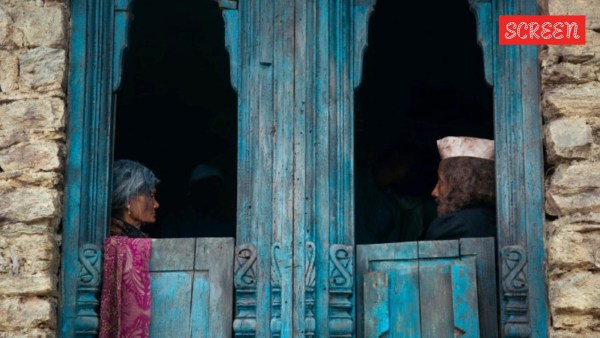 A still from Pyre
We are also part of the migration
There is a saying in the hills: pahaad ka paani aur pahaad ki jawani kabhi pahaad ke kaam nahi aati (The water and the youth of the mountains never work for the mountains).
We have watched it come true. I am one of the people who left the state to earn a living, part of the same migration. I always wanted to go back. Like many others, I never could.
Of roughly 16,500 villages in Uttarakhand, the state’s Rural Development and Migration Prevention Commission counted 1,792 as completely uninhabited by 2022. As per the 2011 Census, the number was a little over a thousand. Between 2008 and 2018 alone, 1,18,981 people left their villages for good, about half of them for work and 15 per cent for education. Most who leave are between 26 and 35, which is exactly the age of the young men Padam keeps begging to stay.
So when Jeevan leaves for Mumbai and Bubu says that his son has gone today, the sentence carries 28 years of waiting. Jeevan and Lakshman were the ones he called for help. In a village that had already lost its own son, they had become the closest thing he had to one.
Story continues below this ad
Imagine belonging to a place where community is everything, and watching every door close, one by one, until the village is only the memory of the people who lived there.
Bubu’s fear is a practical one. When everyone has left, who will take Aama to the hospital the next time she falls sick? And when one of them dies, who will carry the body down the hills for the cremation? So he does what he can. He builds a pyre in front of their house, for both of them.
That is what the title means. It is a plan, made by an old man who has run out of people to ask for help.
When the people go, the culture goes
Girish Tiwari “Girda”, the jan kavi of Uttarakhand, understood that migration was never only an economic problem. A poet, theatre artist and activist who gave the state movement its voice, often argued that roads should not be built in the hills simply as a way to send the youth out, but so that jobs come in and people can stay.
Story continues below this ad
In an interview, he described the cost in plainer words, “Ab jab yahan log hi nahi hain, aapki jawani hi aapke pahad mein nahi hai, toh sanskriti kahan se aayegi. Sanskriti to aadmi ki hoti hai, pahaado mein gaon mein ya to gharon mein taale latke hain, ya tooti kamar ki budhiya baithi hai ya baccha hai. Beech ki peedi to sab gayab hai pahad se (When there are no people left here, when the youth themselves are no longer in the mountains, where will the culture come from? Culture is sustained by people).”
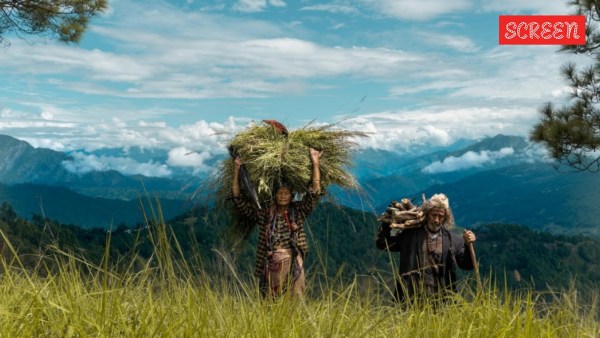 A still from Pyre
We rarely think about how a culture survives. It does not survive because a song has been recorded or a festival has a place on the calendar. It survives because people carry it. Most of us never learnt a folk song from a book. We learnt by being there: at a relative’s house during a ritual, watching the elders, listening to our grandparents’ stories, hearing our mother tongue spoken around us every day. That is how it has always been handed down, from one generation to the next, simply by seeing and being part of it.
But when the young have left and only the old remain, who is left to watch, to learn, to carry it on? Who will perform the Jaagar once Bubu’s generation is gone? Who will recognise the hudka and the bhankora, or know the songs of Gopal Babu Goswami?
Girda was right. We are losing more than villages. A language grows less familiar to children growing up outside the state, and folk traditions turn into occasional performances instead of everyday life.
Story continues below this ad
The story of our home
Uttarakhand celebrates its Foundation Day on November 9. Its people fought for a separate state, and some gave their lives for it, so that the hills would get what they deserved. Twenty-six years later, we are still counting ghost villages, and there are still Aamas and Bubus in remote villages living lonely lives at an age when they should be surrounded by family.
That is why, for us, Pyre is not just a story of love and companionship. It is the story of our home.
KioskNews shows a cleaned-up reading view extracted from the publisher’s page — the original always lives on their site, not ours.