Japan’s youth smartphone dependence: why experts doubt rules can curb ‘dopagaki’
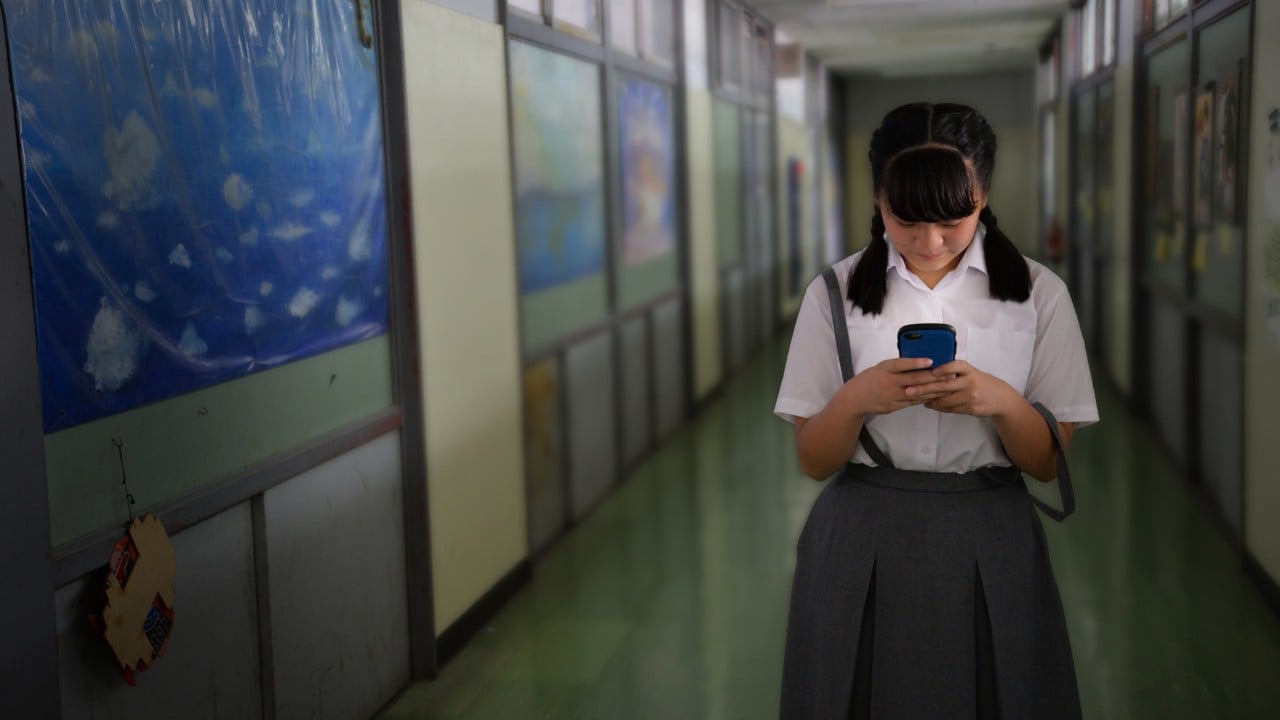
When Kanako was a teenager trying to get out of studying, the surest way her mother could get her to do her assignments was to threaten to tell her father when he got home from work. These days, the Tokyo housewife has a far more effective tactic for her son: threatening to take his phone away.
After hearing a new slang term, dopagaki, used to describe children who have become increasingly hooked on screens, Kanako has grown worried that her son may already be on the cusp of addiction.
“He only got a mobile phone a little over a year ago because he was the last child in his class to have one, and there were obviously some pressures around that, but I cannot help but wonder if it was the right thing to do,” said Kanako, who asked to be identified only by her first name.
Dopagaki – roughly translated as “dopamine-addicted brat” – is among 30 expressions shortlisted for Japan’s annual buzzword awards, organised by publisher Jiyukokuminsha to recognise terms that capture the year’s social and cultural trends.
The selection committee described the term as referring to people who had become accustomed to the instant stimulation offered by short videos, social media and online games, leaving them struggling to concentrate for long periods.
Growing public concern has also prompted a government response, with Japan’s Children and Families Agency unveiling draft age-specific guidance for parents on November 10. Still, experts question whether such measures go far enough to address the deeper risks of children’s growing dependence on the digital world.
Kanako said she was struggling to set boundaries for her son’s smartphone use.
“I know he plays some games, but most of the time he seems to be messaging his friends or on social media sites like TikTok,” she said. “We don’t allow him to take his phone to bed, of course, but even when he is watching television in the evening, he is also constantly on his phone.
“To me, it seems he uses it quite a lot,” she added. “But how much is too much?”
“Dopagaki emerged from internet slang and refers to the fact that many people find themselves unable to resist checking social media, meaning they are effectively digitally dependent,” said Yasue Mitsukura, a professor at Keio University who specialises in neuroscience and brain-computer interfaces.
“This is particularly dangerous for children, especially those of pre-primary school age, as their brain functions are not yet fully developed,” she said.
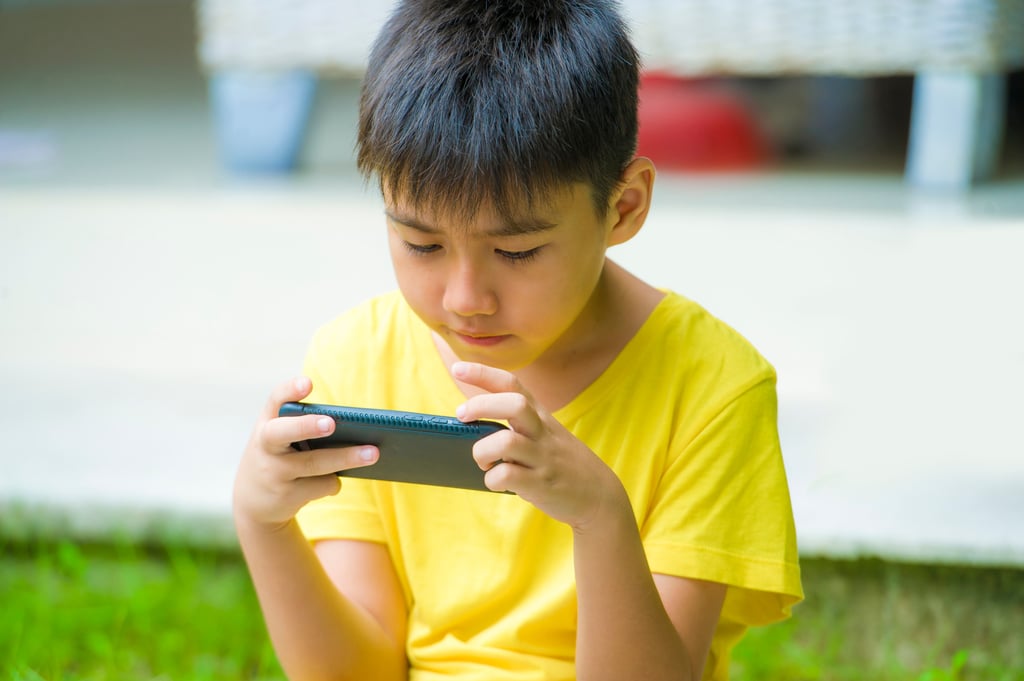
Researchers around the world were reaching similar conclusions, and the issue in Japan was broadly consistent with findings elsewhere, Mitsukura said. Her own research has shown that dopamine levels in a subject’s brain decrease as they consume content over time, but rise again each time a new social media clip is opened.
That surge in dopamine is not necessarily triggered by enjoyment of the new content, but rather by the anticipation of something amusing or entertaining appearing next. This inevitably encourages users to keep swiping, creating a cycle of stimulation that can develop into compulsive behaviour before they even realise it.
“It is not simply that dopamine is bad,” Mitsukura said. “Rather, it is the constant rise in dopamine levels that is harmful. Therefore, it is important to take regular breaks, and a ‘digital detox’ is necessary from time to time.”
With limited data on the scale of the problem in Japan, Mitsukura is currently collating statistical information that will be submitted to the government to help inform policy decisions, she said.
Other governments have already moved to curb youth dependence on the digital world. In 2025, Australia became the first country to enforce a legal ban on social media for children under 16.
The legislation requires platforms to implement measures preventing underage users from setting up accounts, with fines for non-compliance.
Children have inevitably found ways around the rules, with reports that some have drawn facial hair on themselves to fool age-verification facial recognition systems.
More recently, the European Union announced in September a proposed child protection law that would ban social media for children under 13 and limit 13- and 14-year-olds to parent-managed accounts capped at one hour a day, with full access starting at 15.
The draft guidelines published by Japan’s Children and Families Agency this month recommend different levels of parental supervision depending on a child’s age and developmental stage.
They encourage parents to limit screen time for younger children, gradually grant older children greater independence online and teach them about privacy, security and the risks of internet use.
While welcomed as a step towards tackling children’s growing reliance on digital stimulation, the guidelines have also drawn criticism from child safety advocates for not going far enough in warning about online harassment, sexual exploitation, recruitment into criminal activities and exposure to harmful content.
“The challenge is not unique to Japan, and while the government’s policy is provisional and has not yet been finalised, I am opposed to restricting internet use by young people,” Mitsukura said. “Setting rules will simply lead people to find ways to circumvent the restrictions.”
Young people can be inventive in finding ways around regulations, agreed Makoto Watanabe, a professor of communications and media at Hokkaido Bunkyo University, adding that he has seen students who are already too far down the rabbit hole.
“I see it in my own classroom,” he said. “There are those who obviously have a mobile phone, but they still come to class to study. And there are others who attend a lecture but have their mobile phone on the whole time. I would say they are already addicted.”
Watanabe said some other professors banned mobile phones from their classes, but he saw them as a potentially valuable resource – provided they were used with care and restraint.
“I do speak with them to see how they are using their phones, but they are young adults, they make their own decisions and have to take responsibility for themselves,” he said. “If they choose to watch social media in lectures, that is on them.”
Watanabe believes many young people are simply mimicking their parents’ habits and see nothing wrong with being absorbed in a digital world.
“Often, parents are too lax,” he said. “Kids see their parents and they do the same until that behaviour has taken root. Those adults were already the digital generation, so this has now become a trans-generational problem.”
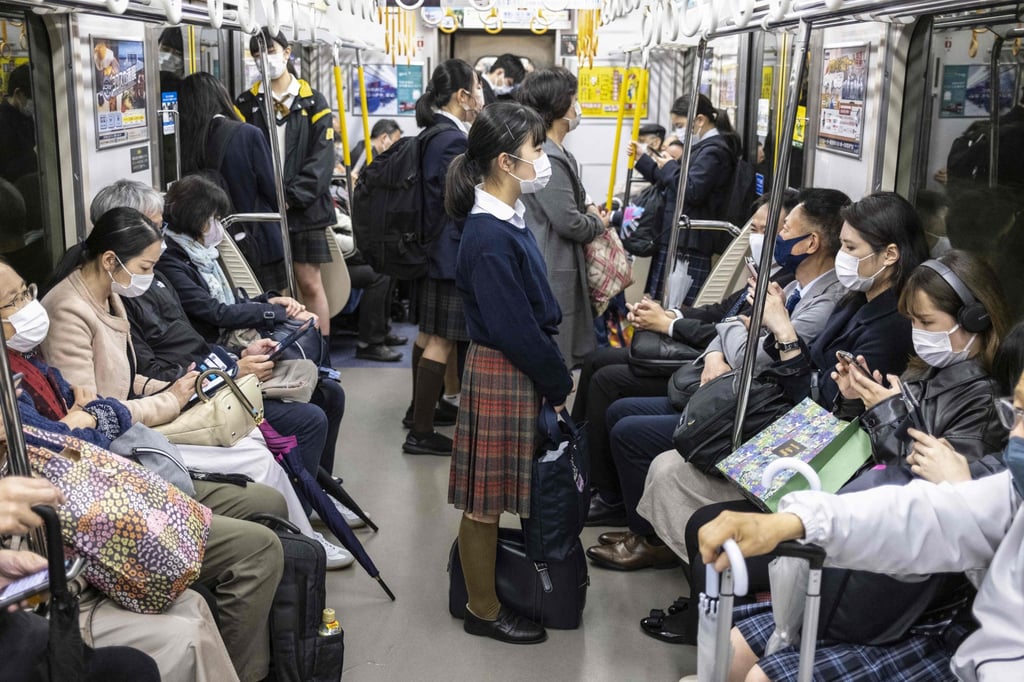
Watanabe said he saw the consequences in his students.
“Ten or 15 years ago, I would say that the average student’s attention span was an hour,” he said. “Now, I would say it’s 10 minutes. And that is a real challenge for a teacher.”
Back in Tokyo, Kanako’s son is waiting for the results of his midterm school tests, and she said he seemed worried about a couple of subjects.
“We have talked about it, and we have set targets for each of the subjects,” she said. “And he knows that if the results are disappointing, then the phone is going to be put away so he can study more. I think he understands.”
KioskNews shows a cleaned-up reading view extracted from the publisher’s page — the original always lives on their site, not ours.