Xi-Trump ties tested as calls grow in Washington for tougher China policy
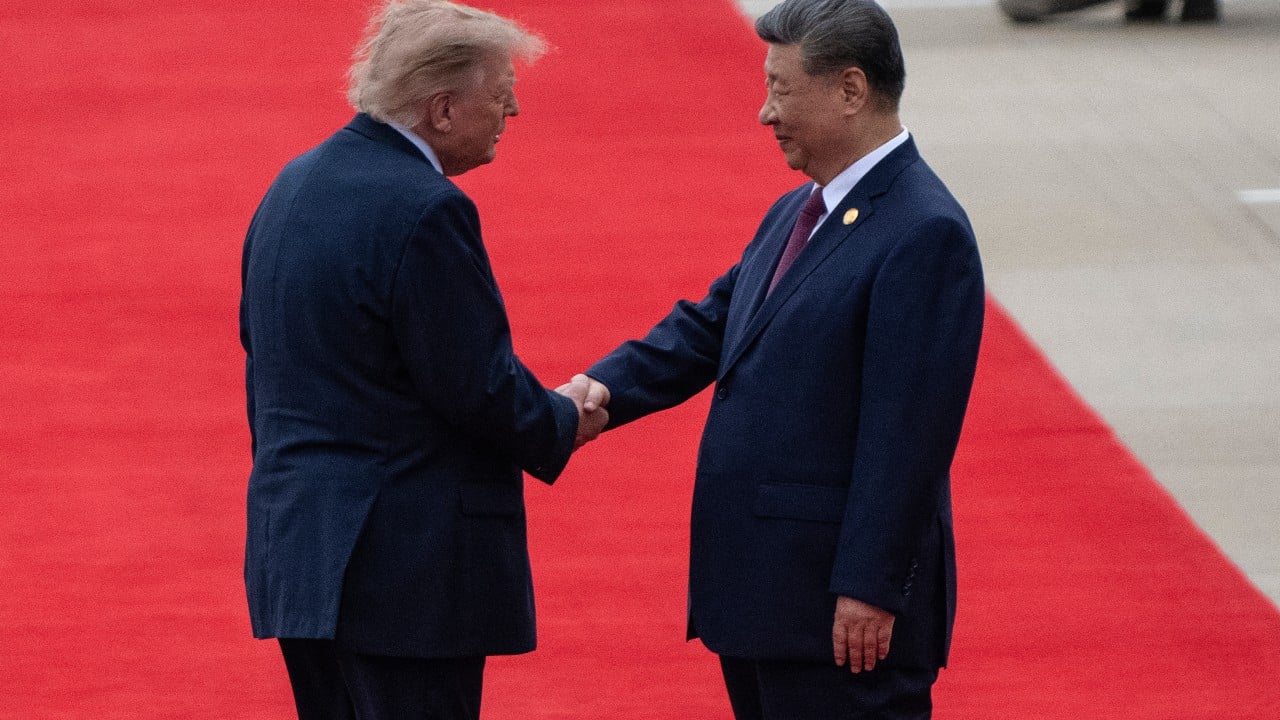
The personal rapport between US President Donald Trump and Chinese leader Xi Jinping is being put to its sternest test yet amid growing congressional pressure over AI chip curbs and broader calls in Washington for a more assertive policy on China, according to experts.
While Trump may want to preserve a cordial rapport with Xi and a tactical thaw between Washington and Beijing, he faces “enormous pressure from the US Congress and more confrontation-minded advisers within his administration to tighten export controls on high-end chips”, said Ali Wyne, senior research and advocacy adviser at the International Crisis Group.
Wyne noted that Trump was also facing renewed demands to unfreeze stalled arms sales to Taiwan and pursue a broader, more assertive pushback against Beijing.
“Trump will face growing pressure to take a tougher approach to China,” said Kyle Chan, a fellow at the Brookings Institution in Washington.
“But I think Beijing sees Trump holding the line on keeping the relationship on a stable path through the end of his term,” he added.
63:34
Live: US President Donald Trump arrives in Shenzhen for Apec summit
Since May, the administration has put on hold a US$14 billion arms package for Taiwan that the US Congress had cleared.
Beijing sees Taiwan as part of China to be reunited by force if necessary. Most countries, including the United States, do not recognise Taiwan as an independent state, but Washington is opposed to any attempt to take the self-ruled island by force and is committed to supplying it with weapons.
Leaders’ good relationship eases trade, technology tensions
Over the past year, direct leader-to-leader ties have acted as the primary stabiliser in a fractious relationship marked by intensifying trade, technology and strategic rivalry.
That buffer is now under strain as fallout from the Nvidia scandal and allegations of advanced AI chip smuggling into China fuel congressional demands for stricter export curbs.
Meanwhile, calls within the administration for a tougher stance on China and persistent frustration over a fragile rare earth truce have cast doubt on whether personal goodwill at the top can still keep ties on course.
On Wednesday, Beijing put on an elaborate show of that goodwill as Trump arrived in Shenzhen to attend the Apec summit.
Breaking with decades of protocol, Xi personally welcomed Trump on the airport tarmac with a handshake that turned into a brief hug, returning the rare gesture the Chinese leader received when he arrived in Washington for a state visit in September.
The reception marked the first time in nearly seven decades that a Chinese leader had personally received a visiting head of state on arrival. The last time it happened was in 1959, when Mao Zedong greeted Soviet leader Nikita Khrushchev.
According to state news agency Xinhua, Xi recalled how Trump and first lady Melania Trump had greeted him at the airport during his US visit, noting that “China is a nation that values courtesy and has a tradition of reciprocating it”.
Trump greets Xi on airfield
Xi went on to call for a “constructive China-US relationship of strategic stability based on respect, fairness and reciprocity”, while Trump hailed his host as a “great leader”.
Chan said Xi’s gesture came down to diplomatic reciprocity.
“Xi was put into a difficult position because this meant going against protocol,” Chan said.
“If Xi didn’t match this symbolic gesture, it might be treated as a personal slight by Trump.”
The bonhomie in Shenzhen belied mounting calls in Washington to tighten AI chip controls on China – pushing Nvidia, the administration and lawmakers into lockstep.
On Tuesday, Nvidia’s interim CEO Colette Kress announced that the company would no longer ship Hopper data centre chips to China, despite US government approval.
The US Commerce Department’s Bureau of Industry and Security (BIS) on Monday moved to block Chinese firms from remotely accessing advanced AI chips via overseas data centres, closing a major export-control loophole.
On Wednesday, the US-China Economic and Security Review Commission urged Congress to require chip exporters to China to provide auditable data proving shipments do not divert US manufacturing capacity.
A bipartisan group of lawmakers is also preparing to fold several measures tightening export controls on AI chips into the final version of the National Defence Authorisation Act in December.
Nvidia scandal unlikely to be discussed at talks in Shenzhen
The multi-front push comes days after Nvidia co-founder Jensen Huang resigned as chief executive following allegations of an affair with Alice Huang, a former executive at Singapore-based Megaspeed, as the chipmaker faces accusations of facilitating AI chip smuggling to China through the company.
According to US media reports, American intelligence officials suspected Alice Huang of working for Beijing, which China has denied.
“The Nvidia scandal is unlikely to be a major topic of discussion between Trump and Xi,” Chan said.
Senior US officials, too, on Friday said the “situation with Nvidia” may not affect the trip.
Chris McGuire, a senior fellow at the Council on Foreign Relations (CFR), said both sides accepted that key supply chains, particularly in AI, would remain separate as the technology became more critical.
On whether they could sustain that divide without a blow-up over rare earths, he said: “It seems like the answer is yes, but it is getting tenser and tenser.”
Washington has repeatedly pressed Beijing to increase rare earth shipments, calling on China to speed up export licence approvals for the strategic minerals and honour commitments under the trade truce signed in Busan, South Korea, last year.
Under the one-year deal, Washington reduced tariffs on certain Chinese imports and suspended additional trade restrictions in return for a pause on China’s rare earth export controls. The agreement was extended by two months, to January 10, 2027.
“I think it is very tenuously holding,” McGuire added.
According to David Sacks, a senior fellow at CFR, Beijing sees Trump as an outlier against Washington’s bipartisan China consensus, which the next US president in 2028 is likely to return to.
That dynamic, he said, “puts a premium on China extending this so-called detente for two years, and locking in whatever advantages they can achieve over the next two years as they prepare for President Trump’s successor and look past his presidency”.
KioskNews shows a cleaned-up reading view extracted from the publisher’s page — the original always lives on their site, not ours.