9 Classic X-Men Storylines That Are Aging Like Milk
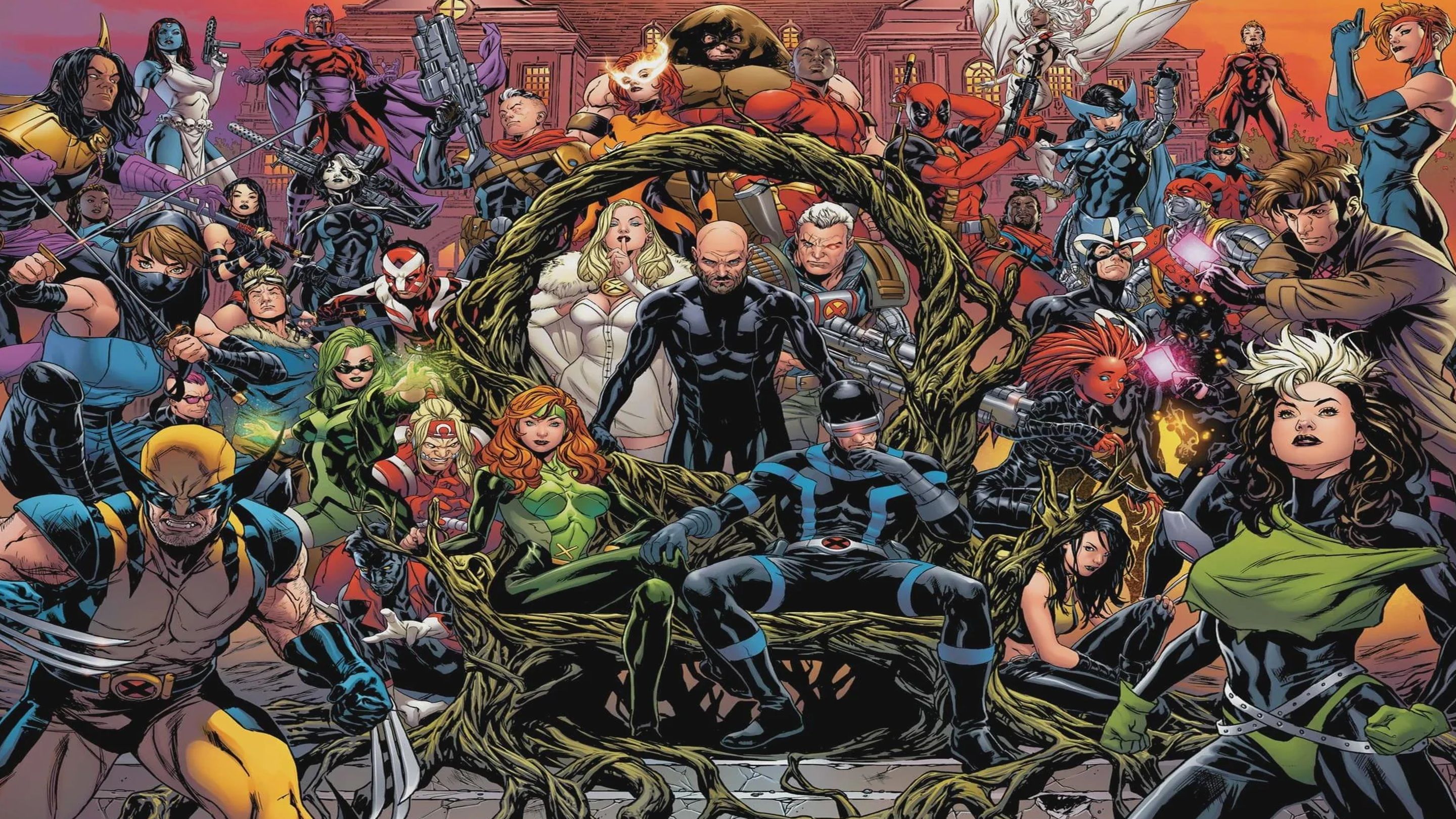
The X-Men’s 1963 debut saw Marvel’s mutant metaphor revolutionize superhero comics with pointed commentary on prejudice, civil rights, and the struggle for social acceptance. The X-Men comics also produced some of the Marvel Universe’s best and most popular stories, including legendary runs by creators such as Chris Claremont and Grant Morrison.
However, reading through vintage X-Men runs with a modern lens reveals that not every groundbreaking arc has stood the test of time. Writers in the ’70s, ’80s, and ’90s frequently stumbled into tropes that feel jarringly out of touch today. What was meant to be edgy melodrama boils down to questionable character choices, bizarre romantic dynamics, and wildly tone-deaf resolutions.
While these runs undeniably shaped the Marvel universe, revisiting them reveals elements and storylines that don’t hold up without the nostalgia goggles. This article highlights 9 X-Men storylines that have aged like milk in the modern era, showing how far comic book storytelling and societal standards have evolved since the Children of the Atom first took flight.
9 House of M Blames Genocide on a “Hysterical” Woman

House of M depicts one of the most consequential events in X-Men history: the depowering of nearly the entire mutant population. In a mental breakdown, Wanda Maximoff says, “No more Mutants,” nearly wiping out the mutants. Consequently, the story frames her not as a nuanced hero processing trauma, but as a dangerous force of nature to be neutralized.
The double standard becomes especially clear when Wanda’s treatment is compared with that of male characters who have committed comparable atrocities. Magneto, Professor X, and Cyclops have all committed obscene acts and orchestrated world-altering events, yet their actions are routinely framed through complex moral philosophy, tragic heroism, or tactical necessity. Wanda, however, is denied the same intellectual framing.
Her actions are instead framed as the irrational outburst of a woman overwhelmed by motherhood and grief. The narrative doesn’t approach her trauma with empathy; it treats her mental health crisis as a convenient way to reset the Marvel Universe’s status quo, reducing a foundational Avenger to an unstable villain whose emotions are too dangerous to exist.
8 “The Maximoff Twin Retcon” (AXIS #7)

For decades, Wanda and Pietro Maximoff were best known as Magneto’s children, and this became central to their identity, producing one of the most emotionally complex dynamics in comic book history. However, 2014’s AXIS #7 systematically erased their foundational history in a single issue, altering a dynamic that made Wanda, Pietro, and Magneto more compelling characters.
In the story, Wanda casts a spell meant to affect anyone sharing her bloodline while fighting a morally inverted Magneto. The spell causes Quicksilver to collapse, but Magneto is unaffected, showing he is not the twins’ father and that neither twin is a mutant. Later, the High Evolutionary is revealed to have disguised normal humans as mutants through genetic experimentation.
This retcon drew widespread criticism for lacking organic character development and serving as transparent corporate synergy with the MCU. Decades of X-Men stories now ring hollow, reduced to arbitrary misunderstandings built on a lie. Though comic writers preserved the surrogate family bond between Magneto and the twins to soften the blow, it remains an unnecessary insult to continuity.

God Loves, Man Kills remains one of the most structurally accomplished X-Men stories. Claremont makes Reverend William Stryker a terrifying bigot, opening with two murdered mutant children hung from playground equipment, with “MUTIE” scrawled beneath them. The writers want his crusade to mirror real-world bigotry, but the story undercuts that aim with the very foundation it’s built on.
The story’s core flaw is that mutants, unlike real marginalized groups, are often factually dangerous, making them an ineffective metaphor for real-world bigotry. They routinely trigger mass-casualty events that humans are justified in fearing. They also produce genocidal villains and uncontrolled powers that threaten bystanders, so the “mutant threat” is less a paranoid fantasy than a demonstrated fact.
Nonetheless, Stryker is still wrong for hating and murdering mutants indiscriminately; however, as a metaphor that frames the bigot’s fear as irrational prejudice, the story doesn’t hold up to scrutiny. The story is indeed powerfully told, but the metaphor only works if you enjoy it in isolation and don’t consider other X-Men stories.
6 “The Trial of Magneto” (Uncanny X-Men #200)

Chris Claremont set the stage for the Master of Magnetism to finally answer for his crimes against humanity in Uncanny X-Men #200. Over the years, Magneto has committed several atrocities against humanity, including acts of terrorism, attempted genocide, and villainy. However, when Magneto is put on trial, he receives no consequences for his actions and is instead rewarded.
When Magneto’s trial is interrupted by the Von Strucker twins wrecking the courthouse, the charges are abruptly dropped. An injured Xavier, before leaving Earth with Lilandra, names Magneto headmaster of the Xavier Institute and commander of the New Mutants. Intended as a story of forgiveness and redemption, it falls flat because Magneto’s crimes are treated as a mere political phase.
The “Trial of Magneto” ignores accountability and the safety of the young mutants in his care. Instead of a meaningful sentence or a slow, earned redemption arc, Magneto gets immediate control of a school full of traumatized teenagers after a courtroom speech. Xavier’s decision to make him the leader of the X-Men makes him seem reckless and detached from reality.
5 Professor X Creeping on Jean Grey (X-Men #3)

In 1964’s X-Men #3, Stan Lee and Jack Kirby featured an internal monologue for Professor Charles Xavier that has become increasingly uncomfortable for modern readers. In it, he laments that he loved her but could never reveal his feelings because he is the leader of the X-Men and confined to a wheelchair.
These romantic feelings are highly inappropriate because of the age gap between Professor Xavier and Jean Grey. Jean Grey was introduced as a 16-year-old high school student, and Xavier is her guardian and mentor, with telepathic access to her private thoughts. His secret romantic feelings for Jean come off as predatory, casting Professor X in a negative light.
4 Kitty Pryde and Colossus’s Romance

When Kitty Pryde debuted in Uncanny X-Men #129 in 1980, Chris Claremont introduced her as a 13-year-old prodigy entering a world of danger. After locking eyes with Piotr Rasputin, “Colossus,” a farm boy from Siberia, their dynamic was framed as an innocent, starry-eyed courtship. However, a glaring flaw in their relationship becomes clear when you read those early issues today.
The core problem with this pairing is the age gap and power dynamic, which you can’t brush aside for nostalgia’s sake. Kitty Pryde was 13 years old, while Colossus was already 18 when they met and began falling in love. Piotr isn’t just older; he also has the authority of an adult teammate falling for a child.
By the time they became explicitly romantic, Kitty was 14 and Colossus about 19. Claremont framed the relationship as sweet and endearing, but modern readers see the age gap as undermining its supposed innocence. Subsequent writers quickly recognized how poorly the relationship was set up and spent years executing awkward narrative damage control.
3 “Holy War” / Nightcrawler as the Pope

The infamous “Holy War” storyline in Uncanny X-Men #423 and #424 features one of comics’ most absurd attempts to take down the X-Men. The Church of Humanity planned to make Nightcrawler Pope, then fake the rapture and blame the mutant population. Nightcrawler had secretly become a Catholic priest and was about to become the next pope.
Their goal was to use image-inducers to disguise Kurt, elevate him to the papacy, and then fake his death so that a “demonic” mutant pope would be exposed as the leader of the Catholic Church. The church also planned to poison churchgoers around the world with genetically altered communion wafers designed to disintegrate anyone who partook.
Naturally, the story was both offensive and nonsensical, alienating religious readers and die-hard X-Men fans alike through its misunderstanding of basic theology and Kurt Wagner’s established characterization. It portrays the Catholic Church as an easily manipulated pawn in a convoluted scheme hatched by a hate group.
2 Chuck Austen’s Angel & Husk Romance

Chuck Austen’s romance between Archangel (Warren Worthington III) and Husk (Paige Guthrie) ran from Uncanny X-Men #437 to #441, a pairing that fans widely regard as one of the most cursed couples in comics. Warren not only became romantically involved with a teenager, but they also famously engaged in public intimacy in the sky directly above Husk’s family.
Additionally, this storyline is so cringe-inducing because Husk’s brother, Icarus, a mutant with wings similar to Angel’s, was also part of this Uncanny X-Men arc. It created a bad impression: Husk was romantically involved with a winged mutant who resembled her brother, made worse by the already horrendous age gap, since Angel was a grown adult at the time.
1 Deadly Genesis (X-Men: Deadly Genesis #1–6)

Published in 2005 for the 30th anniversary of Giant-Size X-Men #1, Ed Brubaker’s X-Men: Deadly Genesis aimed to deconstruct the foundation of the modern X-Men franchise. Giant-Size helped define the team as it is today. In the story, the original team is captured by the living island Krakoa, and Professor Charles Xavier assembles an iconic international group to rescue them.
However, Brubaker introduced a retcon that reframed this iconic event as a desperate cover-up for a horrific failure. The retcon makes Xavier look reckless and negligent, far from the wise saviour of mutantkind he was known to be. The miniseries revealed that before assembling Wolverine and company, a panicked Xavier recruited a secret, ill-prepared team of rookie mutants.
This team consisted of Sway, Petra, Darwin, and Gabriel Summers (Vulcan), the long-lost third Summers brother. Xavier sent them directly into harm’s way on Krakoa, where they were brutally killed within minutes, except Darwin and Vulcan. Instead of taking accountability for his actions, Xavier used his telepathy to wipe Cyclops’ memory of the event, muddying Vulcan’s Sacrifice.
Professor X’s actions in this storyline dealt a permanent blow to his characterization that Marvel has struggled with ever since. Xavier comes across as manipulative, negligent, and cold-hearted rather than simply a flawed idealist. By abusing his powers and wiping Cyclops’ memory to cover up his failures in an obvious boundary crossing, he permanently changed how readers view Professor X.

X-Men
- Release Date
- July 13, 2000
- Runtime
- 104 minutes
- Director
- Bryan Singer
- Writers
- Bryan Singer, David Hayter, Tom DeSanto
KioskNews shows a cleaned-up reading view extracted from the publisher’s page — the original always lives on their site, not ours.