When The Rupee Fell, India Turned To NRIs. What Happened Next
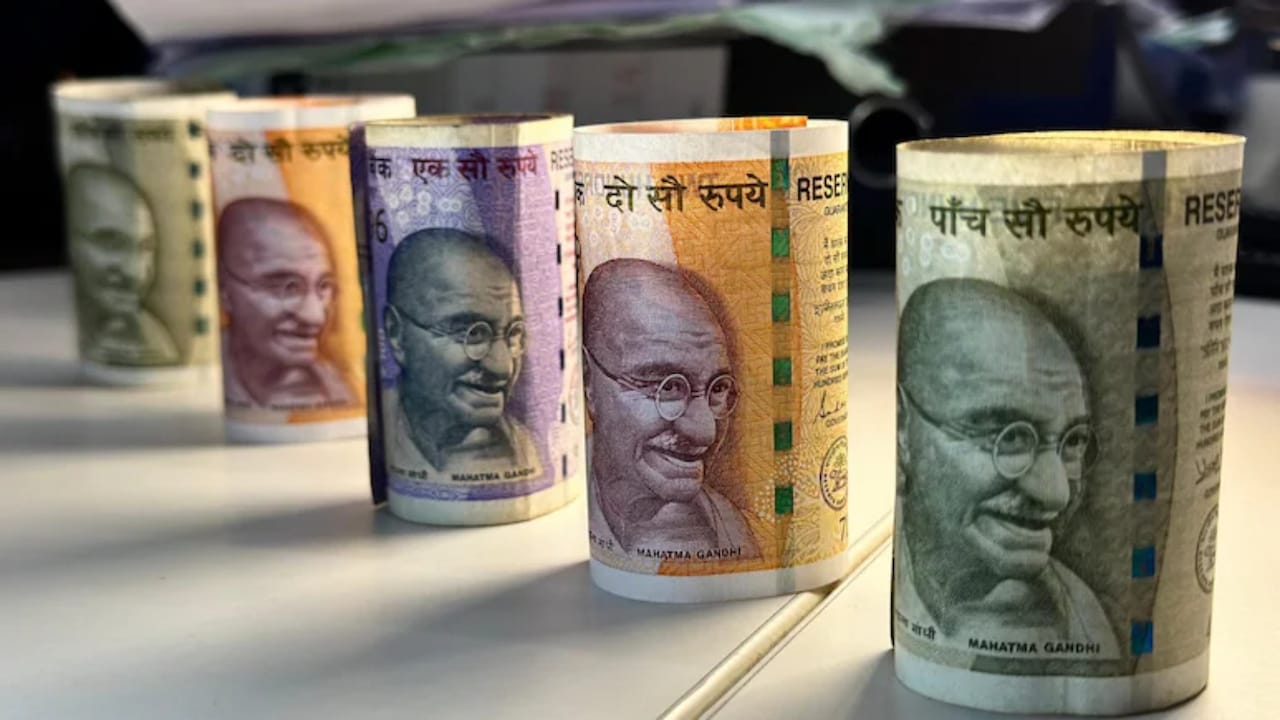
Prime Minister Narendra Modi had a message for hundreds of overseas Indians gathered at Paris' Salle Pleyel concert hall in June: India was counting on its overseas community to send back dollars.
As the war in Iran raged, the world's third-largest oil importer was staring at a surging energy bill. This raised concerns about India's need for greenbacks to pay for imports and sent the rupee to a record low. "I would urge all of you to deepen your engagement with India," Modi told the packed crowd at a community event in the French capital. "This will give new strength to India's development journey, while also giving you an opportunity to serve the land of your ancestors."
Back home, Indian authorities had already begun laying the groundwork to support the rupee, which had weakened to an exchange rate near 97 per dollar, from about 86 a year ago. Reserve Bank of India Governor Sanjay Malhotra and other senior officials at the central bank had been meeting with commercial financial institutions. One idea was to raise dollars through state banks, according to people familiar with the discussions who asked not to be named because the talks were private. That move was ruled out as bankers warned that borrowing when the rupee is weak could be seen as a sign of stress, spooking investors and ultimately making the borrowing more expensive.
Also Read | Layoffs Are Rising In Tech, But These Skills Are Helping People Unlock Better Pay
And so policymakers turned to a familiar move: encouraging commercial banks to attract foreign-currency deposits from Indians living overseas. The RBI would cover banks' cost of protecting against swings in the rupee, in effect allowing them to offer higher rates. A similar measure proved highly effective in 2013, when expectations of tighter US monetary policy triggered an exodus of foreign capital from emerging markets and sent the rupee plunging.
The response was emphatic again. The Foreign Currency Non-Resident (Bank) deposit plan, or FCNR (B), attracted $127 billion, a record for such Indian programs, allowing authorities to close the hedging-cost incentive a month before schedule. The success highlights how India's 35 million-strong overseas community has grown into an economic powerhouse and a key financial backstop.
The RBI didn't respond to a request for comment.
The overseas community has transformed over the past three decades. Once dominated by blue-collar workers mainly in the Persian Gulf, it's now thick with well-heeled professionals from the likes of Alphabet Inc.'s Sundar Pichai and International Business Machines Corp.'s Arvind Krishna as well as doctors and bankers.
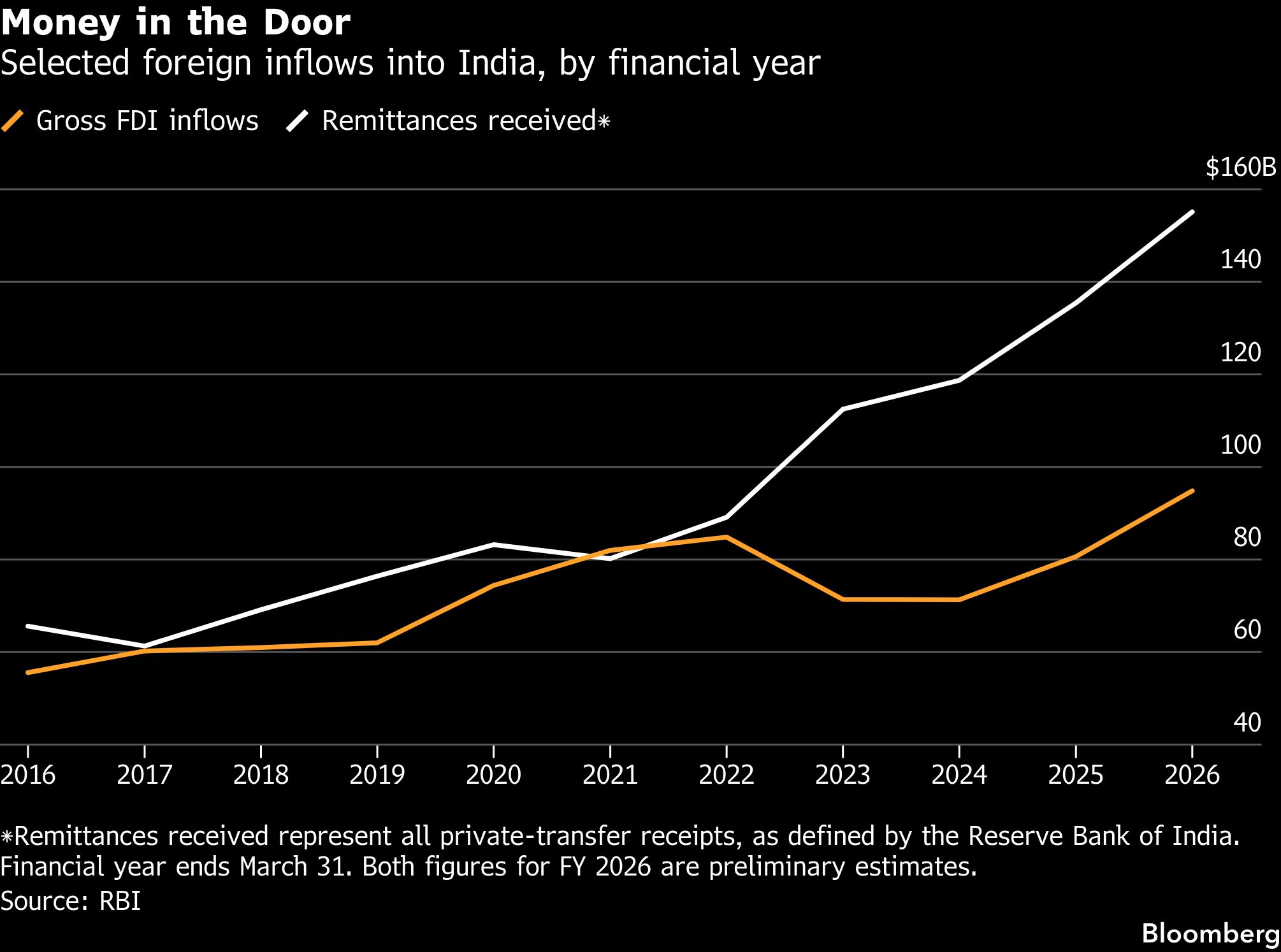
Beyond bank deposits, remittances to India - typically cash sent home by workers to family - were more than $150 billion in 2025, according to World Bank data. That's more than twice the amount sent to Mexico, the world's second-largest recipient. Remittances do more than bolster India's supply of foreign currency. They support household consumption, savings, education and health care, providing a steady source of income even during economic shocks.
Abu Dhabi-based engineer Avijit Chatterjee is one of the overseas savers drawn to the FCNR (B) program. He put in $40,000 in June. Chatterjee, 46, says his foreign-currency deposits now total $100,000, driven purely by the prospect of higher returns as he builds a nest egg for retirement in India. When the RBI was offering its incentives, commercial banks offered rates as high as 7.75% for depositors willing to tie up their money for a few years. "I need dollars without any exchange-rate risk, also to help sustain my son's education abroad," Chatterjee says over a Zoom call.
Piyush Jhunjhunwala, the 44-year-old founder of Stockify Fintech in Dubai, says patriotism played a part in his decision to put $1 million in an FCNR (B) plan, with the help of leverage from also borrowing dollars at a lower rate than the deposit pays. Such leverage can squeeze returns if short-term borrowing costs move the wrong way, but it can also amplify gains as the deposit pays more than the loan. "When I heard of the FCNR scheme, it was exciting because this is like a once-in-a-decade kind of an opportunity," says Jhunjhunwala, who's lived in Dubai for two decades. "This is our opportunity to give back and help our homeland."
As the overseas community has grown wealthier, Indian banks, asset managers and property developers are competing for its accumulated savings in Dubai and Singapore, as well as Europe. They're also tapping investment funds by using international financial hubs, such as India's Gujarat International Finance Tec-City, or GIFT City. The special economic zone has its own regulatory and tax framework to attract global capital.
In July, bankers at HSBC Holdings Plc held roadshows for high- and ultrahigh-net-worth Indians in Hong Kong, Manila, Singapore and the Middle East, in an effort to attract deposits, according to a person familiar with the events who was not authorized to speak to the news media. Dozens of prospective clients attended one gathering in Manila, another person said. They asked bankers about using leverage, its risks and how their dollars would be deployed. HSBC did not respond to a Bloomberg email seeking comment.
At Singapore-based investment firm Lighthouse Canton, nonresident Indians, or NRIs, now account for about half of its $7 billion global assets, from a minuscule amount about eight years ago, says Shilpi Chowdhary, the firm's group chief executive officer. They're increasingly dipping their toes into equities, startups and venture capital funds, moving beyond long-popular property investments. "India will always be a preferred choice because we understand India," Chowdhary says. "It's a known devil."
In 2024, Indian regulators relaxed restrictions on NRIs investing in foreign funds set up in GIFT City. Since then, overseas community investments there have topped $7 billion.
There are also signs that overseas community wealth could provide a particularly durable source of capital. Zerodha, one of India's largest stockbrokers, says its more than 50,000 NRI clients tend to invest more and hold for longer than domestic counterparts. Earlier this year their accounts were worth almost 10 times as much on average as those of resident investors.
Property remains a major draw. Inflows into India's property market reached a record of more than $14 billion in 2025, according to CBRE Research, with foreign investors - including high-net-worth individuals and NRIs - making up about a quarter of the total. At DLF Ltd., India's largest real estate developer, NRIs accounted for 27% of sales in the year through March 2025, up from 23% a year earlier.
The Indian rupee climbed the week the fundraising came to an end, but the flood of money from the overseas community wasn't enough to trigger a strong rally. That's partly due to India's waning appeal among foreign investors: The country replaced Indonesia as Asia's least-preferred stock market in an August survey of fund managers by Bank of America Corp.
Many experts argue that India should put greater emphasis on attracting more long-term and less expensive sources of dollars, especially foreign direct investments - that is, active ownership stakes in businesses. Unlike bank deposits, dollars from FDI don't have to be paid back. India attracted almost $100 billion of gross foreign direct investment in the year ended March 2026, according to official figures.
That's less than the $150 billion-plus in remittances in 2025, which help too. Former RBI Governor Duvvuri Subbarao referred to remittances as "good money" given they have grown from a modest source of foreign exchange into an important buffer for India's external finances. "We need to make it easier for the overseas community to send money here," Subbarao says, suggesting easing the tax burden and lowering transaction costs among potential measures. "It makes sense to bank on the diaspora."
Devesh Kapur, a professor of South Asian studies at Johns Hopkins University's School of Advanced International Studies, refers to the overseas community as "insurance." But he says direct investment would make it even more powerful. He draws parallels with Chinese living outside the mainland, which historically sent less money home through remittances. Instead, entrepreneurs in Hong Kong, Taiwan and elsewhere in East Asia helped finance factories in the mainland, Kapur says, bringing manufacturing expertise, supply chains and international networks that led to China's emergence as an export powerhouse.
There are also questions about whether the overseas community can be a reliable backstop indefinitely. A global immigration crackdown is slowing the flow of Indians overseas. Second- and third-generation Indians may have weaker ties to their ancestral homeland and weigh investment opportunities elsewhere, fund managers warn.
The challenge for India will be to maintain their ties. "Provided we can tap them and ensure that they maintain an emotional connect with India," Subbarao says, "that will be good for India."
(Except for the headline, this story has not been edited by NDTV staff and is published from a syndicated feed.)
KioskNews shows a cleaned-up reading view extracted from the publisher’s page — the original always lives on their site, not ours.