Min Jin Lee on "American Hagwon" and writing "social novels"
It's been nearly a decade since Min Jin Lee's last book made her a literary phenomenon. "Pachinko," a sweeping historical epic chronicling four generations of a Korean family living in Japan, sold more than two million copies in the United States. It was adapted into a popular series on Apple TV.
But all that success didn't come easily. "When 'Pachinko' first came out as a hardcover, it was never on the bestseller lists," said Lee. "If you look at my hardcover sales, they're abysmal. So, if you start out with failure, it's really easy."
Did she consider "Pachinko" at its beginning a failure? "Oh, I think you can ask my publishers!" she laughed. "They would just say, this didn't sell!"
It wasn't until The New York Times named it one of the best books of the year, and it was selected as a National Book Award finalist, that "Pachinko" took off.
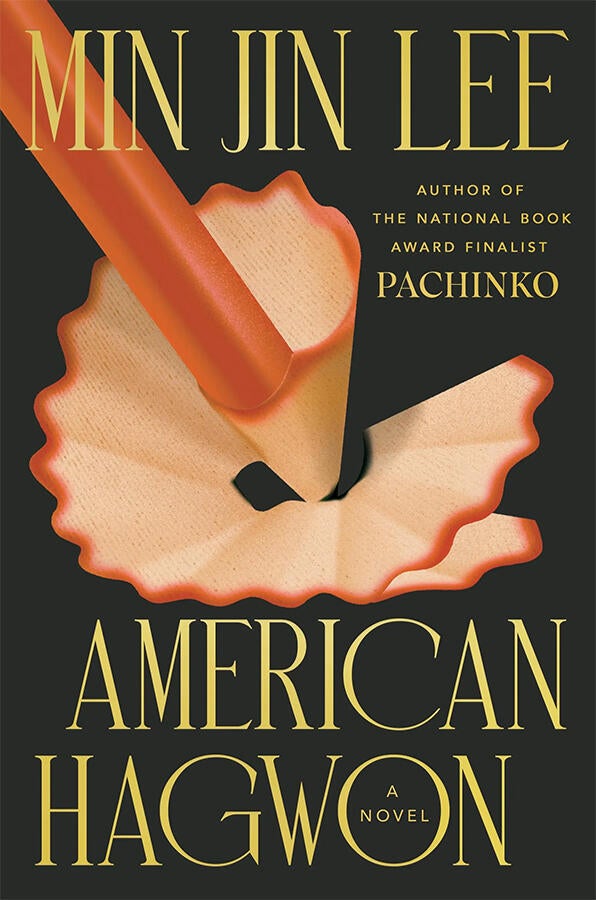
Lee's latest novel, "American Hagwon" (published by Cardinal), is the third in a series she calls "The Diaspora Quartet," chronicling the migration of Koreans around the world.
"Every industrial revolution had people leaving the farm to go to the city," Lee said. "And now we have environmental diaspora, where people don't have water in their communities anymore. You have economic diaspora, where certain jobs don't exist anymore, like manufacturing. I'm focusing on Koreans, because those are the people that I know about. But I'm really writing about this modern condition."
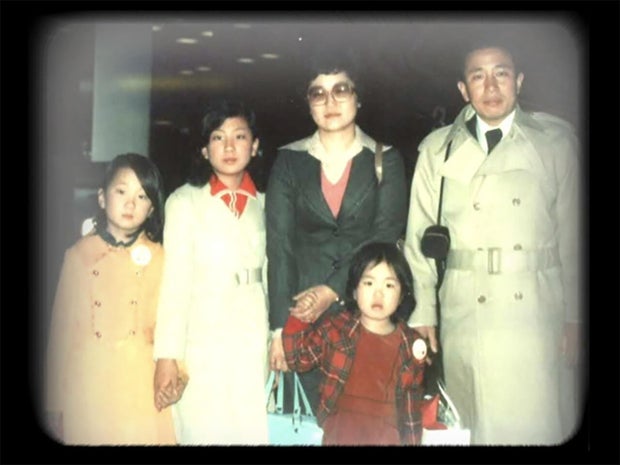
It's a deeply personal story for Lee. She came to America in 1976, when she was seven years old. The middle of three girls, her family moved to Elmhurst, Queens, where she grew up in a very blue-collar neighborhood. Her parents, a marketing executive and piano teacher in Korea, opened a newspaper stand and, later, a jewelry shop.
"As a little kid, I was so unbearably shy," Lee said. "I didn't really speak or interact with my peers very well."
But she tested into a highly-competitive public high school, where she found friends – and her footing.
From there it was on to the Ivy League, where she discovered something important was missing: Yale did not offer Korean language or Korean history courses – which, Lee says, was ignoring the full story.
"I think because of the Cold War and because of the Korean War in American history, I do think this is a rational thing to ask for," she said. So, Lee organized a letter-writing campaign, and convinced the university to start a Korean Studies program. "I think that it really helped the school," she said. "My mom has this whole theory that wherever you go, you should make it better than when you found it."
While at Yale, Lee was also struggling with a serious liver condition. "I learned that I would get liver cancer in my 20s or 30s; that's what the doctor said to me," she said. "I was like, 'Oh, if I have until 35, what do I want to do?' So, it gave me this sort of courage that I don't think normally I would have had."
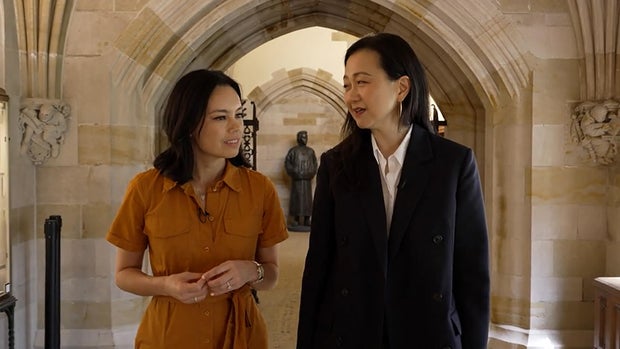
Lee went to law school, then to a big firm. But before long, the hours and the stress caused her liver disease to flare up, and she decided to take a leap. "I thought, if I walk away from money and status and power, at least I'll find tremendous enrichment for me," she said.
Lee found that by writing what she describes as "social novels": "I think it's to write realistic fiction that reflects on society today, saying, this is what I think and this is the way things should be," she said.
Lee conducted thousands of interviews with people of Korean descent. In her conversations, one topic came up more than any other. And so, in "American Hagwon," she takes on education.
"A hagwon is a for-profit learning center," Lee said. "In Korea, you can go to a hagwon to become a police officer. You can go a hagwon to become a K-pop idol. And you can go to a hagwon to learn English. So, starting at the age of four or five, 80% of Koreans in South Korea send their children to hagwons."
Much of the book takes place in hagwons in Korea and the U.S., centering on a family whose life is upended when they come to America. Lee said of the father, John Koh, "John goes to the most elite school in Korea; and yet, he ends up working frying fish for somebody else."
The family's experience raises big questions about the value of education: "Sometimes someone will tell you, you go to college to get a job," said Lee. "But other people will say education should be a form of transformation and liberation. Gradually, as I worked on the book, the more I was interested in wisdom. Like, how do you obtain wisdom? How do you live a wise life?"
While "American Hagwon" is set in the 1990s, Lee says what's happening in the world today makes these questions essential. She opens her book with the line: "The rules of engagement have changed already."
"I think this is the condition of the modern person in the 21st century, and 2026 for certain, especially in the era of AI," she said. "The rules of engagement have changed already, and you didn't know. Like, we didn't get the memo. Everybody is changing the game, the paradigm, the rules. Now that we know that, what are you supposed to do? How do you educate your children? How do you retool yourself?"
Thanks to an experimental treatment in her 30s, Lee's liver disease was cured. In Harlem, where she lives with her husband and raised her son, she's already researching her fourth book, the final in her Diaspora Quartet.
Lee said, "What I would really love is if readers could feel that they have the internal resources to manage the change that feels alarming and threatening to them, and then have the internal resources and the fortitude to care for others. There's no way we're going to be able to make it through this era unless we have each other."
READ AN EXCERPT: "American Hagwon" by Min Jin Lee
Story produced by Wonbo Woo. Editor: George Pozderec.
For more info:
- "American Hagwon" by Min Jin Lee (Cardinal), in Hardcover, Large Print Trade Paperback, eBook and Audio formats, available via Amazon, Barnes & Noble and Bookshop.org
- minjinlee.com (Official site)
- Thanks to Kjun, New York City, and Yale University
KioskNews shows a cleaned-up reading view extracted from the publisher’s page — the original always lives on their site, not ours.