Global headwinds weigh on Thai bourse
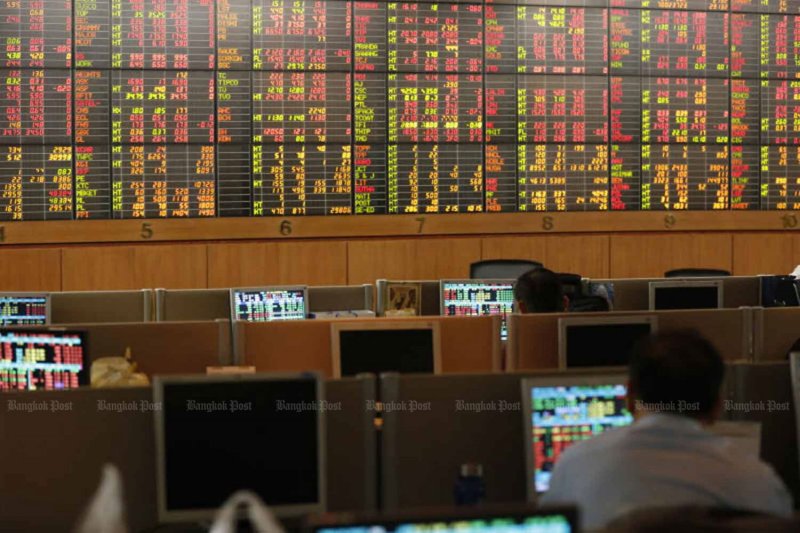
The Stock Exchange of Thailand (SET) remains exposed to downside risks after falling sharply below 1,500 points on Tuesday, as global financial markets struggle under the weight of wars and trade tensions, say analysts.
Benjaphol Suthwanish, assistant managing director of securities analysis at UOB Kay Hian Securities (Thailand), said he expects the Thai index to remain under pressure in the short term, in line with other regional bourses.
Commodity markets have been volatile recently amid expectations surrounding the US midterm elections, and continued uncertainty could prompt investors to reduce their exposure to risky assets in the short term, he said.
Oil prices edged up on Tuesday following reports of a US strike on Iran's Qeshm Island, raising concerns about an escalation of the eight-month conflict and prolonged disruptions to Middle Eastern oil supplies. Brent crude rose 1.23% to US$106.1 a barrel, while West Texas Intermediate crude gained 1.03% to $97.74.
Market analysts broadly expect US President Donald Trump's Republican Party to lose control of the House of Representatives while retaining the Senate in the midterm elections, although uncertainty over the political outlook remains.
For the SET, the key support level is around 1,520 points, which the index has already breached, said Mr Benjaphol.
The next support level is estimated at 1,475 points, suggesting the market could remain in a short-term downtrend.
Regarding energy investments, he said the sector remains suitable for investors with a relatively high risk tolerance. Although negotiations over the ongoing wars have continued, there are few signs of a meaningful breakthrough, according to the brokerage.
Oil prices could remain elevated, although a return to the exceptionally high levels seen previously may be difficult given that the broader economic environment would struggle to sustain such prices, said Mr Benjaphol.
He viewed a pullback in oil prices to less than $100 per barrel as a potential buying opportunity.
However, if the US election results do not deliver a major negative surprise, the market could stabilise and consolidate following its recent decline, said Mr Benjaphol.
Investors should remain mindful of the risk of a Federal Reserve interest rate hike next month, which could weigh on market sentiment towards year-end, noted the brokerage.
Asia Plus Securities (ASPS) said the Thai bourse also faces pressure from concerns over an artificial intelligence (AI) bubble. Initial support for the SET is estimated at 1,495-1,500 points.
The SOX semiconductor index continued to plunge, falling 7.2% last Friday and a further 3.4% on Monday, amid reports that Anthropic plans to spend more than $895 billion and raise up to $3.5 billion from Japanese investors for its stock market debut.
This news prompted the market to question whether the massive capital invested in AI will generate worthwhile returns, ASPS noted.
KioskNews shows a cleaned-up reading view extracted from the publisher’s page — the original always lives on their site, not ours.