Unhealthy air returns to Asia's richest country as smoke blows in from abroad
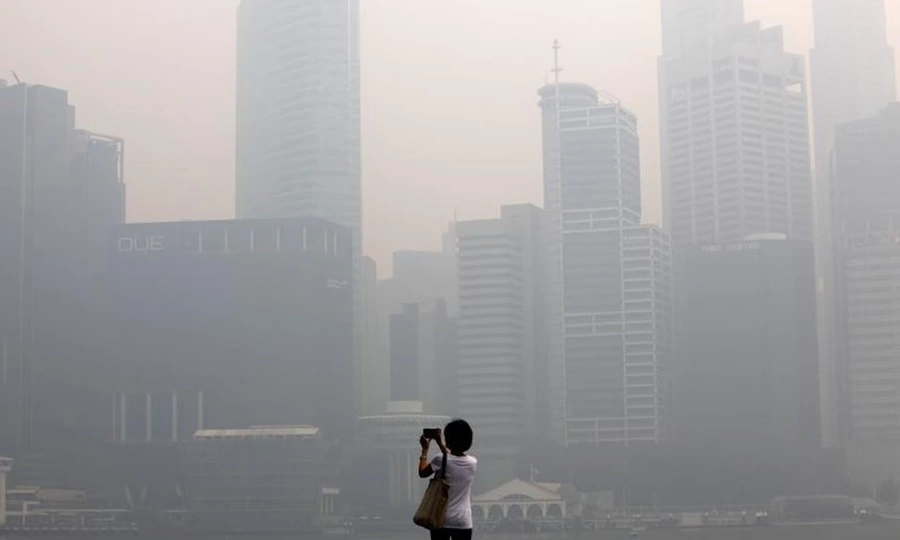
Air quality in central Singapore fell back into the unhealthy range on Monday as smoke from fires in Indonesia's Kalimantan and Sumatra drifted north across the region.
The 24-hour Pollutant Standards Index (PSI) in Singapore's central region reached 102 at noon and 108 by 2 p.m., CNA reported.
The other four regions stayed in the moderate band, ranging from 83 in the north to 96 in the east.
At noon, National Environment Agency data cited by AsiaOne showed readings of 91 in the east and west, 82 in the south and 79 in the north. One-hour PM2.5 concentrations were elevated across the island and peaked at 113 in the central region at 10 a.m.
The ASEAN Specialised Meteorological Centre said in its daily weather and haze report that transboundary smoke haze was observed over Singapore on Monday morning.
It expects the regional hotspot and haze situation to stay elevated, with winds forecast to blow mainly from the southeast apart from parts of Borneo, where they will be light and variable.
Malay Mail reported the center as detecting moderate to dense haze over central and southern Sumatra, West and Central Kalimantan, and parts of Sarawak and Peninsular Malaysia.
Scattered hotspot clusters were detected in southern Sumatra and in West, Central and South Kalimantan.
Monday's reading ended four consecutive days of moderate air quality in Singapore.
The index first crossed into the unhealthy range this episode at 7 a.m. on Sept. 4 and rose to 105 by mid-morning, which NEA said was the first time haze had pushed the PSI into that band since Oct. 8, 2023.
The agency began issuing daily advisories that evening, after the government's Haze Task Force activated its response plans.
In its Sunday update, NEA forecast the index would sit in the moderate to low unhealthy range over the following 24 hours, with moderate to dense smoke plumes from fires in Kalimantan drifting toward Singapore and more observed over southern Sumatra.
Showers were forecast over northern Sumatra and northwestern Borneo, but dry conditions were expected to persist over Kalimantan and central and southern Sumatra, leaving what the agency called a continuing "risk of smoke haze affecting Singapore."
 |
|
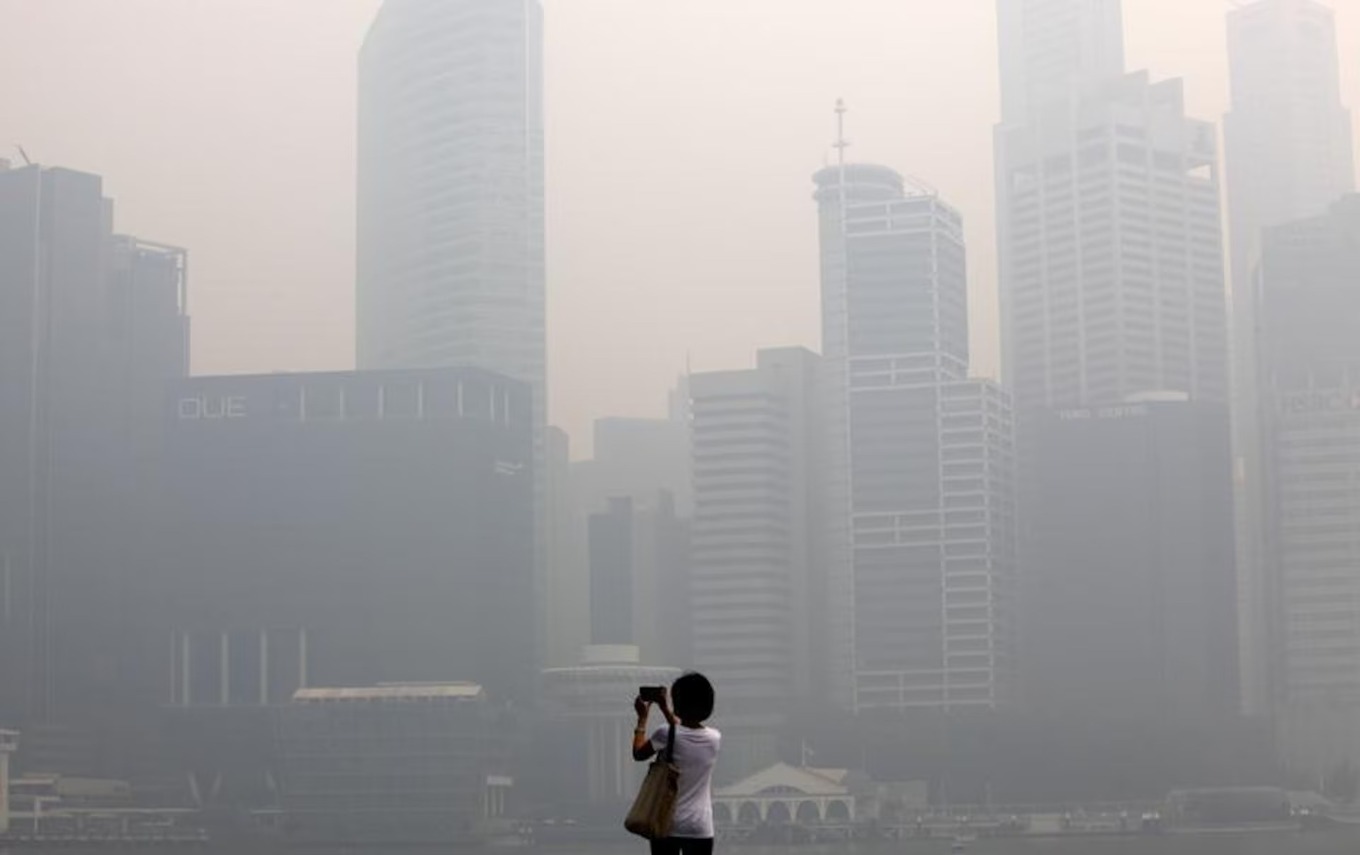
A woman takes photos of the hazy skyline of Singapore. Photo by Reuters |
Indonesian authorities describe this as the country's most intense wildfire season in 11 years, Reuters reported, with fire emissions between Sept. 1 and 7 reaching 19.7 million metric tons, more than a third of the global total, according to the European Union's Copernicus climate monitoring service.
Around 1.43 million students from 12,874 schools across six of the worst-hit provinces had shifted to remote learning as of Sept. 2, education ministry official Gogot Suharwoto told reporters in comments carried by Reuters. About 1.1 million of them are in West Kalimantan.
Malaysia declared an emergency in the Serian division of Sarawak on Sept. 4 after the Air Pollutant Index there surged to 521, according to the country's environment department in figures reported by AP. Kuching, the state capital, recorded a hazardous 311.
Under Singapore's index, readings of 0 to 50 are good, 51 to 100 moderate and 101 to 200 unhealthy. Readings of 201 to 300 are very unhealthy and anything above 300 is hazardous.
When the 24-hour PSI is in the unhealthy range, NEA advises healthy people to reduce prolonged or strenuous outdoor physical exertion.
The elderly, pregnant women and children are told to minimize it, and people with chronic lung or heart disease to avoid it altogether.
Singapore is Asia's wealthiest country by income per head, with GDP per capita projected at about US$99,000 this year in the International Monetary Fund's April World Economic Outlook, ahead of Qatar at roughly $72,500.
KioskNews shows a cleaned-up reading view extracted from the publisher’s page — the original always lives on their site, not ours.