The 8 Most Perfect Animated Movies of the 1980s, Ranked

Born with Autism (formerly classified as Asperger syndrome), Tyler B. Searle has been obsessed with storytelling since he was old enough to speak. He gravitated towards fairy tales, mythology, the fantasy genre, and animated movies and shows aimed at family audiences. When not writing, Tyler enjoys watching more cartoons and reading fantasy books in his home in Ontario, Canada.
Sign in to your Collider account
The 1980s was an experimental decade for films, thanks in large part to studios being more willing to spend money on their projects. Animation was no exception, especially since Disney had been stuck in a rut ever since the death of Walt Disney in 1966. This allowed other studios to try their hand, while across the Atlantic, Japan was releasing some major works that would become global successes and help contribute to the popularity of anime.
1980s animation didn't have a single style, varying wildly from fun family films to gritty features full of drugs, sex, and copious violence. Though CGI was starting to become more commonplace, the films were still made using 2D methods, and many of them were made with such love and care that they're still looked back on as classics.
8 'An American Tail' (1986)

Fievel Mousekewitz (Phillip Glasser) and his family barely survive a pogrom and decide to flee Russia for a better life in America. During the crossing, Fievel is swept overboard and presumed dead by his family, while he arrives later in New York City. His quest to find his family sees Fievel interact with numerous sub-cultures of fellow immigrants, all of whom are suffering oppression at the hands of a gang of cats called the Mott Street Maulsers.
An American Tail combines the beautifully detailed animated from ex-Disney animator Don Bluth with the sentimental storytelling of Steven Spielberg. It pulls no punches in showing the harsh conditions immigrants face when trying to adapt to a new home, which makes it a timeless story still applicable today. Still, it also has plenty of moments of levity, from some fun musical numbers to memorable side characters and a really intersting look at New York City from a mouse's perspective.
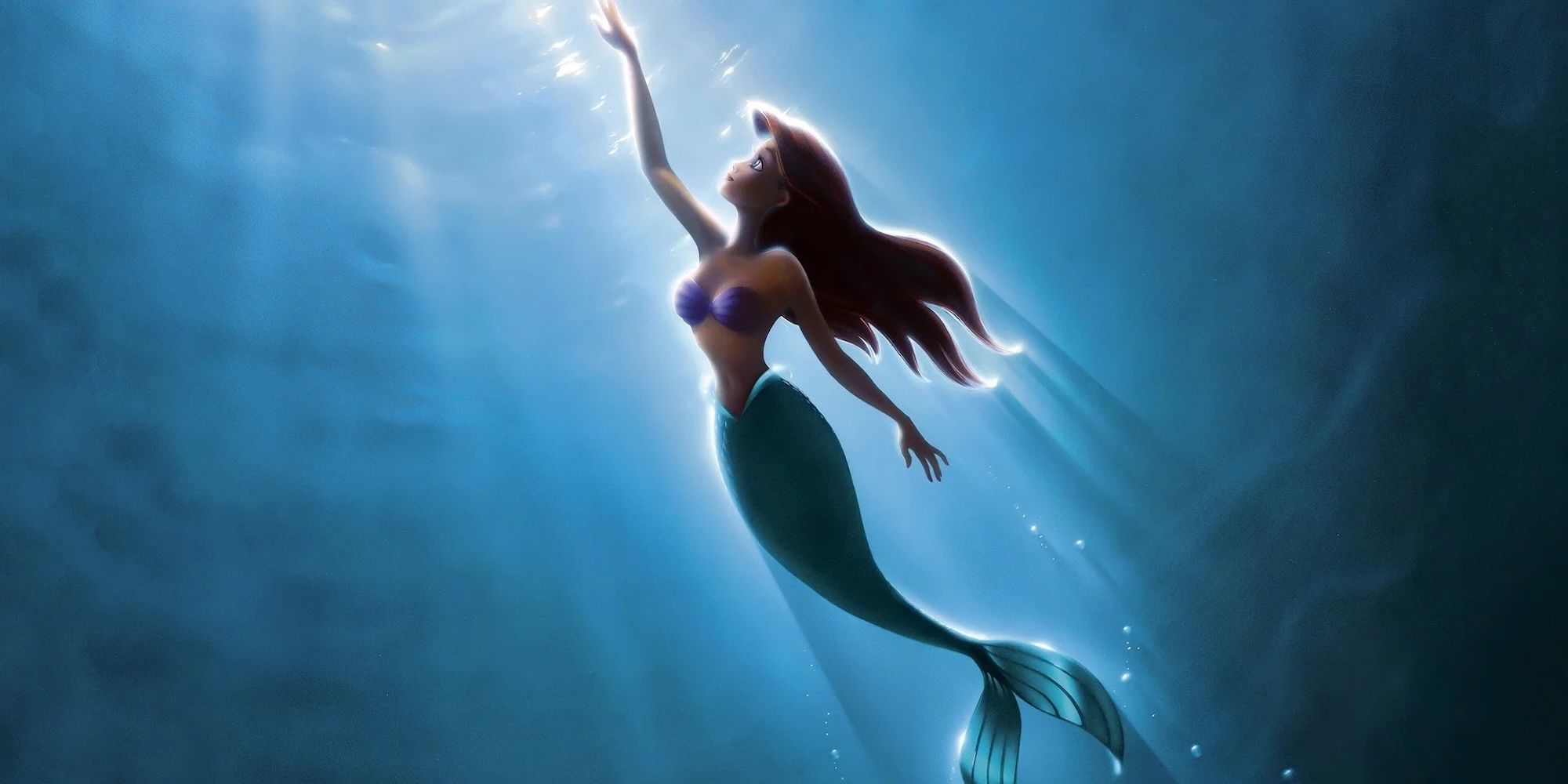
7 'The Little Mermaid' (1989)
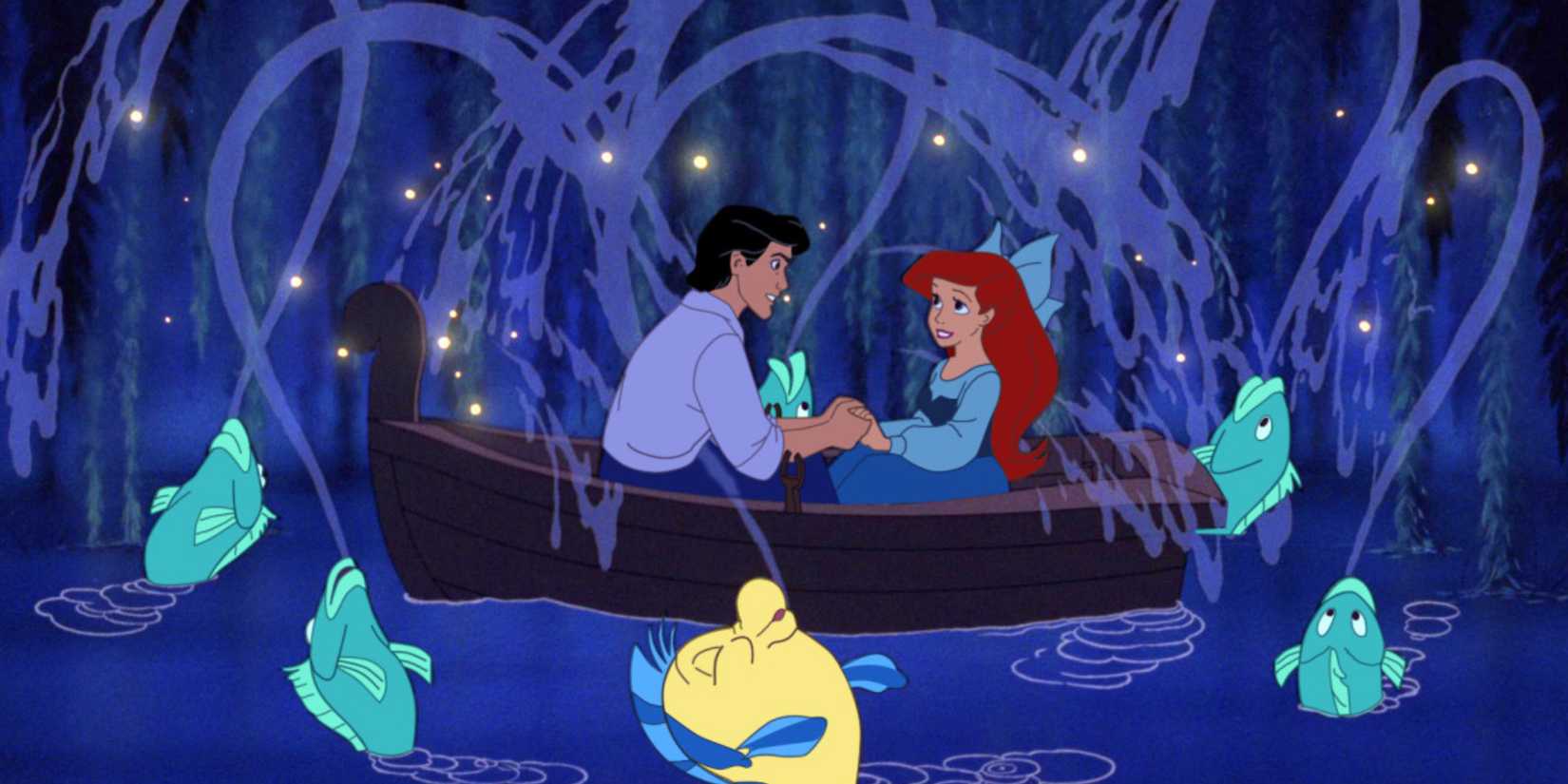
Ariel (Jodi Benson) is the youngest daughter of the sea king, Triton (Kenneth Mars), who is fascinated with humans. One night, she rescues Prince Eric (Christopher Daniel Barnes) from drowning, and falls madly in love with him. The rescue was witnessed by the sea witch, Ursula (Pat Carroll), who eventually offers Ariel the chance to be human in her plot to usurp Triton as ruler of the ocean.
The Little Mermaid is the film that kickstarted Disney's greatest era, the Disney Renaissance, and remains one of their most beloved fairy tale films. This is thanks in large part to the iconic music by Alan Menken and Howard Ashman, who brought with them a Broadway flare that set the formula for the modern animated musical. Of course, it doesn't slouch when it comes to the animation or characters: the former makes great use of its underwater world to create gorgeous camera angles, while the latter are a fantastic mix of personalities, including Ursula, one of Disney's best villains.
6 'The Secret of NIMH' (1982)

With her son Timmy (Ina Fried) sick with pneumonia, Mrs. Brisby (Elizabeth Hartman) is unable to move her family before Farmer Fitzgibbons (Tom Hatten) begins plowing his field. In desperation, she ventures into the home of the Great Owl (John Carradine), who apparently knew her recently deceased husband, Johnathan. The owl tells her to seek out the rats who live in the farmer's rosebush, but when she meets them, Mrs. Brisby finds herself pulled into a complex world that is linked to her husband's past.
The Secret of NIMH was Bluth's first film, and his chance to remind the world of the emotional power and artistic beauty of hand-drawn animation. At this, he succeeded, crafting a world that is lavish in detail and mysticism, where everyday animals and locations can feel as grand as something out of a fantasy story. Mrs. Brisby is also a phenomenal protagonist, demonstrating the courage only a mother can muster as she constantly fights her own instincts for the sake of her family.
Collider Exclusive · 8 Questions · 2 Minutes Which Iconic Fandom Should You Join? Harry Potter · Lord of the Rings · Star Wars · Star Trek
Eight honest questions about how you actually are: what you put on when you need cheering up, how deep you go into the things you love, what you argue about, what you keep on your shelf. Answer them and we will tell you where you belong. Four of the biggest fandoms on earth are taking new members, and they could not be more different from one another.
⚡Harry Potter(Wizarding World)
💍Lord of the Rings(Middle-earth)
⚔️Star Wars(A Galaxy Far Away)
🖖Star Trek(The Final Frontier)
01
What do you put on when you need cheering up? Nobody is brave about this one.
02
How deep do you go into something you love? There is no shallow end here, only different deep ends.
03
What do you and your friends actually argue about? Every fandom has one argument it has been having for years.
04
How do you feel about a room full of strangers? Every one of these comes with a very big room.
05
Where would you rather spend a week? Pick on instinct rather than on budget.
06
What do you believe about people, mostly? All four of these stories have an answer, and they disagree.
07
What is actually on your shelf? Look over at it before you answer.
08
What do you actually want from a story? Eight questions in, this is the one that picks your fandom.
Membership Confirmed Your Fandom Is…
Four of the largest communities on the planet, and four completely different reasons to belong to one. Here is yours, what it would give you, and the argument you would be having within a week.
Harry Potter
You belong to the fandom that is really about comfort. Hogwarts works on people because it is a place rather than a plot, and the pull is not the wizard war so much as the corridors, the food, the weather and the sense that somebody is expecting you.
- You are drawn to belonging, which is why this fandom sorted itself into houses within about five minutes and has never stopped.
- This is the most social of the four, and the one most likely to know which type every single person in your life would be.
- The books are built to be reread rather than analysed, and rereading is exactly what you do with things you love.
- The new HBO series is bringing the whole thing back one book at a time, which means the arguments are about to start all over again.
Lord of the Rings
You belong to the deepest fandom on this list, the one where somebody has always read further than you and is quietly delighted to say so. Middle-earth rewards patience more than any other world in popular culture.
- You like the sense that the story you are reading is only the visible part of something enormous, which is precisely how Tolkien built it.
- This fandom takes adaptation seriously to a degree that other fandoms find slightly alarming, and it has good reasons for that.
- Your favourite thing about the books is probably the bit that is not action at all, which is the walking, the songs and the long goodbyes.
- Nobody here thinks heroism belongs to the powerful, and the whole story exists to make that argument.
Star Wars
You belong to the loudest and largest tent of the four, the one where three generations are all watching the same thing and none of them agree about any of it. That disagreement is not a flaw in this fandom, it is the main activity.
- You want something you can share with absolutely everybody, from a six year old to a grandparent, and this is the only one on the list that really does that.
- Nobody argues like Star Wars fans argue, and the argument has been running since roughly 1980 with no sign of resolution.
- The pull here is sensory before it is narrative, since it is the sound design, the score and the look of a used and dented galaxy.
- You would be first in the queue, in costume, with strong opinions and a genuinely good time.
Star Trek
You belong to the thinking fandom, the one that turns up for the argument rather than the explosion. Trek has always been a series of ethical problems in space, and the people who love it love being asked what they would have done.
- You are an optimist in a way that is currently unfashionable, and this is the only major franchise still willing to say the future might be better.
- The best episodes are the ones where nobody fires anything, which is a sentence that makes perfect sense to this fandom and to nobody else.
- Starfleet Academy brought the franchise back to a classroom in 2026, which is appropriate, because Trek has always been a bit of a seminar.
- You would want the conversation afterwards more than the episode itself, and here you will always find somebody willing to have it.
5 'The Land Before Time' (1988)

Littlefoot (Gabriel Damon) is a young Brontosaurus traveling with his mother (Helen Shaver) and grandparents through a hostile prehistoric landscape to find a mythical paradise called the Great Valley. Unfortunately, an earthquake separates Littlefoot from his grandparents, and his mother dies protecting him from Sharptooth (Frank Welker), a monstrous Tyrannosaurus. Fortunately, Littlefoot remembers the landmarks his mother told him to look for, and forms a herd of other orphaned dinosaurs of different species.
The Land Before Time saw George Lucas join up with Bluth and Spielberg, and the result is nothing short of iconic. The movie pulls no punches, with grief and loss being one of the major themes, and a lengthy sequence dedicated to Littlefoot processing the loss of his mother. Yet this grief is also balanced out by the power of faith, as this is what allows Littlefoot to lead his friends through peril in the hope that the next day will be better than the current one.
4 'Nausicaä of the Valley of the Wind' (1984)

One thousand years after an apocalyptic war, the Earth is now dominated by the Toxic Jungle, a poisonous biome inhabited by mutated insects, which forces the surviving humans into conflict. In the Valley of the Wind, Princess Nausicaä (Sumi Shimamoto/Susan Davis/Alison Lohman) regularly makes ventures into the jungle to try and understand it in the hopes of allowing humans and insects to live in harmony. However, her dream is threatened when soldiers from the kingdom of Tolmekia arrive in the valley to claim a deadly superweapon to use in their war with their neighbors.
Nausicaä of the Valley of the Wind is often grouped alongside the works of Studio Ghibli, though it was actually produced by Ghibli's predecessor company, Topcraft Entertainment. It's a fantastic dystopian sci-fi story with rich world building centered around the Toxic Jungle and the creatures within it, which gives the film a strong environmentalist message without getting too preachy. The human characters are also wonderful, with a good mix of likable personality traits even among the villains, while the heroes embody all the best virtues, such as Nausicaä's dedication to maintaining peace and balance.
3 'Castle in the Sky' (1986)

Pazu (Mayumi Tanaka/Barbara Goodson/James Van Der Beek) is an orphaned mechanic who is shocked one day to see a girl named Sheeta (Keiko Yokozawa/Louise Chambell/Debi Derryberry and Anna Paquin) survive falling out of the sky thanks to a crystal she wears around her neck. It turns out Sheeta is pursued by two different groups: a government agent named Muska (Minori Terada/Jack Witte/Mark Hamill) and a family of sky pirates led by their matriarch, Dola (Kotoe Hatsui/Rachel Vanowen/Cloris Leachman). Pazu tries to keep Sheeta safe from them, and, in doing so, learns that this is all linked to Laputa, a mysterious floating castle said to contain great treasure and weapons.
Castle in the Sky is Studio Ghibli's first official animated film, and what a movie to start off with. It's a fantastic adventure movie, with lovable characters and an immersive world that has just enough world building to give you a general idea of the setting, but leaving enough things unexplained to make it feel like a wider world full of secrets. Laputa itself is a good example of this, especially in how it combines its technology with natural beauty.
2 'Grave of the Fireflies' (1988)

In the closing days of World War II, siblings Seita (Tsutomu Tatsumi/J. Robert Spencer/Adam Gibbs/Jucas Jaye) and Setsuko (Ayano Shiraishi/Corinne Orr/Emily Neves/Luna Hamilton) lose their mother in an Allied firebombing. They go to stay with their aunt (Akemi Yamaguchi/Amy Jones/Marcy Bannor/Ren Hanami) for a time, but, frustrated with her dismissive attitude, Seita decides to take Setsuko to live in a bomb shelter. Unfortunately, Japan's situation continues to deteriorate, making it more difficult to get food, forcing Seita to take drastic measures to try and support Setsuko.
Grave of the Fireflies is one of those movies that you'll probably only watch once, because, oh boy, is it hard on the emotions. The film explores all the ugly realities of war upon civilian populations, from the immediate devastation of the bombings to the slow breakdown of social order, and how it's always the most innocent who suffer the most. There's also an affective demonstration of the dangers of stubbornly clinging to pride and nationalism, as the more Seita tries to do so, the harder it becomes for him to care for Setsuko, until it all ends in tragedy.
1 'Akira' (1988)
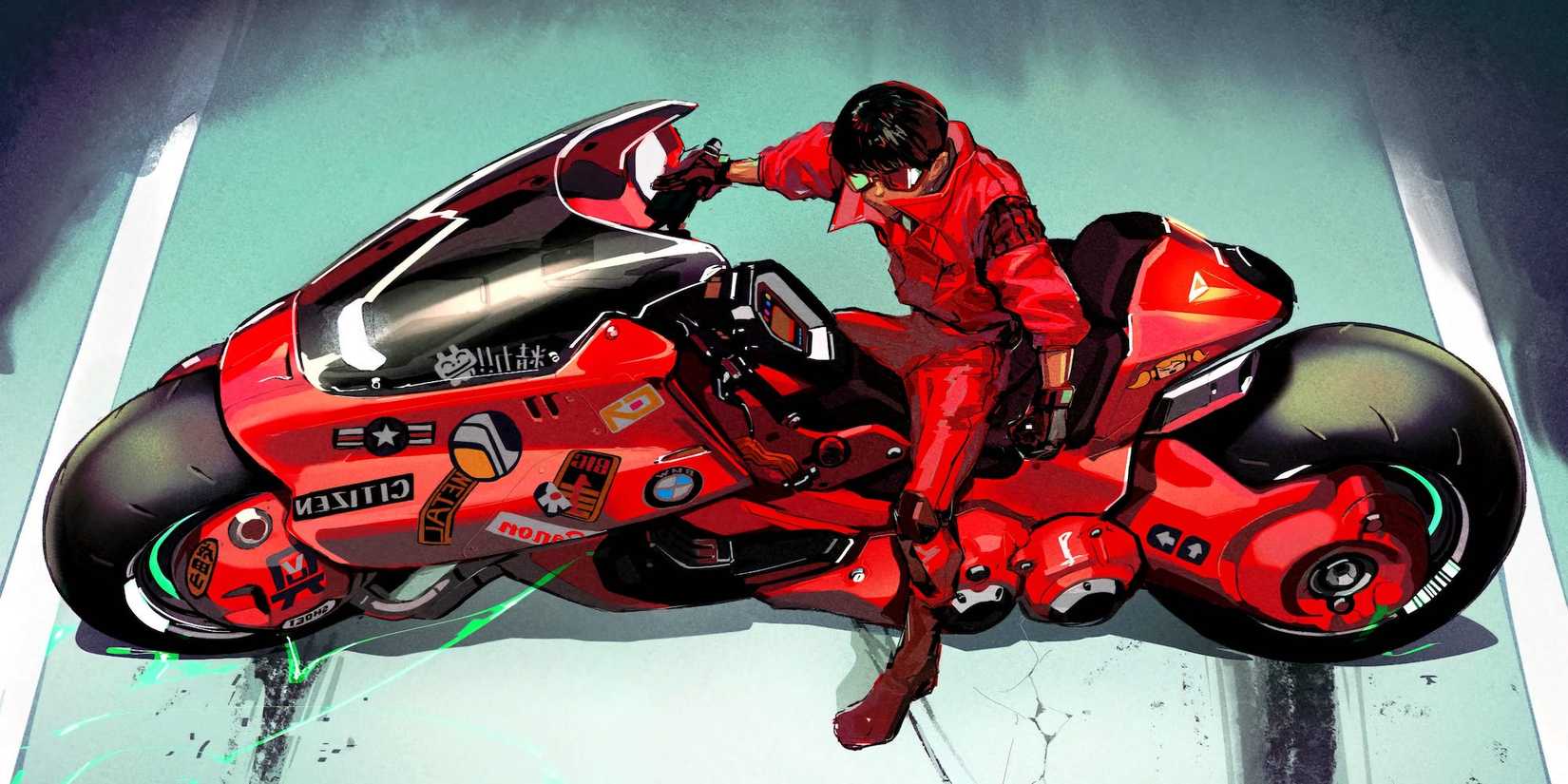
Thirty years after Tokyo was destroyed by a psychic explosion, the rebuilt Neo-Tokyo has become a den of corruption and violence. During a clash between two rival motorcycle gangs, Tetsuo Shima (Nozomu Sasaki/Jan Rabson/Joshua Seth) of the Capsuls crashes into a strange child and is seized by the government. As his best friend and gang leader, Shōtarō Kaneda (Mitsuo Iwata/Cam Clarke/Johnny Yong Bosch), makes an alliance with a resistance fighter to try and rescue Tetsuo, the government discovers that he possesses tremendous psychic powers, and fears that Tetsuo could prove just as destructive as the psychic who destroyed Tokyo.
Akira is a legendary film that played a major role in helping Japanese animation find a global audience. It goes all-in with its post-apocalyptic world, highlighting how the survivors of traumatic experiences try to move on, the cycle of violence, and the corrupting nature of power. As for its animation, words can't properly describe how fantastic it is, featuring 24 frames per second and ambitious camera shots to create some of the most fluid and detailed 2D animation ever seen.

Akira
- Release Date
- July 16, 1988
- Runtime
- 124 Minutes
- Director
- Katsuhiro Otomo
- Writers
- Katsuhiro Otomo, Izô Hashimoto
KioskNews shows a cleaned-up reading view extracted from the publisher’s page — the original always lives on their site, not ours.