6 Most Perfect Thriller Movies of the Last 50 Years, Ranked

Sign in to your Collider account
The thriller genre has evolved in pretty fascinating ways over the last five decades. What started with classic noir mysteries and crime investigations slowly transformed into psychological mind games, complex narratives, and morally gray characters. The problem is that plenty of thrillers are great for their time but don’t always age well as audience tastes change and storytelling trends evolve.
However, some films manage to defy that limitation and feel just as effective years later because the fears they tap into are timeless. Here is a list of six perfect thriller movies of the last 50 years that redefined the genre in their own, unique ways.
6 ‘Memento’ (2000)

Memento is a one-of-a-kind thriller that genuinely offered the audience something new back when it premiered. The Christopher Nolan masterpiece follows Leonard Shelby (Guy Pearce), a man suffering from anterograde amnesia after a brutal attack that left his wife dead and his memory permanently broken. Leonard is unable to form any new memories and retains information through Polaroid photos, handwritten notes, and tattoos carved directly onto his body as he hunts the man he believes murdered his wife. The premise sounds fairly simple, but what’s interesting is that the narrative actually moves backward, so the audience is forced to experience Leonard’s confusion in real time.
This reverse structure never feels like a gimmick because Nolan masterfully uses it to make everything feel constantly unstable. The audience never knows what’s coming next, and that adds a whole new layer of depth to the central mystery. The film gradually transforms from a revenge thriller into something far darker and more existential. That, combined with Memento’s neo-noir aesthetic that thrives on fragmented editing, creates a sense of paranoia that never fully leaves the audience, even when the credits start rolling. The film practically demands several rewatches because every scene takes on a new meaning once all the puzzle pieces come together. Even decades later, Memento stands as one of the most haunting cinematic experiences of all time.
5 ‘Se7en’ (1995)
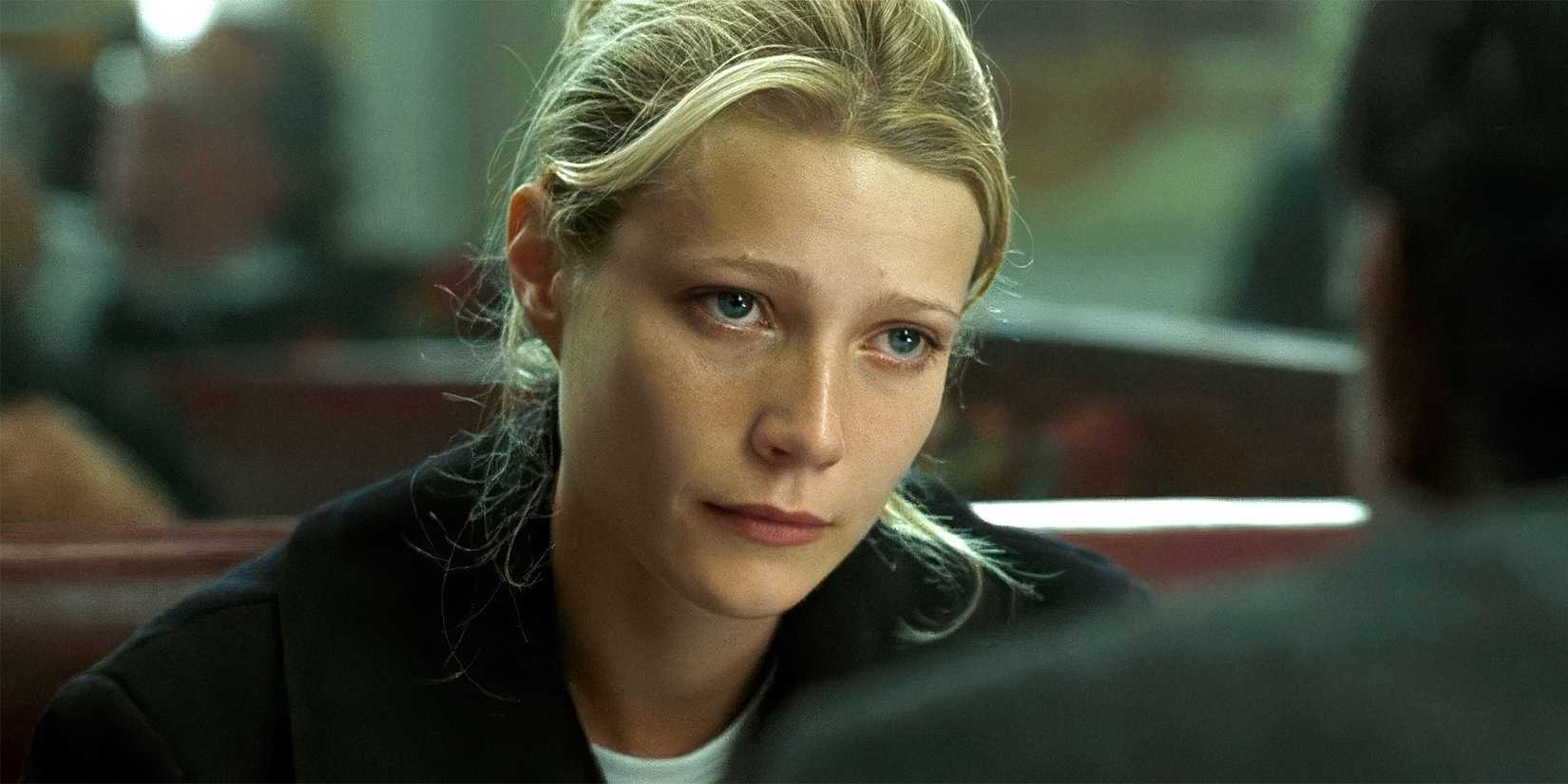
David Fincher’s Se7en is as brutal a thriller as can be. The film follows veteran detective William Somerset (Morgan Freeman) and the younger, impulsive David Mills (Brad Pitt) as they hunt a serial killer whose brutal murders are inspired by the seven deadly sins. As the investigation unfolds, the detectives realize that they are chasing someone who isn’t an ordinary criminal, because he sees himself as a man carrying out necessary moral punishments. Se7en takes place in an unnamed, gloomy, and perpetually rainy city that completely immerses the audience in its rotten world.
Fincher avoids showing too much gore on the screen, but the crime scenes still feel viscerally horrifying. The dynamic between Somerset and Mills is the emotional core of the story, with their two opposing worldviews creating a constant tension underneath the investigation. By the time the killer finally appears on the screen, the story becomes less about his identity and more about understanding his twisted philosophy. The film builds a sense of dread and culminates in an ending that refuses to offer any kind of comfort or closure to the audience, but that was the point all along.
Collider Exclusive · Action Franchise Quiz What Action Series Would You Thrive In? Wick · Fast · Mission · Die Hard
Four franchises. Four completely different ideas of what a hero is: the assassin with a code, the family that never leaves anyone behind, the man who does his own stunts, and the guy who simply refuses to die. Only one of them runs on your particular brand of trouble. Eight questions will tell you which one you would survive.
🐕Wick
🏁Fast
🧨Mission
🎄Die Hard
01
How does a room know you've walked into it? Every action hero arrives differently. Some of them arrive before they arrive.
02
It turns physical. What does your fighting actually look like? Choreography is character. Yours says something about you.
03
Who is standing beside you when it starts? Some franchises are built on a team. Others are built on one person walking in alone.
04
It has gone badly wrong. What keeps you upright? Act two exists to find out what you're actually made of.
05
There's a vehicle. What are you driving, and how? No action franchise has ever survived without a car chase. This one is yours.
06
How do you feel about the people giving the orders? There is always an institution. There is rarely a good one.
07
Underneath all of it, what are you actually doing this for? The stunts are the reason people come. This is the reason they stay.
08
When the credits roll, what do people say about you? Every franchise is really an argument about what makes someone worth watching.
Casting Has Been Completed Your Franchise Is…
Four action series. One of them is built around exactly the way you handle pressure, people, and a room that has just gone very quiet. Here is where you would survive the trilogy, and probably headline it.
John Wick
You are precision with a grudge. You don't posture, you don't escalate, and you don't warn anybody twice. That is exactly why the people who know you are so careful never to be the reason you start.
- The Wick films run on discipline: an underworld with actual etiquette, a hero who honours every rule of it, and a world that unravels the instant someone breaks one against him.
- You share that quality. You are extraordinarily reasonable right up to the line, and then completely immovable past it.
- Focus, commitment and sheer will. You'd be the one carrying grief through three sequels and turning it into technique rather than noise.
- People wouldn't call you dangerous. They'd say your name quietly and let that do the work.
Fast & Furious
You understand the thing the whole franchise is secretly about: the cars are spectacular, but the crew is the point. You collect people, you keep them, and you'd drive through a building for any one of them.
- This series went from street racing to orbit without ever changing its actual subject, because loyalty scales and plot doesn't have to.
- You have the same instinct. You build a family out of whoever turns up, and then you defend it past the point of reason.
- You'd thrive here because the franchise rewards exactly your strengths: warmth, nerve, an absolute refusal to leave anyone behind, and a relaxed relationship with physics.
- The mission can wait. The barbecue cannot.
Mission: Impossible
You over-prepare and then take the dangerous part yourself anyway. It looks like control, but it's really responsibility. You have never worked out how to ask somebody else to carry the risk.
- This is the franchise of the plan that collapses on schedule: the team, the mask, the rooftop, and the one person sprinting flat out because sprinting is all that's left.
- You share that refusal to accept an outcome. Told the odds, you treat them as an administrative error.
- You'd thrive here because these films reward competence and loyalty in equal measure. The mission matters, but nobody on the team gets left on the wrong side of a door.
- Some people delegate the cliff. You have never once been that person.
Die Hard
You are not the most trained person in the building, the best equipped, or the one anybody would have picked. You are simply the one still standing at the end, which turns out to be the only qualification that matters.
- Die Hard invented the modern action hero by making him mortal: outgunned, out-planned, bleeding, and extremely funny about it.
- You share that stubbornness. Adversity doesn't make you noble, it makes you sarcastic, and then it makes you unstoppable.
- You'd thrive here because these films reward improvisation and nerve over preparation, and you've never had the luxury of preparing anyway.
- You didn't want any of this. You just declined to be the person who let it happen.
4 ‘Basic Instinct’ (1992)

Basic Instinct is a cultural phenomenon. The thriller practically weaponized seduction to manipulate not just its characters, but the audience. Paul Verhoeven’s neo-noir classic follows troubled San Francisco detective Nick Curran (Michael Douglas) as he investigates the brutal murder of a rock star, only to become dangerously entangled with the prime suspect, crime novelist Catherine Tramell (Sharon Stone). The deeper Nick falls into Catherine’s world, the harder it becomes to separate fantasy from reality. The film’s biggest strength is how it never lets anyone feel fully in control.
The narrative thrives on ambiguity and plays out almost like a fever dream that the audience can’t look away from. Stone is definitely the star of the show and completely dominates the screen as the perfect femme fatale. Unfortunately, Basic Instinct is usually remembered for its shock value and reduced to its more sensual scenes. However, the reality is that beneath all the controversy is an incredibly entertaining and genuinely well-crafted story. The film fully embraces its pulpy roots while still delivering sharp character dynamics and a mystery that keeps evolving right until the final scene.
3 ‘Shutter Island’ (2010)

Martin Scorsese’s Shutter Island is the perfect slow-burning thriller that traps the audience inside the protagonist’s mind. The film follows U.S. Marshal Teddy Daniels (Leonardo DiCaprio), who arrives at the remote Ashecliffe Hospital to investigate the disappearance of a dangerous patient. From the moment Teddy steps onto the island, everything feels wrong. The doctors seem to be hiding secrets, the patients are terrified, and no matter how hard Teddy tries, he just can’t seem to find any answers. The investigation pulls him into increasingly disturbing territory involving secret experiments, wartime trauma, and conspiracies, but everything leads to one dead end or another.
The film never rushes to solve its central mystery — it builds tension through Teddy’s growing sense of paranoia. DiCaprio does complete justice to the character who is both a determined investigator and a man trying to run from unbearable grief. What makes Shutter Island truly unforgettable, though, is how all that confusion eventually leads to one of the most devastating twists in modern thriller cinema. The reveal completely recontextualizes everything that came before it, and the best part is that the audience experiences the realization at the same time as Teddy. Very few thrillers balance mystery, emotion, and psychological tension as well as Shutter Island does, which explains why the film has only gotten better with time.
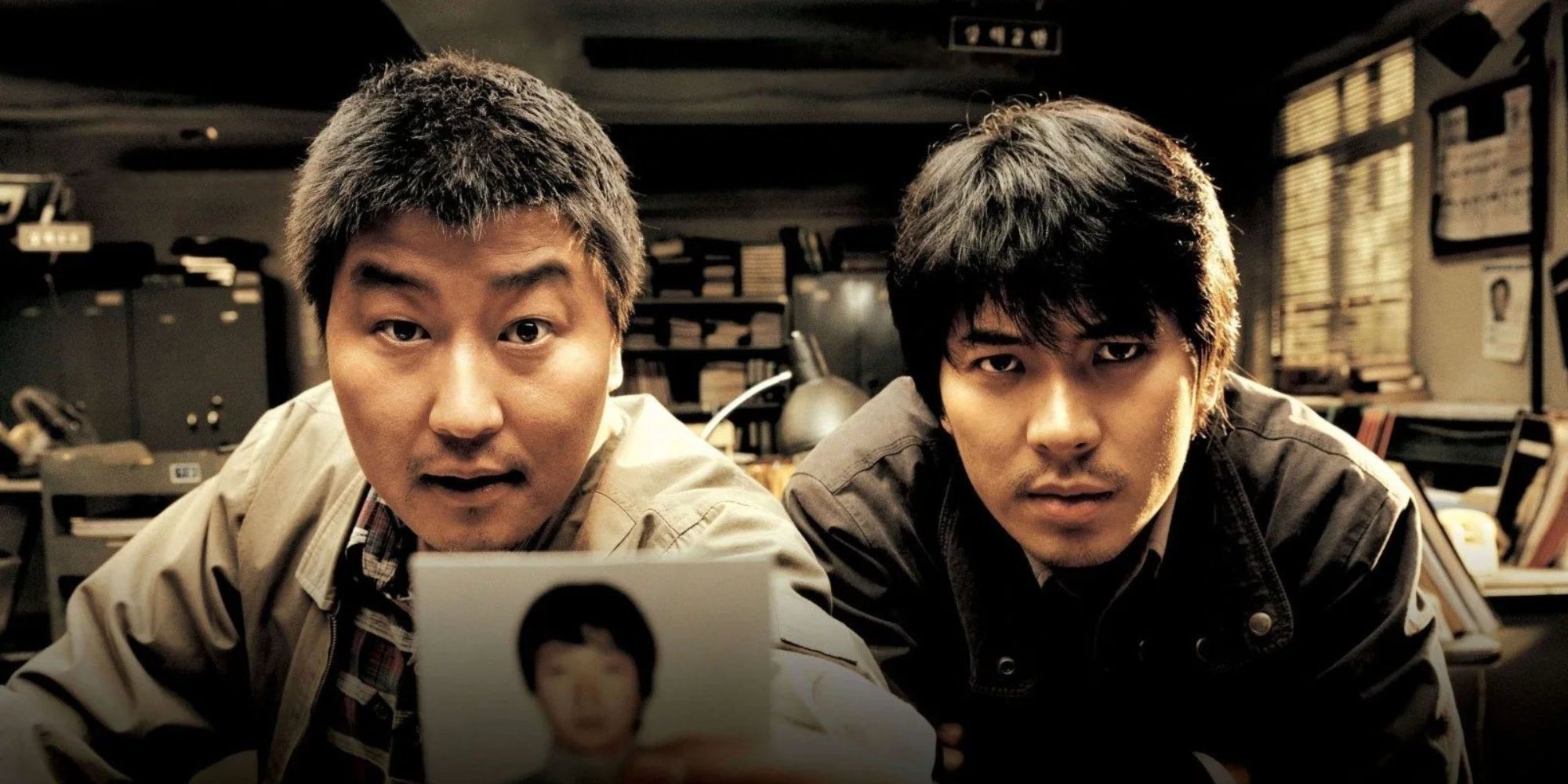
2 ‘Memories of Murder’ (2003)

Long before the global success of Parasite made him a global phenomenon, Bong Joon-ho gave the world one of the most brilliant thrillers ever made: Memories of Murder. The film, inspired by South Korea’s first confirmed serial murder case, follows two detectives investigating a series of brutal killings in a small rural town during the late 1980s. Local detective Park Doo-man (Song Kang-ho) relies on instinct, intimidation, and forced confessions. Seo Tae-yoon (Kim Sang-kyung), a detective from Seoul, approaches the case with logic and procedure. However, as the killer goes on a rampage, the pressure mounts, and both men slowly begin to unravel. Unlike most other thrillers, the investigation doesn’t really lead to any solid answers.
In fact, the director ensures that the audience realizes how helpless the two detectives really are. The film portrays the non-glamorous parts of their jobs, including contaminated crime scenes, false leads, and lost evidence. What’s interesting, though, is how Memories of Murder plays with tone to convey all this. The film constantly shifts between dark comedy, procedural drama, and outright horror to highlight the absurdity of the situation. After all that, Memories of Murder delivers one of the greatest and hardest-hitting endings in film history to prove that evil doesn’t always look the part. That final image lingers in the viewer’s mind for a long time, which is exactly how one knows the film accomplished everything it set out to do.
1 ‘The Silence of the Lambs’ (1991)

The Silence of the Lambs remains an integral part of pop culture to this day, which goes to show the film’s staying power. Jonathan Demme’s psychological thriller follows FBI trainee Clarice Starling (Jodie Foster), who is tasked with tracking down serial killer Buffalo Bill (Ted Levine). Now, to understand the criminal she is hunting, Clarice is forced to seek help from the imprisoned psychiatrist and cannibalistic killer Dr. Hannibal Lecter (Anthony Hopkins). What starts as a professional exchange quickly turns into something far more unsettling as Lecter begins dissecting Clarice psychologically just as much as he helps her solve the case. It’s almost baffling how personal this investigation becomes.
Buffalo Bill is a terrifying antagonist, but the conversations between Clarice and Lecter make for the most horrifying moments in the film. Their interactions feel like a psychological chess match as Lecter quietly manipulates Clarice. Despite his limited screentime, Hopkins completely dominates every scene he is in. The Silence of the Lambs is also brilliant because of how it places the audience directly into Clarice’s perspective to emphasize her isolation inside male-dominated spaces. At the same time, the central mystery itself keeps evolving in unpredictable directions, which keeps the audience hooked till the very end. This is a film that completely redefined what suspense could look like on the big screen.
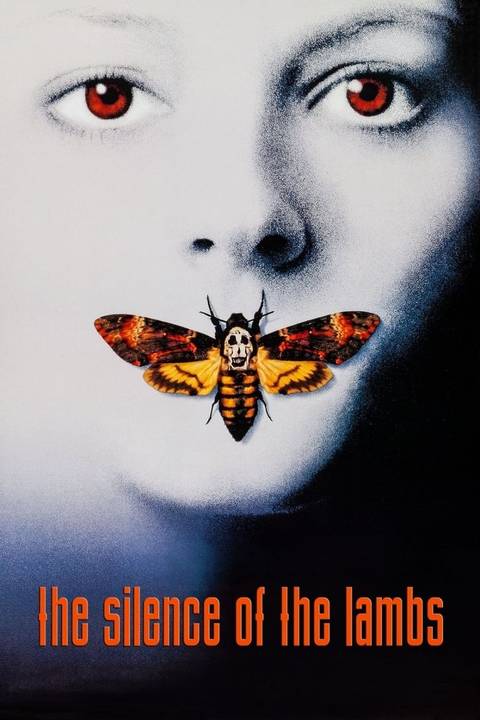
The Silence of the Lambs
- Release Date
- February 14, 1991
- Runtime
- 119 minutes
- Director
- Jonathan Demme
- Writers
- Ted Tally, Thomas Harris
KioskNews shows a cleaned-up reading view extracted from the publisher’s page — the original always lives on their site, not ours.