Rajnath, Jaishankar to meet Japanese counterparts tomorrow for 2+2 dialogue, deepen bilateral ties
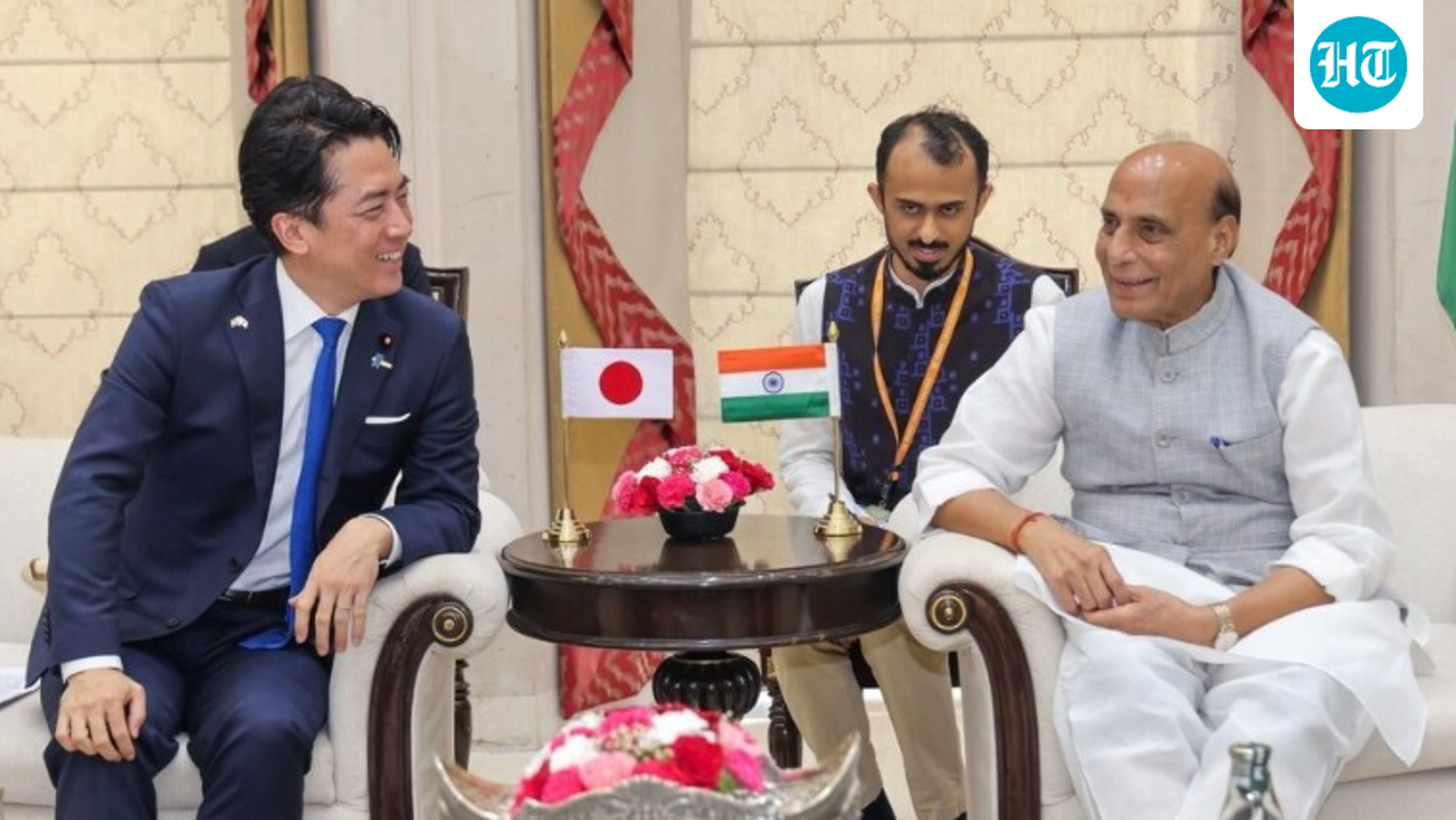
Defence minister Rajnath Singh and external affairs minister S Jaishankar will meet their Japanese counterparts, Shinjiro Koizumi and Toshimitsu Motegi, in Tokyo on Thursday for the India-Japan 2+2 dialogue to strengthen bilateral ties.
“The dialogue will review the full spectrum of bilateral strategic and defence cooperation, exchange views on regional and global developments, and reaffirm the shared commitment of the two nations to a free, open, inclusive, and rule-based Indo-Pacific,” an official statement said.
The dialogue comes five months after India and Japan unveiled measures to expand cooperation in defence, energy security, rare earths and artificial intelligence, and finalised a joint roadmap on economic security at the 16th India-Japan Summit. During the summit, Prime Minister Narendra Modi and his Japanese counterpart Sanae Takaichi stressed the importance of mutual trust in a world order facing growing uncertainty.
Singh and Koizumi will meet for the third time this year.
Building on the momentum from their interactions in New Delhi in August and on the margins of the Asean Defence Ministers’ Meeting-Plus in Cebu in October, the two ministers “will deliberate on advancing defence equipment and technology collaboration, maritime security, enhancing the scale and complexity of joint exercises across all three services, and deepening industrial partnerships,” the defence ministry said on Tuesday.
In August, India and Japan signed a memorandum of arrangement to deepen maritime security cooperation, focusing on closer ties between the Indian Navy and the Japan Maritime Self-Defense Force – the latest in a series of steps to bolster bilateral military ties.
Another outcome of the earlier talks between Singh and Koizumi was the two leaders agreeing to set up a working group to boost cooperation in a raft of areas, including operations, intelligence, equipment, technology and industrial cooperation.
“During this visit, we will review the steady progress in our defence and security cooperation and explore new avenues to deepen collaboration in technology, maritime security, and regional stability,” Singh said on the eve of his two-day visit.
Security in the Indo-Pacific will be on the agenda during the fourth edition of the India-Japan 2+2 dialogue.
India has consistently called for a free, open and inclusive order in the Indo-Pacific region, pivoting on respect for the sovereignty and territorial integrity of all nations while stressing the peaceful resolution of disputes through dialogue and under the framework of international laws. Challenges in the Indo-Pacific include China’s carefully calculated power play for influence and defending the rules-based international order.
"Through these meetings, the ministers will hold candid discussions on cooperation toward the realisation of a ‘Free and Open Indo-Pacific’, coordination in addressing various challenges in the region and the international community, as well as bilateral cooperation in a wide range of areas such as security, the economy, and economic security, thereby further strengthening the relationship between the two countries," the Japanese foreign ministry said on Tuesday.
Interestingly, a joint statement issued after the August meeting between the two ministers mentioned the Indian military's ongoing theaterisation drive.
“With a view to further advancing cooperation among the services of the two countries, the two ministers concurred on promoting exchanges between their respective special operations forces and pursuing cooperation with India’s integrated theatre commands following their establishment,” it said.
That marked a rare, and possibly the first, reference to India’s planned theatre commands in a joint statement. The mention came at a pivotal moment as the country takes steps to advance theaterisation, a long-awaited reform designed to integrate the military’s resources for future conflicts.
At the Asean Defence Ministers’ Meeting -Plus in Cebu, Singh asserted that Operation Sindoor drew a “non-negotiable red line” against state-sponsored terror, and demonstrated India’s “proactive, battle-tested doctrine” as the country’s armed forces struck terrorist targets in Pakistan.
KioskNews shows a cleaned-up reading view extracted from the publisher’s page — the original always lives on their site, not ours.