Creative or claustrophobic? Experiencing a movie set in just one limited space
NOVEMBER 29 — I thought the movie would be a no-brainer box office success.
Samuel L. Jackson as POTUS kicking ass from within the Presidential state car armed to the teeth and bonnet with firefly drones (basically mini machine guns which fly and spin around) and rail guns (think electromagnetic mini-nuke!) – what else would action movie fans want?
Alas, Renny Harlin’s The Beast opened in very few theatres in America and around the world, grossing barely US$1 million (RM4 million).
In Malaysia, it popped up for a short while (maybe about two weeks?) and even then was playing only once or twice a day in barely half a dozen cinemas.
I couldn’t believe it. Like, this is a Samuel L Jackson action movie!
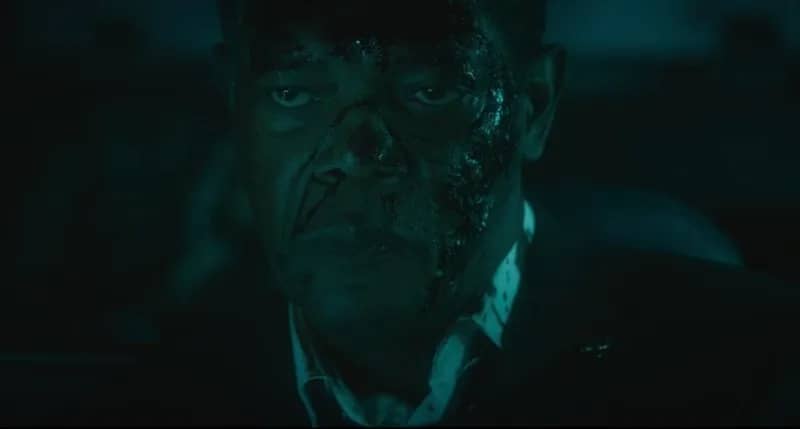
Samuel L. Jackson appears in a scene from ‘The Beast’ (2026). — Picture courtesy of Aura Entertainment
Then last week I managed to catch it on streaming and I finally realised why: Apart from the first and last one or two minutes, practically the entire movie is shot and set inside the vehicle.
The film just shows Jackson in the car trying to drive and shoot his way out of an ambush and towards some rendezvous site.
The only people POTUS talks to are a Secret Service agent played by Joel Kinnaman and a voice from the US Command Center guiding him.
If you think this sounds like a limo version of the Keanu Reeves bus thriller Speed (which grossed more than US$350 million worldwide), you’d be wrong.
Whilst Speed spends a lot of time inside a bus, a substantial portion of the movie involves other locations and Reeves’ character interacts with many people and even the scenes from inside the bus are mingled with other non-bus shots.
For The Beast, though, the camera doesn’t even leave the vehicle for about 98 per cent of the movie.
Behold, the contained or chamber movie i.e. movies which, for whatever reason (maybe budget or some artistic objective) are “squeezed” or concentrated inside a tight space with near-minimal cast (usually just one or two people with the rest as voices if at all).
I recall the first such movie I watched was Tom Hardy’s Locke, about a guy driving through the night, making phone calls to his boss, his family, his colleague, etc.
As with The Beast, there are virtually no shots beyond Hardy in the car, the road, the back of the car, and the phone console in the car.
The masterliness of that show was how, despite seeing and hearing nothing but Hardy’s character talking to people, the audience can feel the tension and tragedy unfolding over the one and a half hours or so.
Another show I watched with such a “contained” nature was The Sunset Limited starring Tommy Lee Jones and (again) Samuel L Jackson. The entire show was two guys talking and arguing in an apartment about everything from philosophy to politics to spirituality, etc.
Naturally, such chamber films demand a bit more patience from viewers: No views of multiple locations, barely any people in any one scene, and that slight touch of claustrophobia since everything happens in one (usually limited) location.
And if you’re not a fan of the actors or actresses the show can be over (for you) before it even gets going.
This was my experience of Daddio, a show starring Sean Penn and Dakota Johnson who spend almost two hours chatting in a cab. I quit after about 15 minutes.
Having said that, chamber or contained movies can be a breath of fresh air to audiences who are tired of cheap plots, CGI tricks, sub-par acting and directors trying to rake in money with fancy sets, costumes and the like. If nothing else, movies like The Beast and Daddio demand the very best from the performers and the script-writers.
Other notable examples are Mel Gibson’s On The Line, 10 Cloverfield Lane, Fall, Open Water, etc.
Overall, I can’t say I’m looking much forward to another such cinematic (or should we say mini-cinematic) experience.
Contained films can be clever, but after a while the cleverness starts to feel like the walls closing in. Some stories thrive in a single room or a single car. Most of us still prefer a few more stops along the way.
To each his own, then.
* This is the personal opinion of the columnist.
KioskNews shows a cleaned-up reading view extracted from the publisher’s page — the original always lives on their site, not ours.