Maharashtra woman who earned Rs 200 in fields now manages 12-acre family farm
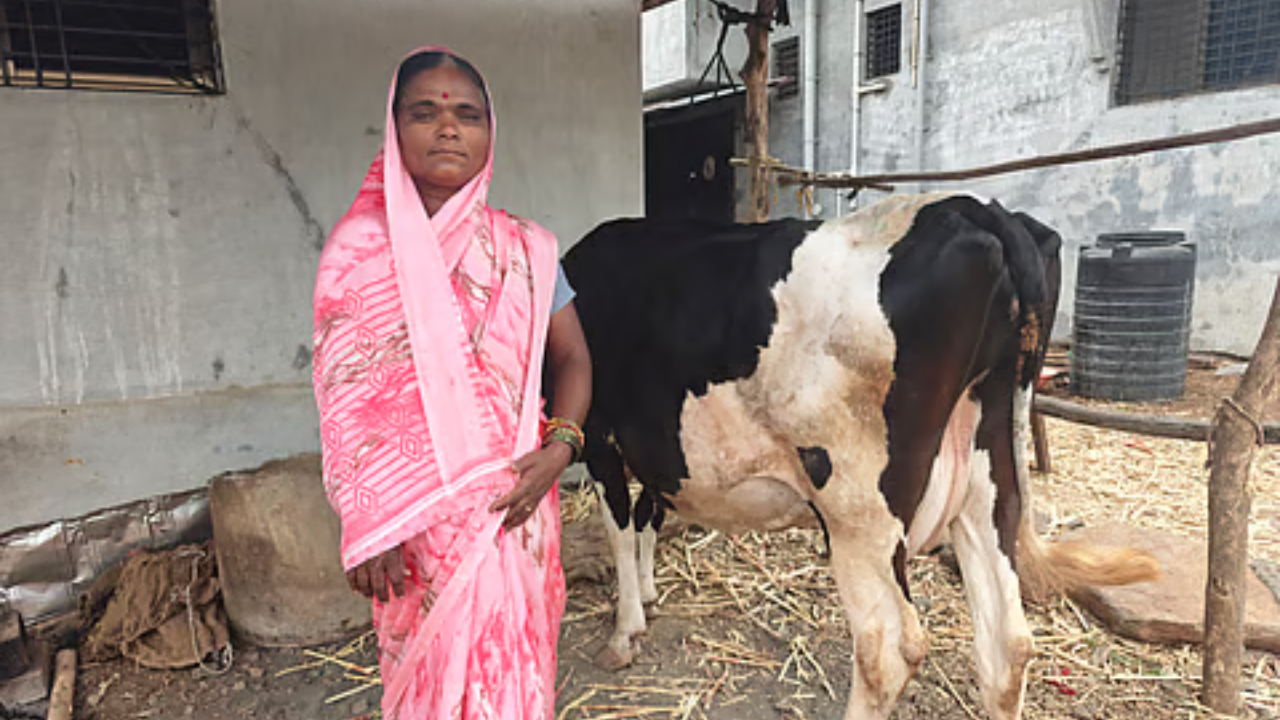
Photo credit: Down to Earth
At 4 am, Sunita Nehare would begin her household chores. By 6 am, she would be working as a farm labourer, earning ₹200 for two hours of work. After that, she would head to her family’s own fields and work until 1 pm.
Every day, she put ₹100 from her wages into a post office savings account. Today, the 12 acres of family land that she once had little say in managing have become her responsibility. Sunita, who lives in Pachod village in Maharashtra’s Wardha district, has improved cotton production, brought unused plots under cultivation and diversified the farm with pulses, millets and other crops.As reported by Down To Earth, Sunita’s cotton yield has risen from around 1-1.5 quintals per acre to 7.14 quintals per acre.
Intercropping cotton with red gram gives her an additional 2.75 quintals of the pulse. Her story is not just about increasing farm output. It is also about what changed when she gained the authority to decide how the family’s land would be cultivated.
From working as a labourer to managing her family's land
When Sunita married into the family, only about 3.5 acres of its 12 acres were being cultivated. Her ageing father-in-law managed the farm, while her husband had grown frustrated by repeated poor harvests from the rain-fed fields and had turned to alcohol.
The sloping land lost rainwater quickly, and wild boars, nilgai and rabbits damaged crops. Farming offered little certainty. According to Agro News Today, when Sunita’s daughter was four, an argument with her husband made her consider leaving the house.
Her father-in-law intervened and offered her responsibility for cultivating the land so she could support the family. She decided to stay and take charge of farming.According to Agro News Today, she began with nine rows of cotton in 2018. The first harvest yielded five quintals. She experimented with sowing patterns, manure and irrigation, and production rose to eight quintals the following year. Over time, the harvest from those 3.5 acres increased to 25 quintals. Water remained a major problem. Sunita collected monsoon rainwater in a pit near the farm and used an engine to pump it onto the cotton crop.
In 2024, she dug a well with support from a state government scheme. She now spends around ₹12,000 each season on diesel to run the irrigation engine.
How she changed the way the farm is cultivated
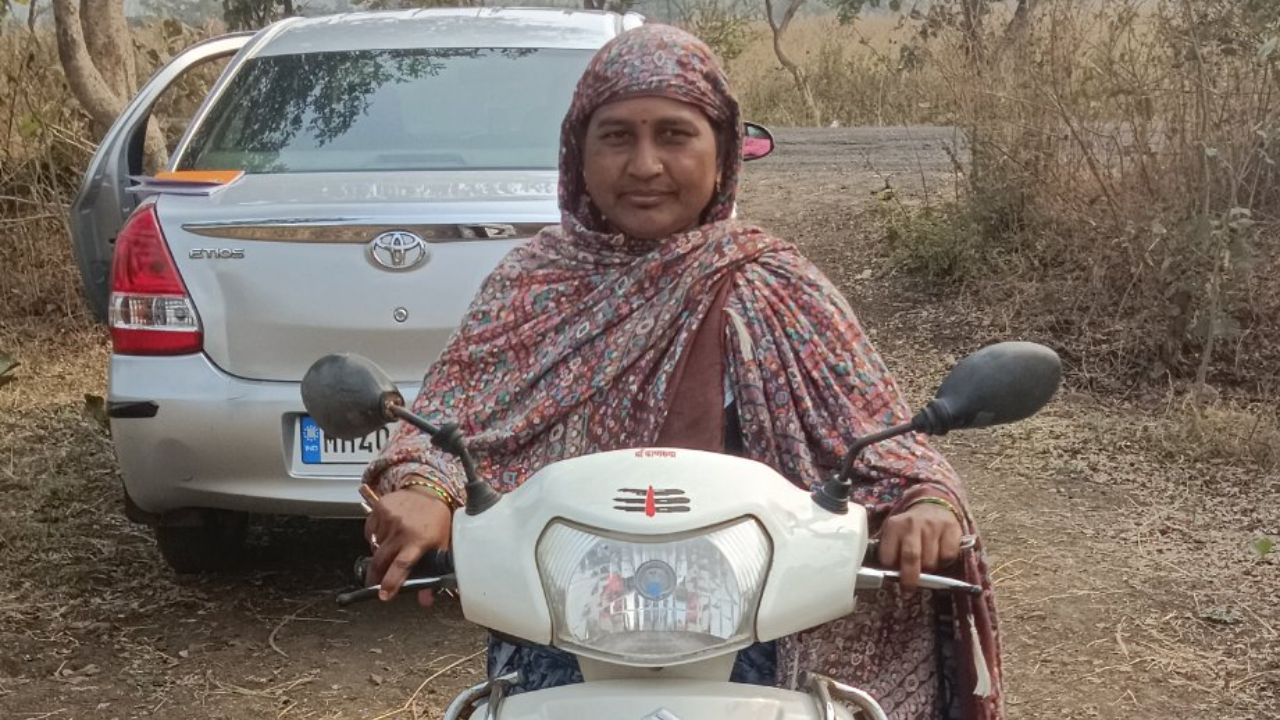
Photo credit: Down to Earth
Sunita received support through the Climate Change Adaptation Project, implemented by the Wardha-based nonprofit Dharamitra with support from the National Bank for Agriculture and Rural Development (NABARD) She adopted several practices to conserve soil moisture, improve fertility and reduce the risks associated with relying on a single crop.
Sunita prepares bio-inputs such as Jeevamrit, Dashaparni Ark and Beej Amrit, and uses neem oil for crop protection. According to Down To Earth, she applies six tractor-trolley loads of cow dung manure annually across alternate plots and returns red gram and soybean residues to the soil.
She says she no longer uses urea. She has also brought previously uncultivated land back into production. After clearing shrubs, levelling plots and strengthening the field bunds with stones, she began growing jowar, bajra, green gram and sesame.
Crop rotation allows her to avoid planting the same crop on a plot every year.Wild animals continue to threaten the harvest. She uses solar-powered fencing and reflective strips to deter wild boars and nilgai, while nets protect selected plots from rabbits. An exposure visit to Nashik gave her another idea: planting fruit trees along the farm bunds. She has planted mango, guava, cashew, jackfruit and lemon trees, which she hopes will provide another source of income as she grows older.
Farm earnings reach ₹2.5 lakh, including savings on food
According to Down To Earth, Sunita’s earnings from cotton, red gram and other crops have exceeded ₹2 lakh over the past two to three years. Growing green gram, black gram and vegetables for household consumption saves the family an estimated ₹14,760 a year in purchases. Poultry sales contribute another ₹10,000. Together, these farm earnings and savings amount to approximately ₹2.5 lakh, excluding income from her other activities.
Sunita has also diversified her livelihood beyond crop cultivation. She works as a 'Pashu Sakhi,' a village-level livestock resource person who assists with vaccinations, administers medicines and maintains records. The work earns her around ₹3,000 a month, which she uses for household expenses and life insurance premiums.
Her family life has changed too
The changes extend beyond the fields. According to Down To Earth, Sunita’s elder child studies in Class 12 at a military school, while her daughter is in Class 6 at the village school.
The family has also built a house in Pachod. Her work as a Pashu Sakhi and volunteer often requires her to travel between villages, sometimes returning home at night after walking long distances. Seeing these difficulties, her father-in-law bought her a two-wheeler to make travel to farms, meetings and neighbouring villages easier.Sunita believes that saving and financial planning matter particularly for households with limited incomes. Her own habit of putting aside ₹100 from her daily wages began when she had little control over the family farm. But she is also realistic about farming. Rainfall has become less predictable, she says, and farmers have little control over market prices. Cultivation requires substantial labour, and she does not want her son to depend entirely on agriculture because she is unsure whether farm income alone can sustain a family.
KioskNews shows a cleaned-up reading view extracted from the publisher’s page — the original always lives on their site, not ours.