Airline changes diabetic passenger’s booked seat at last minute, told to pay Rs 3 lakh
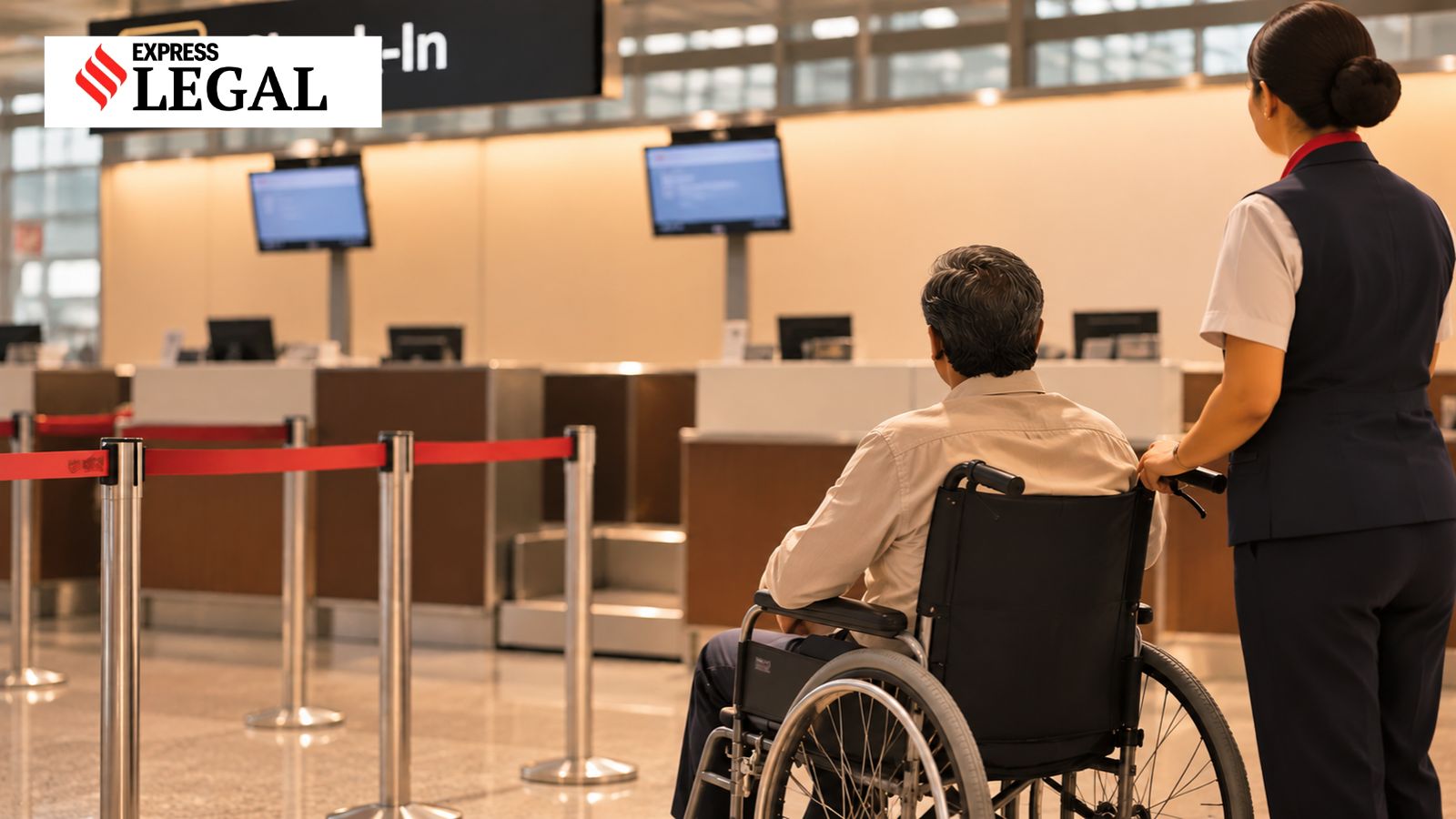
A Haryana Consumer Commission has directed an airline to pay Rs 3 lakh compensation to a passenger after shifting him from a paid front-row seat to a middle seat on a 15-hour Toronto-Delhi flight, despite his health and mobility issues. The passenger, a senior government employee serving as Reader at the Karnal Sessions Court, suffers from diabetes and chronic leg pain and had booked the front-row seat along with wheelchair assistance.
President Jaswant Singh and members Neeru Agarwal and Sarvjeet Kaur were hearing the complaint filed by the man who claimed that after returning to India, his medical condition deteriorated and he had to undergo treatment at a hospital.
“Due to a change of seat by the opposite party (airline), the very purpose for booking confirmed seats and wheelchair facilities has gone. Hence, the act of the OP amounts to deficiency in service and unfair trade practice,” the October 28 order read.
Change in seat at the last moment
The man said he had booked an international round-trip ticket with the airline with the outward journey from Delhi to Toronto in June 2025. He claimed that, due to diabetes, chronic leg pain and related mobility issues, he paid extra for a front-row seat on the return flight for comfort and medical reasons. He also said the airline had been informed of his condition and that wheelchair assistance had been pre-booked.
Despite this, during boarding for the return flight, the complainant was forcefully shifted to a middle-row seat without his knowledge or consent. When he presented his original boarding pass reflecting the front row seat, the airline staff dismissed it as a “boarding confusion” and rudely instructed him to either accept the seat or de-board.
The man said that, with limited sanctioned leave available, he had no option but to undertake the uncomfortable 15-hour journey in a middle seat, causing him pain and distress.
He added that after returning to India, his medical condition deteriorated. He allegedly suffered increased leg pain and complications related to diabetes.
The man also made a representation to the airline regarding the said incident by contacting their India-based reservation office via email. In response, the airline allegedly, in its official email ID, merely directed the complainant to a generic online support link without taking any substantive action or offering any redressal.
Aggrieved, he moved the commission alleging deficiency in service and unfair trade practice on the airline’s part, seeking compensation of Rs 10 lakh. He was represented by advocate Shubham Kalia.
Airline’s defence
The airline, through advocate Akaash Chawla, argued that the extra payment for the seat was refunded to the original mode of payment in June 2025. It was added that a seat-change notification was emailed to the complainant on the date of travelling at 3.15 pm and the shift followed from the later wheelchair request. The airline claimed that there was no negligence or deficiency on its part.
‘Airline’s duty to inform changes in time’
The commission noted that the passenger had booked the seat 12 days before boarding. It observed that if the airline intended to change his seat, it should have informed him well in advance and not on the day of boarding.
It further said that the airline had a duty to provide him with a suitable seat. Even if it considered the booked seat unsuitable, safety requirements did not absolve it of that responsibility.
“Having decided to move a passenger on a wheelchair request, it had to arrange a seat that suited his health, such as an aisle or bulkhead seat with space,” the commission added.
The commission observed that the airline had shifted the passenger to a middle seat instead of arranging a suitable alternative. It said that even if the change was made for safety reasons, the airline should have considered his medical condition.
The commission also noted that the airline had refunded Rs 8,799 to the passenger, but held that the refund did not absolve it of its negligence or deficiency in service.
“The refund of the amount does not undo the discomfort suffered on the flight, and it was done after the journey had ended, as the complainant has also spent a huge amount on his treatment,” it added.
Accordingly, the commission directed the airline to pay Rs 3 lakh to the man within 45 days.
Takeaway
This ruling highlights that airlines must inform passengers well in advance if a booked seat needs to be changed and must arrange a suitable alternative, keeping their health and mobility requirements in mind.
Consumers facing similar grievances may contact the consumer helpline in their respective states (Haryana: 1800-180-2087) or dial the National Consumer Helpline at 1915 for assistance.
KioskNews shows a cleaned-up reading view extracted from the publisher’s page — the original always lives on their site, not ours.