Oil painting bought for £20 in charity shop set to sell for £20,000
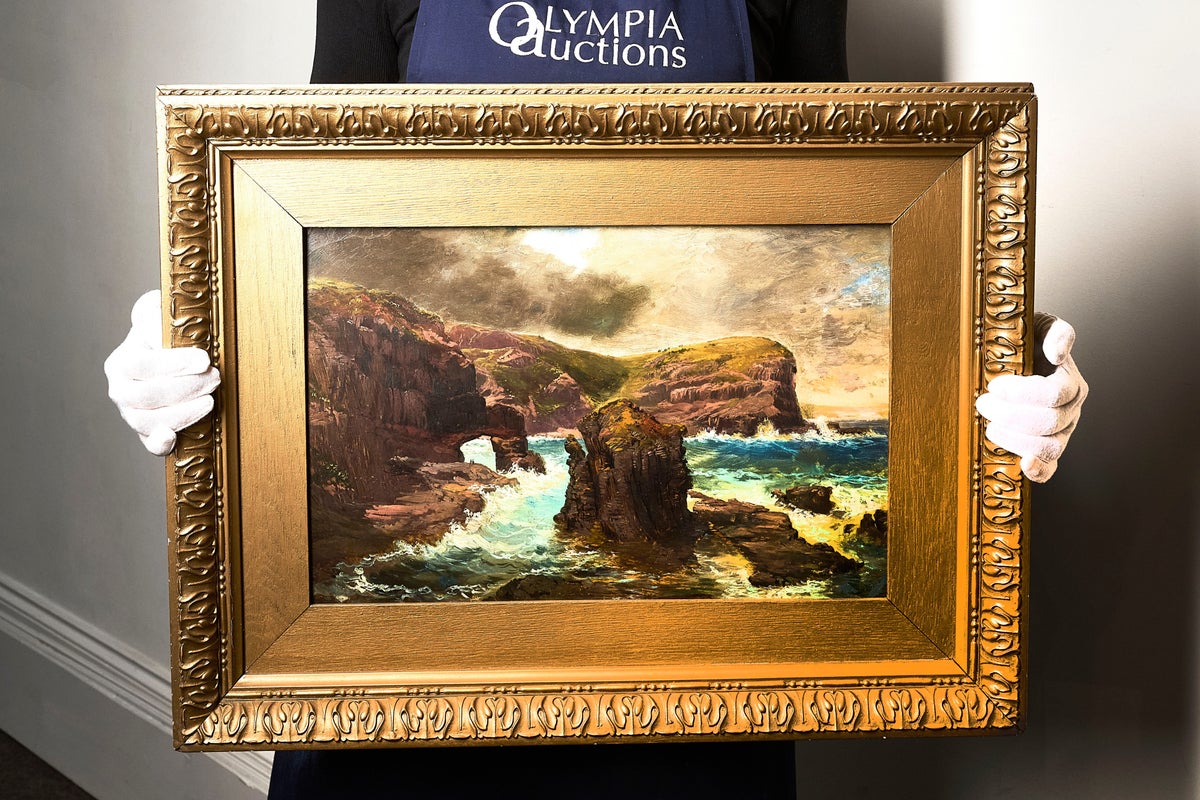
An oil painting bought for £20 in a charity shop is tipped to sell for £20,000 after being identified as an important lost 19th century landscape.
The vendor was browsing a high street shop in Bracknell, Berks, earlier this year and purchased it for the meagre sum as he liked the look of it.
He showed it to an auction specialist who immediately thought it could be a rediscovered work by the celebrated Russian-Swiss artist Nicholas Chevalier.
Further research has confirmed it is indeed one of his paintings which had been missing for more than 160 years.
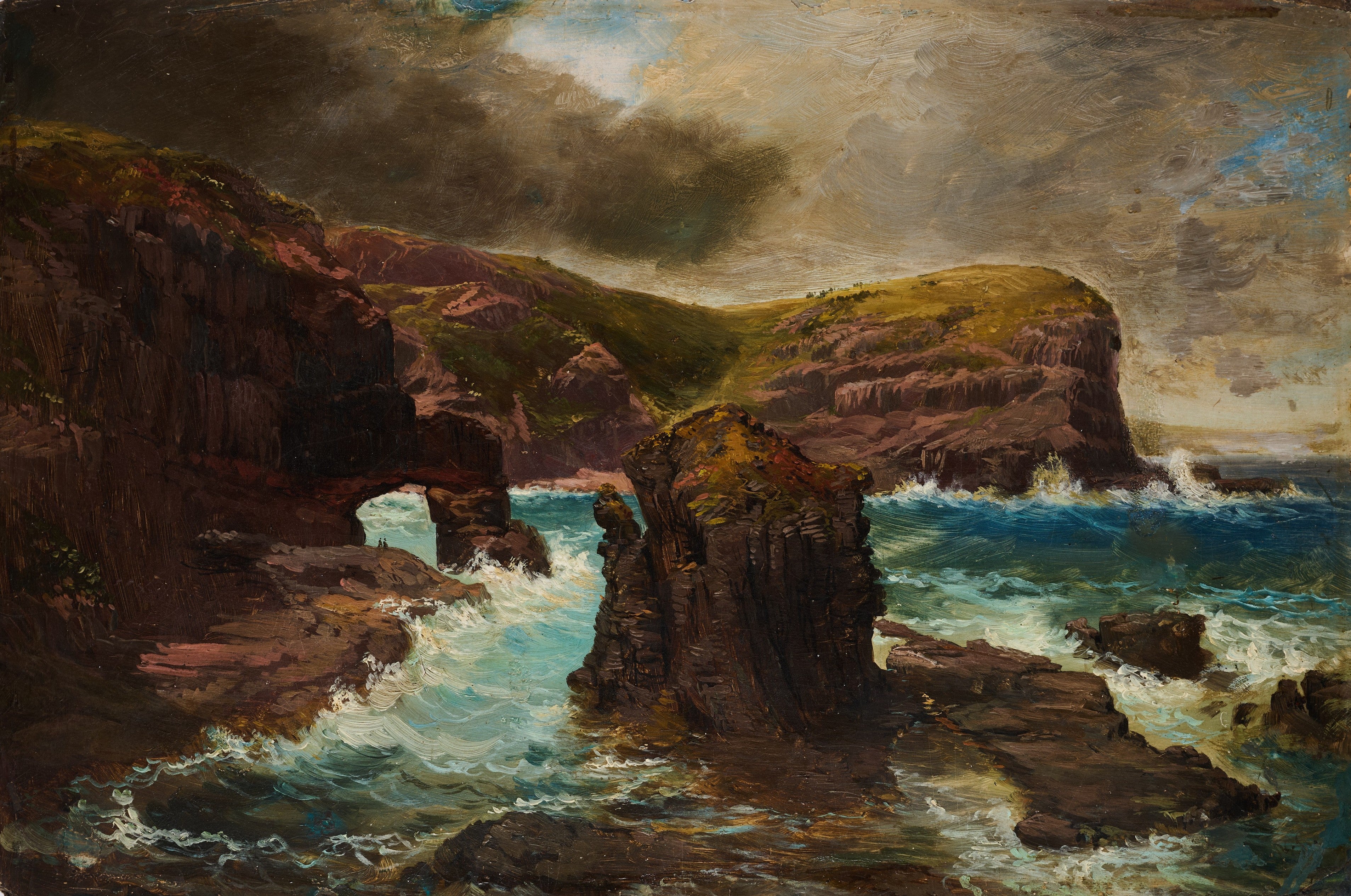
The 1862 painting, titled Cape Schanck, Victoria, was produced during Chevalier's Australian travels.
Other paintings by him are in the collection of the Art Gallery of New South Wales in Sydney.
The 12ins by 18ins artwork, depicting the rugged Australian coast south of Melbourne on the Mornington Peninsula, is going under the hammer at London-based Olympia Auctions, who expect it to make up to 1,000 times what the vendor paid for it.
The auctioneers hailed it as an 'extraordinary find'.
Adrian Biddell, Head of the Pictures Department at Olympia Auctions, said: “The discovery of Cape Schanck, Victoria is hugely exciting.
"This is far more than just the appearance of a lost painting, it is the return to the historical record of a documented, but long-untraced work by one of the pioneers of Australian landscape painting.
"Chevalier was a remarkable visual talent, with an extraordinary ability to capture the drama, power and sheer scaleof the natural world.
"In this painting, towering rock formations, turbulent seas and a dramatic sky combine to create a vivid sense of this remote and formidable coastline.
"It is a wonderful demonstration of his ability to transport the viewer directly into the landscape.
"To find it now, quite unexpectedly, in a corner of the British high street, is an extraordinary find.”
Chevalier (1828-1902) studied in Lausanne and Munich before moving to London, where he worked as a lithographer and exhibited at the Royal Academy.
He arrived in Melbourne on Christmas Day 1854, initially working as an illustrator and cartoonist for Melbourne Punch.
By 1861, however, he had resigned from the magazine to concentrate on painting the Australian landscape.
In 1864, his large-scale painting The Buffalo Ranges, Victoria, became the first Australian painting to be purchased for the newly established National Gallery of Victoria.
Chevalier's admirers included the British Royal family and he accompanied the Duke of Edinburgh on part of his world tour, documenting the journey through sketches and watercolours.
He later received commissions from Queen Victoria.
The auctioneers contacted leading Chevalier expert Simon Gregg, who confirmed that the painting had previously been recorded in his catalogue of the artist’s work as ‘whereabouts unknown’.
Mr Gregg said: "This was definitely painted en plein air.
"This was Chevalier’s typical modus operandi, he would carry a satchel of primed boards by horseback to different scenic locations around the colony to make oil sketches, which he then drew on to create larger studio works on canvas.
"Most of the oil sketches have not survived, hence my delight that this one has shown up.”
KioskNews shows a cleaned-up reading view extracted from the publisher’s page — the original always lives on their site, not ours.