Doctor encourages awareness of ADHD in adults
By Lin Chih-yi and Esme Yeh / Staff reporter, with staff writer


Adults with attention deficit hyperactivity disorder (ADHD) could experience procrastination or forgetfulness in daily life, a psychiatrist said.
Although it is not unusual for people to procrastinate while dealing with the stresses of daily life, those who regularly avoid completing tasks until the last minute might have ADHD, psychiatrist Yang Tsung-tsai (楊聰財) said, calling on people who tend to procrastinate to seek medical attention.
Adult ADHD is a neurodevelopmental disorder, he said.
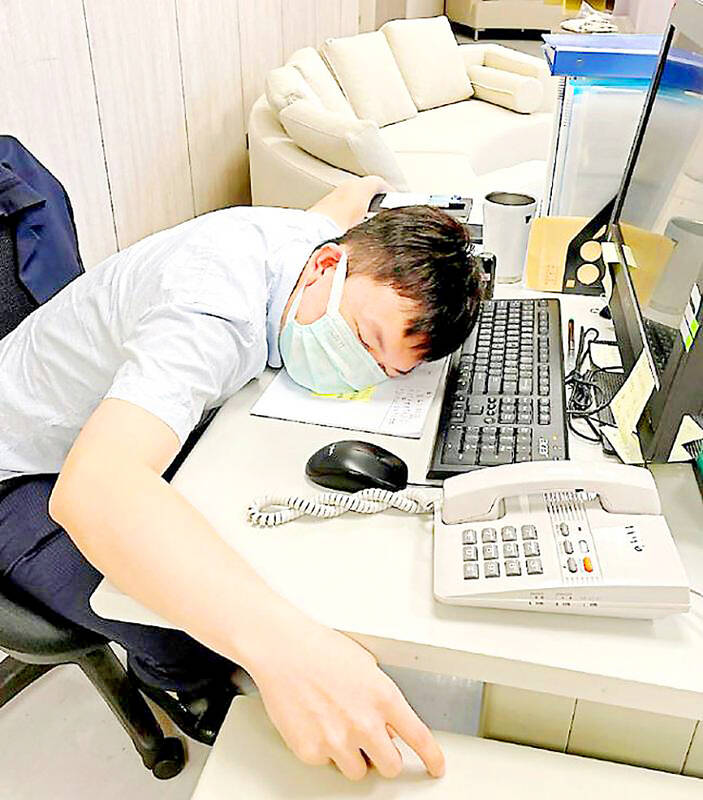
A man rests his head on his desk in an undated photograph.
Photo: Liao Hsueh-ju, Taipei Times
Adults with ADHD have difficulties with attention and self-regulation, leading to persistent inattention, hyperactivity or impulsivity that significantly impairs work, learning, relationships and daily activities, Yang said.
They might experience discomfort and restlessness when under-stimulated, experience racing thoughts and say whatever comes to mind, he said.
Adults with ADHD might also reply before others finishing speaking, make rash decisions, feel unable to sit still during meetings or constantly bounce their leg while seated, Yang said.
They are highly likely to show behavior such as forgetting appointments, missing tasks, being late, misplacing things, interrupting others, or forgetting to pay bills, as they remain chronically busy due to misdirected attention, he said.
Such symptoms could make adults with ADHD feel frustrated in daily life, resulting in severe self-doubt or feelings of worthlessness, Yang said.
People with ADHD do not entirely lack attention, he said, adding that they just have difficulty with attention regulation and executive function.
Some patients can sustain high levels of attention when they engage in hobbies or activities with immediate feedback, strong stimulation or tight deadlines, Yang said.
Chronic procrastination due to ADHD could also make “working against the clock” a habit for sufferers, he said.
Yang listed six major symptoms of adult ADHD: limited attention span, difficulties with organization and time management, forgetfulness, impulsivity, internal or external agitation, and emotional dysregulation.
However, people with such symptoms do not necessarily have ADHD, he said.
Other mental or physical conditions, such as anxiety, depression, sleep deprivation, stress, substance use or thyroid disorders could also lead to such symptoms, Yang said.
Those who are concerned that they might have ADHD should not rush to label themselves with the disorder, he said.
They should instead seek professional medical help for evaluation of their symptoms, development history, current conditions and other possible causes, Yang said.
Even if they are diagnosed with adult ADHD, they can still significantly improve their life with proper medication, therapy and lifestyle adjustments, he said.
KioskNews shows a cleaned-up reading view extracted from the publisher’s page — the original always lives on their site, not ours.