Burnham government ‘not working for the economy’, PM’s former advisor warns
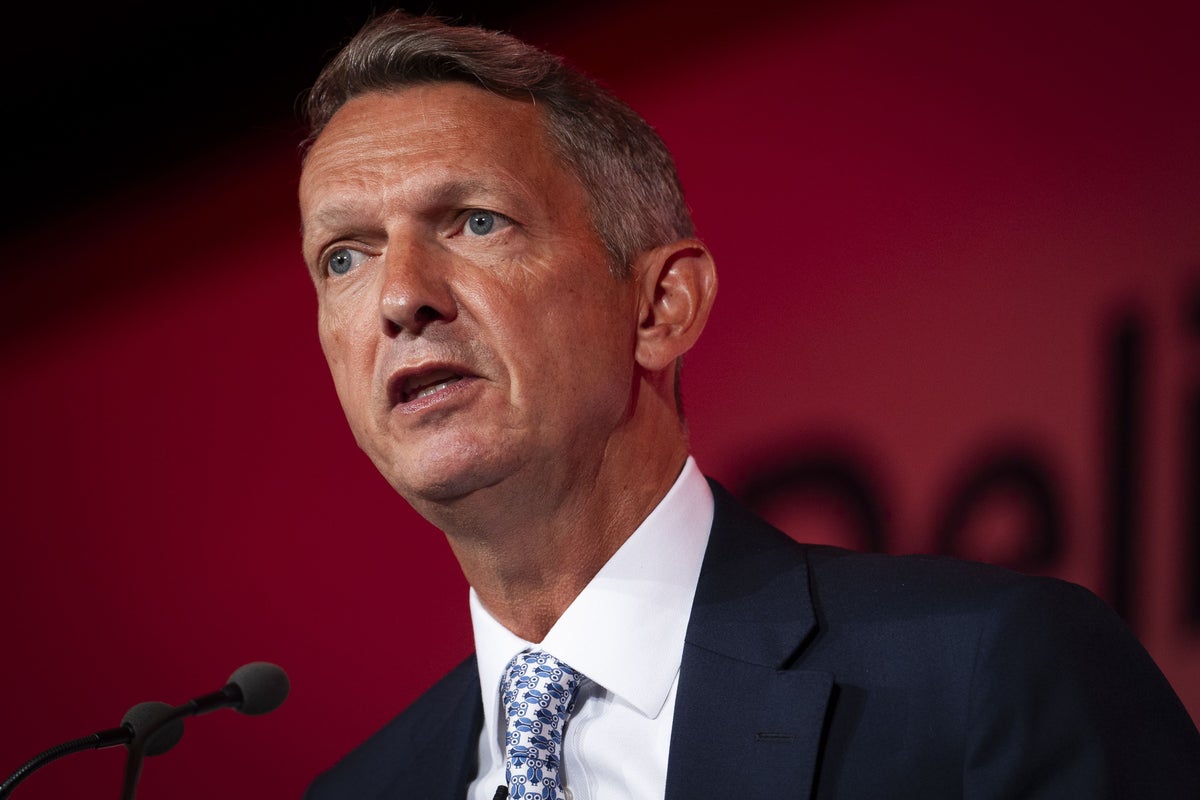
A former adviser to Andy Burnham has warned a key plank of the government’s economic plan does “not work” as he urged ministers to protect the Treasury’s “headroom” in next week’s Budget.
Andy Haldane, a former chief economist at the Bank of England, said now was not the time to run down what he described as the UK’s “insurance cover”, given high borrowing costs and the risks facing the economy due to the ongoing impacts of the Iran and Ukraine wars.
He added that he hoped the chancellor John Healey would unveil a Budget in favour of businesses and the bond markets on Wednesday by not imposing further taxes on already-struggling firms and reigning in spending, but feared it would be designed to appease backbench Labour MPs instead.
Headroom is the gap between the government’s self-imposed fiscal rules and economic forecasts, potentially leaving less room to deal with shocks or slower economic growth.
Running down the government’s headroom was “a slightly odd response”, he said, “to reduce your insurance cover at the same time as the risk itself has increased”.
“Now is the time for this government to be putting on more insurance cover rather than less,” he argued.
Increasing the financial buffer would “result in a very positive response in financial markets”, including lower borrowing costs, he told a pre-Budget event organised by Ipsos and the National Institute of Economic and Social Research (NIESR).
Taking out extra “insurance” could “actually be a boon… for the economy, that would be my strong advice,” he said. “This government, the path it's on, is actually the opposite of that, (and) I think does not work for the economy or indeed for bond markets.”
He also expressed his hope that Wednesday would see Mr John Healey announce a Budget “for business and the bond markets”.
“In other words, the government signals voluntary restraint on government spending, and chooses voluntarily not to raise taxes on households or on businesses. That would be the best thing they could do to get growth going.”
But he added that while that was his hope it was not his “expectation” which is “that we will see some further borrowing… and that we will see some further tax rises… Or put in a nutshell, I expect a Budget for the backbenchers.”
Earlier, writing in the Financial Times, he said: “The Labour Party’s plan for an expansive (and expensive) state sits uncomfortably with this precarious fiscal backdrop.”
He added that “the Conservatives’ economic plans are better suited” to boosting growth “through cuts to business and employment taxes and regulation to unleash animal spirits; and by slimming government spending to lower borrowing costs”.
Meanwhile, Jim O'Neill, a financier and former minister who has acted as an informal adviser to Mr Burnham before he became prime minister, told The Independent that when it came to the Budget “I am a fan of ‘don't mess up the momentum the economy has,’” advocating the use of headroom rather than raising taxes.
On the momentum, he said he was “rather baffled as to why more people aren't focused on it”.
Last week official figures showed the UK economy had grown unexpectedly, confounding predictions it would shrink due to the ongoing impact of the Iran and Ukraine wars.
Gross domestic product (GDP) rose 0.1 per cent in August, according to the Office for National Statistics, and a total of 0.7 per cent over three months.
KioskNews shows a cleaned-up reading view extracted from the publisher’s page — the original always lives on their site, not ours.