ANC faces anger over poor services as South Africans vote in local elections
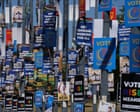
The African National Congress is on course for a bruising result in South Africa’s local elections on Wednesday as voters go to the polls amid deep discontent over water outages, power cuts and crumbling infrastructure.
The former liberation movement, which Nelson Mandela led to power in 1994 at the end of apartheid as South Africa’s first black president, is still likely to be the largest party. However, polls show it getting less than a third of the vote, down from 45.6% at the last municipal elections in 2021 and 40.2% in 2024’s national elections.
Vote fragmentation means the ANC could still end up leading many city coalition governments while losing control of others.
Unstable coalitions are already a feature of many of South Africa’s 257 municipalities, and analysts point to their high turnover as a major reason for poor service delivery.
Johannesburg, a city of 4.8 million people that has faced water shortages for more than a week, has had 10 mayors in as many years. The neighbouring municipality of Ekurhuleni has had three mayors since 2021. To the north, in Tshwane, which contains the capital, Pretoria, the mayoralty has rotated between parties four times since 2020. In October, more than 800 people contracted a gastrointestinal illness from contaminated water in Bronkhorstspruit, in east Tshwane.
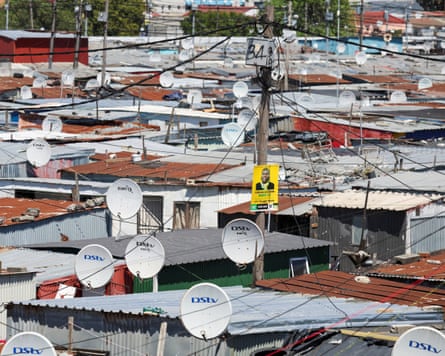
Johannesburg, Ekurhuleni and Tshwane are in Gauteng, South Africa’s most populous and densely populated province and its economic engine. The centre-right, white-led Democratic Alliance is leading the polls in all three metros but has not been polling above 40%.
The ANC’s national leadership is open to working with the DA in Gauteng, according to South African media, mirroring the government of national unity, where the two parties are the largest in the national coalition. However, local ANC leaders are reportedly not in favour of a DA tie-up. Currently, the ANC governs with a combination of the far-left Economic Freedom Fighters and the populist Patriotic Alliance and ActionSA across the province’s three metros.
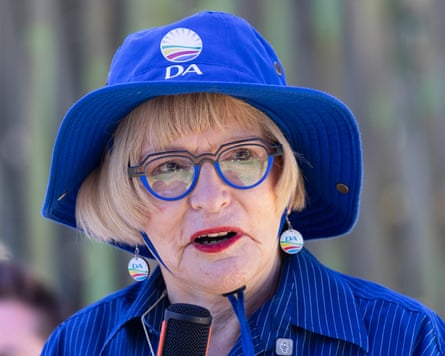
In Johannesburg, the DA’s Helen Zille has led a spirited campaign, with viral stunts including the 75-year-old snorkelling in a pothole and kayaking along a flooded street. However, the former Cape Town mayor is still viewed with suspicion by many, especially black voters, due to controversial past comments appearing to excuse colonialism. Some voters also point to soaring housing costs in Cape Town, which has been run by the DA since 2006, as a reason not to vote for Zille.
The former Johannesburg DA mayor Herman Mashaba, who leads ActionSA, which is polling around 10%, has ruled out working with Zille in Johannesburg. Mashaba has called Zille a “racist”, an allegation she has always fervently denied. The ANC, for its part, has three possible mayoral candidates for the city, amid factional infighting.
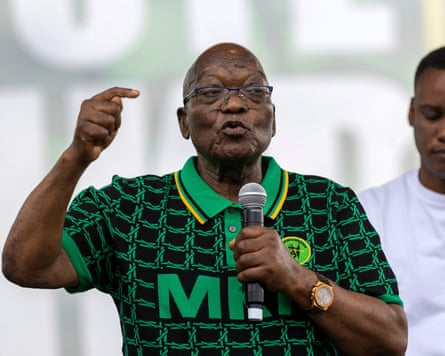
In eThekwini metro, which contains the port city of Durban, the uMkhonto we Sizwe (MK) party of the former ANC president Jacob Zuma is polling above 40%. The 84-year-old Zuma, who has weathered and denied numerous corruption allegations, is set to take many of the votes of his former party, which won 42% in eThekwini in 2021 and is now polling around 10%.
The DA looks set to retain its majority in Cape Town, although probably with less than the 58% of the vote it won in 2021, as unaffordable housing turns more voters against the party.
South Africa’s electoral commission will have a week to announce the final results of Wednesday’s vote, which chooses councillors and parties, with mayors not directly elected. Parties will then have two weeks from the announcement to form councils and elect mayors.
KioskNews shows a cleaned-up reading view extracted from the publisher’s page — the original always lives on their site, not ours.