‘Aboriginal people were the backbone of this state’: rediscovered photographs reveal life inside the 1946 Pilbara strike camps
Troy Eaton lives in Pippingarra, near Port Hedland, where the Pilbara’s multibillion-dollar mining industry looms large. “It’s a mecca of mining,” says the Nyamal man. But his family’s mining history stretches back long before the arrival of today’s resources giants.
In September, Eaton took the long drive from Pippingarra to Perth to see some of those early pioneers: his ancestors, who established their own mining ventures in the Pilbara some 80 years ago.
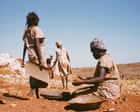
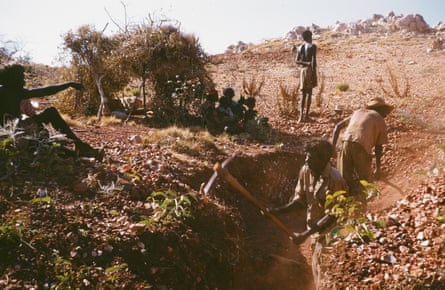
On the walls of Lawrence Wilson Art Gallery at the University of Western Australia (UWA), he saw colour photographs of women sifting minerals with shallow tin yandies, and men wielding picks and shovels beneath vast blue skies. Among them were his grandmother, Kakaya Lucy Mitchell, his great-grandmother and other relatives, captured in photographs he had never seen. “It’s a bit emotional … just reminiscing on what it was like in their time,” he says.
“They look healthy. They look happy. There was a sense of pride looking at it, because they was doing something that they could never believe, most probably in their lifetime – taking control of their own destiny.”
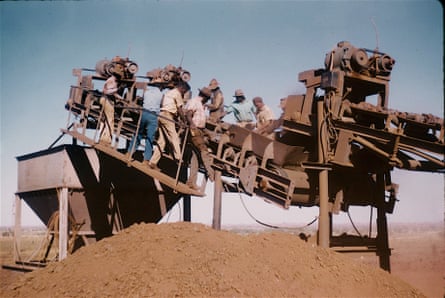
The photographs feature in Strike Camps: The Photographs of John Wilson, an exhibition documenting the independent mining communities established after the 1946 Pilbara strike, when about 800 Aboriginal workers walked off pastoral stations over appalling conditions and meagre wages. Many were paid only in rations of tea, flour, sugar and tobacco.
The walk-off soon became more than a labour dispute. Hundreds of workers established camps near Port Hedland and Marble Bar, building spinifex shelters and setting up schools. Over the following years, they supported themselves by mining tin, beryl and other minerals, as well as pearl shelling and collecting buffel grass seed.
The camps offered them a measure of freedom from pastoralists’ control and the chance to raise families on their own terms. In 1952, their mining company, Northern Development and Mining, produced minerals worth £70,000.
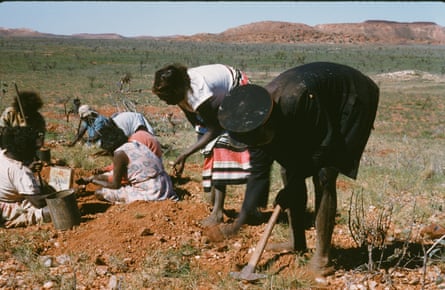
The anthropologist John Wilson photographed the camps in the late 1950s and early 1960s, conducting fieldwork alongside his wife and fellow anthropologist, Katrin. Both have since died, and this year their daughter Bu unearthed a cache of slides beneath a wardrobe in the family’s Fremantle home, helping reunite an archive of some 350 colour images.
The UWA art historian Darren Jorgensen, who co-curated the exhibition, had spent years searching for Wilson’s photographs. They form what he calls “the most substantial collection of pictures” of the camps, documenting Aboriginal self-determination 20 years before the Gurindji walk-off at Wave Hill, the 1966 strike that became a turning point in Australia’s land rights movement.
Jorgensen believes the Pilbara strike remains less well known partly because it lacked a defining image, unlike Wave Hill’s famous photograph of Gough Whitlam pouring soil into Vincent Lingiari’s hand. Yet the communities Wilson photographed had achieved something remarkable: at a time when Aboriginal people in Western Australia were still denied the vote and subjected to discriminatory laws, “they were making international mining deals and shipping off barrels of columbite to Singapore,” he says.
Alongside 35 photographs, the exhibition features two short films that use generative AI to animate scenes of work and everyday life in the Pilbara camps. Created by the exhibition co-curator and UWA fine arts head, Vladimir Todorović, the films were developed in consultation with descendants of the strikers.
The strike itself was carefully orchestrated. As early as March 1945, more than a year before the walk-off, Nyamal organiser Clancy McKenna and Nyangumarta lawman Dooley Binbin travelled between remote pastoral stations, distributing makeshift calendars drawn on food packaging, including jam-tin labels, so workers could count down to the planned walk-off on 1 May. With the help of white prospector Don McLeod, they coordinated a strike that spread across more than 20 stations and some 10,000 square kilometres. Both Aboriginal leaders were jailed, but the strike gathered strength.
The walk-off lasted three years, making it the longest recorded strike in Australian history. But the workers’ right to remain in their camps was contested. In 1949, when authorities ordered families to dismantle their homes at Twelve Mile, near Port Hedland, the strikers protested in writing, warning that the closure could reignite the dispute. The government subsequently withdrew the order. The strike ended that year with improved pay and conditions at two stations but unfulfilled promises of wider reform. Some returned to work on sheep and cattle stations; others stayed in the communities they had built, which endured for decades.
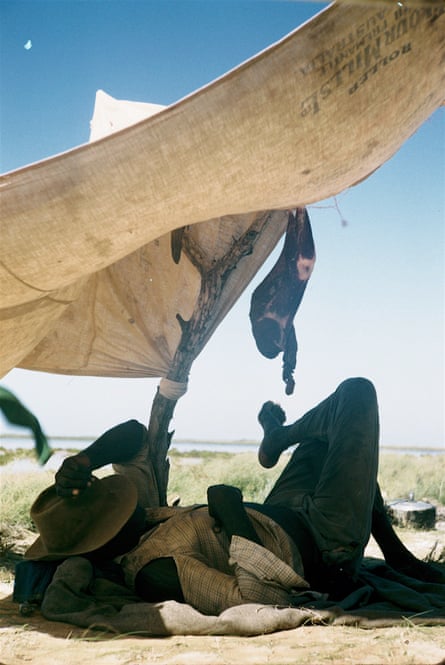
Eaton’s grandfather Putangaja Ernie Mitchell became a key leader, coordinating mining operations and negotiating with government officials. Mitchell’s daughter Doris, who also attended the exhibition opening, remembers growing up in the camps, where children sifted ore and traded tins of minerals for lollies. Welfare authorities once labelled her a “neglected child”. “But I wasn’t neglected,” she says. “As children, we grew up with many parents.”
Yet even within the mining cooperatives, control remained contested. In 1959, Mitchell and fellow leader Peter Kangkushot Coppin broke with McLeod amid disagreements over how earnings were used, with workers receiving rations rather than cash. Wilson photographed a meeting as the movement split. “They didn’t get any money in their hands,” Doris recalls.
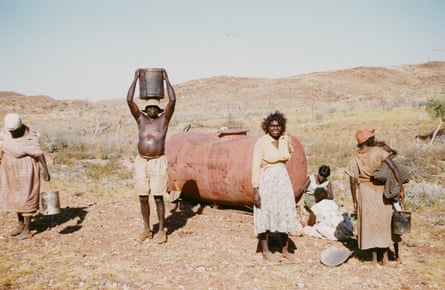
Mitchell and Coppin continued the mining cooperative known as Pindan, while McLeod’s supporters formed another, Nomads. Both groups went on to establish pastoral enterprises: Pindan’s successors at Yandeyarra and Nomads at Strelley, where an independent Aboriginal school established in 1976 still operates today.
One of the last surviving strikers, Nyamal elder Captain Mudjawariny Wilson, is now in his 90s and living in aged care in Roebourne. His daughter Ursula, an exhibition co-curator, brought him to Perth for the exhibition’s opening, where he recognised himself working as a young man in the photographs. “When I first looked at the pictures, I stood there and had tears in my eyes,” Ursula recalls.
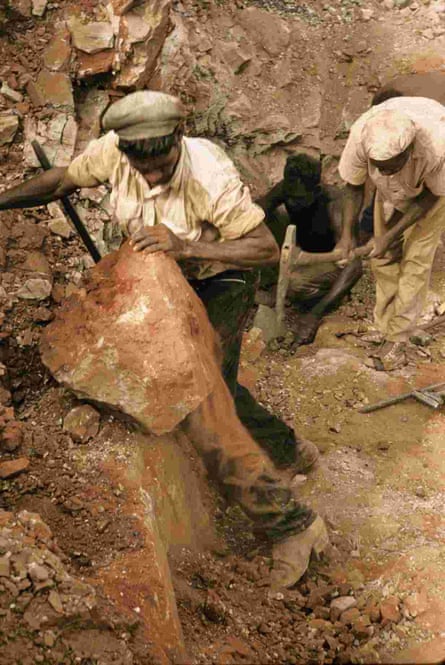
For Eaton, the photographs tell a story too often overlooked. “We always hear doom and gloom stories, but we don’t hear any great stories like this,” he says. This year, he notes, Rio Tinto celebrated 60 years of Pilbara operations; his ancestors were mining there decades earlier. “Aboriginal people were actually the backbone of this state.”
Eighty years after the strike began, Eaton is working to establish an Aboriginal-owned mining venture in the Pilbara, pursuing the same independence his grandfather’s generation fought for.
“I need to finish that journey,” he says. “Because my grandfather and those guys started it back then, right? And that journey continues to this day.”
KioskNews shows a cleaned-up reading view extracted from the publisher’s page — the original always lives on their site, not ours.