RSSI hits over 3,000 ha of sugarcane farms in Passi City
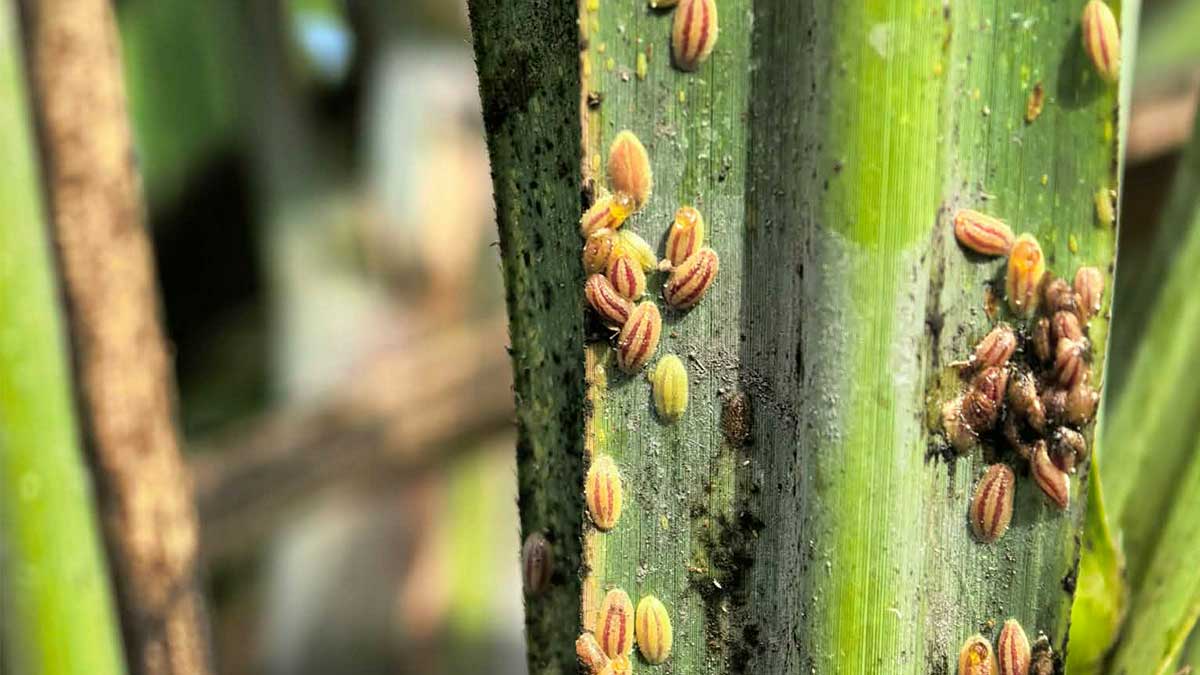

ILOILO CITY, Philippines — More than 3,300 hectares (ha) of sugarcane farms in Passi City have been affected by a growing infestation of the red-striped soft scale insect (RSSI), threatening the livelihoods of more than 8,000 farmers and agricultural workers.
An initial report by the Passi City Agriculture Office last month placed the affected area at approximately 3,337.85 ha, according to City Council Resolution No. 2026-179.
The infestation has affected about 3,126 farmers and 4,929 agricultural workers and laborers whose livelihoods depend substantially on sugarcane production, the resolution said.
Article continues after this advertisement
According to the city council, the infestation was increasing weekly and was “progressive in nature,” with the affected area continuing to expand. The full extent of the crop damage was still being validated and assessed by the City Agriculture Office.
FEATURED STORIES
NEWSINFO
NEWSINFO
NEWSINFO
READ: Sugarcane pest attack widens; Negros worst hit
State of calamity
The worsening infestation prompted the city government to declare a state of calamity. The resolution was approved during the City Council’s regular session on Aug. 25 and announced by the city government on Sept. 4.
The council said the pest had severely affected sugarcane production and the livelihoods of farmers and agricultural workers in the city.
Sugarcane is a major source of income in Passi, an agricultural city where thousands of farmers, farm workers, laborers and others depend directly or indirectly on the industry.
Article continues after this advertisement
The declaration cited Republic Act No. 10121, or the Philippine Disaster Risk Reduction and Management Act of 2010, which allows a local council to declare a state of calamity upon the recommendation of the Local Disaster Risk Reduction and Management Council and based on a damage assessment and needs analysis.
It also cited national guidelines allowing such a declaration when at least 30 percent of livelihoods in the agricultural, business and industrial sectors are affected, or when there is widespread destruction of crops and other agricultural products.
Article continues after this advertisement
Passi officials said the city was coordinating with the Department of Agriculture, Sugar Regulatory Administration, Iloilo provincial government and other concerned agencies on monitoring and containment measures.
Spreading
The Passi infestation is part of a rapidly expanding RSSI outbreak that has affected sugar-producing areas in Iloilo and other parts of the country.
By August, provincial data showed that 7,021 ha of Iloilo’s 20,749.88 ha of sugarcane plantations had been affected, equivalent to roughly one-third of the province’s sugarcane area.
The infestation had been recorded in Passi City and at least 14 municipalities, including Anilao, Balasan, Banate, Batad, Bingawan, Carles, Dingle, Estancia, Lambunao, Pototan, San Dionisio, San Enrique, San Rafael and Sara.
Iloilo Gov. Arthur Defensor Jr. had described the situation as alarming and placed the provincial government’s response in “disaster mode,” with authorities focusing on biosecurity and controls on the movement of planting materials.
Your subscription could not be saved. Please try again.
Your subscription has been successful.
The infestation has also worsened nationwide, ruining 134,386 ha of sugarcane plantations. /cb
KioskNews shows a cleaned-up reading view extracted from the publisher’s page — the original always lives on their site, not ours.