Israel Election 2026: What does Prime Minister Benjamin Netanyahu's Likud stand for?

The Likud, founded in 1973, is one of many vying for citizens’ votes in the elections for the 26th Knesset, which will be held on October 27.
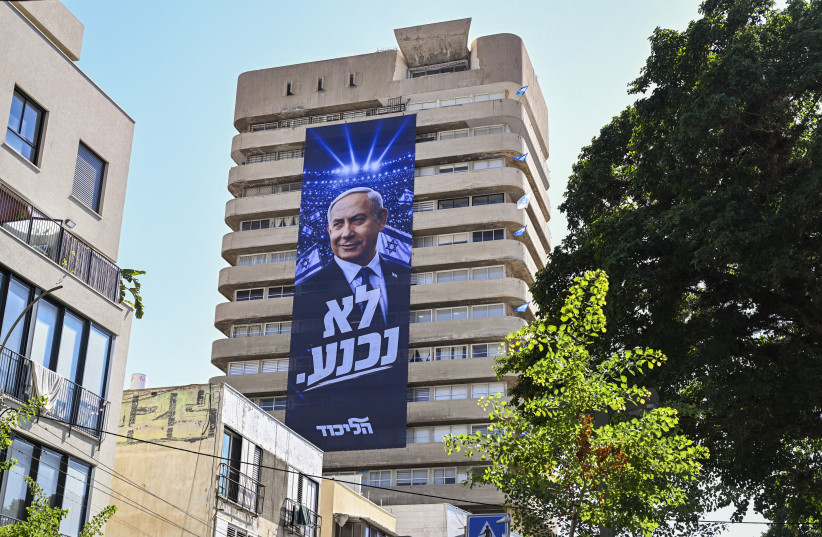
Led by Prime Minister Benjamin Netanyahu, Likud sits on the political Right and has served as the ruling party for the majority of the past two decades.
The party has historically sat on the Center-Right of the political spectrum, holding a right-wing position on military and defense issues while maintaining a more economically liberal, pro-market approach that favors private enterprise and limited government intervention.
In the 25th Knesset, Likud held 32 seats and is currently polling at 19-21 seats, facing uncertainty over maintaining its status as the largest party in the Knesset.
Netanyahu and the Likud have led the sitting government, hailed as the most right-wing coalition in Israel's history, for four years, leading the country during the judicial reform crisis, the October 7 massacre and the subsequent war in Gaza, escalations across Israel's borders with Lebanon and Syria, and repeated rounds of fighting with the Islamic Republic of Iran.

The Likud's rise from political misfits to Israel's ruling party
Founded in 1973, the Likud brought together several parties, including former prime minister Menachem Begin’s Herut and the Liberal Party, combining nationalist and liberal political traditions. Herut’s roots lay in the Revisionist movement associated with Ze’ev Jabotinsky.
Begin led Likud to power for the first time in 1977, ending nearly three decades of Labor-led government. The victory established the party as a governing alternative and marked a lasting shift in Israel’s political landscape.
The movement’s founding identity included a commitment to individual liberty alongside Jewish national aspirations.
Netanyahu first became Likud leader in 1993 and won the premiership for the first time in 1996, narrowly defeating former prime minister Shimon Peres in Israel’s first direct election for prime minister, a year after the assassination of former prime minister Yitzhak Rabin. His first term ended with defeat at the hands of former prime minister Ehud Barak in 1999, after which former prime minister Ariel Sharon succeeded him as party leader.
He also served as finance minister under Sharon from 2003 to 2005, then regained the Likud leadership in December 2005, winning 44% of the vote against rivals including Silvan Shalom, Moshe Feiglin, and Defense Minister Israel Katz.
Netanyahu returned to the premiership in 2009 and remained in office until 2021, before returning once again following the 2022 election. In 2019, he surpassed David Ben-Gurion as Israel’s longest-serving prime minister.
During Netanyahu’s leadership, opponents and former Likud lawmakers have accused him of steering the party away from its founding principles and turning it into a vehicle for his personal political interests.

Likud shifts Oct. 7 blame to generals - and highlights Netanyahu's diplomatic role
Following the October 7 massacre, Likud has sought to separate responsibility for the failures that enabled the massacre from credit for the military achievements that followed. Its campaign credits Netanyahu with successes against Hamas, Hezbollah, and Iran, while arguing that the security establishment bears primary responsibility for failing to provide him with adequate warning of the attack.
Netanyahu has called to dismantle Hamas and for the removal of the terror organization from the governance of Gaza, which serves as one of his government's fundamental war goals. However, Netanyahu has also rejected the Palestinian Authority as a potential post-war governing body, while being accused of stalling US President Donald Trump's peace plan.
Likud's stated position rejects Palestinian statehood. In September 2025, responding to the recognition of a Palestinian state by several Western countries, Netanyahu said, “There will be no Palestinian state west of the Jordan River.”
On settlements, the Netanyahu government’s actions have strengthened and expanded Israeli settlements in the West Bank. It has also pushed for legislation granting tax benefits to qualifying settlements.
Security is central to Likud’s campaign, with Netanyahu presenting his leadership as essential to confronting Israel’s enemies and resisting pressure to limit military action, while portraying his opponents as lacking the resolve to fight Israel’s adversaries and defend its interests abroad.
Likud's campaign messaging is that military achievements must be protected through continued readiness and forceful action, rather than treated as evidence that the threat has disappeared.
On Iran, Netanyahu has presented the toppling of the Islamic regime as an unfinished objective of Operations Rising Lion and Roaring Lion, extending beyond damage to its military capabilities.
On Lebanon, Netanyahu’s policy similarly extends beyond airstrikes to maintaining a security zone and preventing Hezbollah from rebuilding along the border.
The government's defense spending provides another measure of Likud's priorities. The 2026 budget passed by the coalition included about NIS 142 billion for the Defense Ministry, up from about NIS 32 billion during the war.
Netanyahu and Likud have also placed the prime minister’s relationship with the US, particularly Trump, at the center of both security policy and regional normalization.
The US-brokered Abraham Accords agreement with the UAE, Bahrain, and Morocco in 2020 has been touted by the Likud as proof that a Netanyahu-led government could pursue strategic alliances with certain Arab states, arguing that the party’s opponents lack the ability to foster diplomatic relations at Netanyahu’s level.
Beyond the US, Netanyahu faces legal obstacles to international travel. In November 2024, the ICC issued arrest warrants for him and former defense minister Yoav Gallant, exposing him to possible arrest in countries that enforce them.

Likud offers divisive stance on haredi draft, A-G's role - and a free-market approach
Many of the Netanyahu government's domestic policy and legislation have caused a rift within Israeli society, including the hot-button issue of haredi (ultra-Orthodox) conscription into the IDF.
The Likud's position led to recent criticism when contentious legislation to enshrine Torah study as a fundamental value in the country's Basic Law was passed by the government earlier this year. Opponents argued that the legislation would encourage draft evasion amid the military's severe manpower shortage crisis.
Netanyahu’s government has also been under fire for what critics describe as accommodating demands from its haredi partners over enforcement against men who evade military service, which included support from ministers within the Likud faction, including Defense Minister Israel Katz, for a temporary freeze on arrests of draft evaders.
Haredi factions have continually threatened to boycott coalition voting as the contentious legislation they were seeking to advance was being stalled in the Knesset plenum.
The 2026 state budget also raised concerns over the amount of funds transferred to haredi education institutions.
The government's judicial reform served as a key issue during its term, placing the Likud and its coalition partners at the center of a struggle over the powers of the government, Knesset, and courts.
Justice Minister Yariv Levin unveiled his reform package in January 2023, proposing greater political influence over judicial appointments, restrictions on judicial review, and changes to the authority of government legal advisers. Levin argued that courts and legal officials had exceeded their proper role, preventing elected representatives from implementing the policies voters had chosen.
The attempted reform, considered a highly divisive issue in Israeli society, prompted mass nationwide protests across the country before it was shelved by Netanyahu in the months leading up to October 7, and was not renewed due to the war that ensued.
However, the suspension did not end the coalition's legislative effort. In July 2023, Netanyahu’s coalition passed a law to cancel the Reasonableness Clause in a vote boycotted by the opposition. It barred courts from using the reasonableness standard to review decisions by the government and ministers. The High Court struck the amendment down in January 2024 by an eight-to-seven majority.
Amid the government's ongoing rift with the judiciary, the role of the attorney-general also became a major sticking point.
In August 2025, the cabinet unanimously approved Levin’s proposal to dismiss Attorney-General Gali Baharav-Miara, with the High Court later issuing an injunction blocking its implementation. Levin rejected allegations that the dismissal was connected to his Netanyahu’s criminal trial, while the legal challenge raised concerns about the removal of an independent check on government power.
The prime minister's criminal trials on charges of bribery, fraud, and breach of trust remain ongoing.
The judicial reform remains a part of Likud’s election messaging, with ministers and candidates continuing to call for the A-G's dismissal and for an overhaul of the judiciary.
Likud's socio-economic platform emphasizes lower taxes, competition, and reducing the cost of living. Netanyahu's 2022 plan proposed reducing income and corporate taxes, lowering food import duties, and action on electricity, fuel, water, and municipal charges.
Housing policy has focused on expanding construction and speeding planning procedures. However, The Jerusalem Post’s review of Netanyahu’s 2022 promises found that construction remained behind population growth and that the war disrupted building activity. It also found that universal free childcare for children under three had not been delivered, although subsidies and other support had expanded.
Likud’s record on religion and state is deeply connected to its partnerships with haredi factions Shas and United Torah Judaism (UTJ). On marriage, conversion, and public transportation on Shabbat, the record similarly points toward preserving existing religious arrangements, also known as the Status Quo, rather than broad liberalization.
What a vote for this party is likely to produce
According to current polling, Netanyahu's sitting coalition, made up of Otzma Yehduit, Religious Zionist Party, Shas, and UTJ is projected to reach 50-55 seats, but lacks a 61-seat majority across most polls conducted by Israeli media.
Despite assumptions that the Likud's partners are set in stone, accusations hurled by coalition partners and speculation ahead of the election suggest that Netanyahu could seek alternative partners in hopes of forming the next government.
National Security Minister Itamar Ben-Gvir has accused the prime minister of attempting to block his Otzma Yehudit party from a future coalition, instead eyeing a partnership with rival for the premiership Gadi Eisenkot’s Yashar.
A vote for Likud is most directly a vote for Netanyahu to remain prime minister. Based on existing partnerships, the likeliest starting point would be an attempt to assemble another government with Netanyahu's existing coalition partners. If Netanyahu's bloc falls short of 61 seats, the prime minister would need additional partners or a different coalition arrangement.
A larger Likud faction would strengthen his negotiating position with potential partners, but would not remove the need for compromises.
KioskNews shows a cleaned-up reading view extracted from the publisher’s page — the original always lives on their site, not ours.